The Kingdom of Opportunity: Why Investors Can’t Ignore Saudi Arabia
Khalid Alsaeed highlights why Saudi Arabia has become the “land of opportunity,” citing Vision 2030 reforms, a young entrepreneurial population, and a tech-driven ecosystem that is attracting global investors.
Opinions expressed by Entrepreneur contributors are their own.
You're reading Entrepreneur Middle East, an international franchise of Entrepreneur Media.
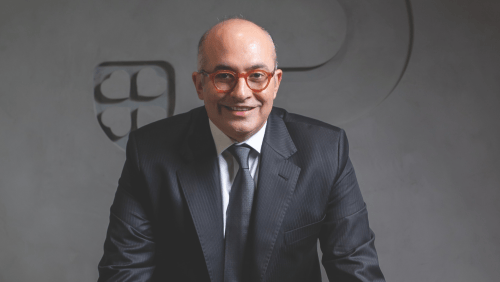
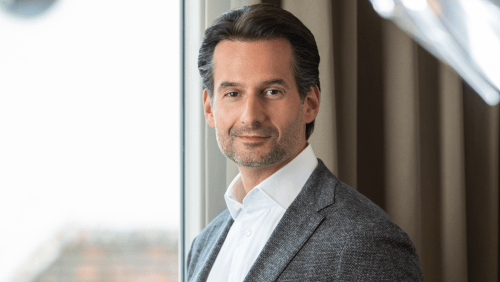
At the buzzing SuperReturn Conference, where global investors converge to spot the next big opportunity, Khalid Alsaeed, chairman of AlKhizanah Capital, didn’t just attend — he offered a window into a market that is quietly redefining itself. For Alsaeed, Saudi Arabia has become more than an investment destination; it’s the “land of opportunity,” a country whose transformation is visible in everything from infrastructure to human capital.
Alsaeed describes the Kingdom’s evolution as a direct result of Vision 2030, the structural reform blueprint that has diversified the economy, strengthened legal frameworks, and opened doors for international investors. The government has poured resources into labor and education, sending Saudi talent to the world’s top universities, while simultaneously building the hard infrastructure to support technology-driven sectors. The result is a business ecosystem that is both sophisticated and adaptable, where innovation can scale rapidly.
But the real transformation, Alsaeed says, is cultural. “Ten years ago, most young Saudis sought public sector jobs. Today, they want to be entrepreneurs, to build, to innovate. And now they can.” With supportive platforms, clear regulations, and cutting-edge technological infrastructure, ambition meets opportunity in ways previously unseen.
The entrepreneurial ecosystem is further strengthened by collaboration between the public sector, the private sector, and the Public Investment Fund (PIF), whose investment arms are actively backing startups and SMEs — the largest generators of jobs in the Kingdom. Banking institutions and private credit funds complement these efforts, providing capital where innovation meets potential.
For international investors, the advantages are clear and compelling. The Saudi riyal is pegged to the U.S. dollar, effectively removing currency risk. The market behaves like a dollar-denominated asset class, while capital inflows and outflows have remained open for decades. The Kingdom also benefits from a youthful population, a prime geographic location bridging Asia, Africa, and Southern Europe, and a regulatory framework designed to nurture rather than stifle growth.
“The combination of reforms, talent, infrastructure, and location is unprecedented,” Alsaeed notes. “If you’re looking for a market that is secure, yet full of opportunity, Saudi Arabia is very attractive. The potential is immense, and the ecosystem exists to support ambition and innovation.”
Saudi Arabia’s narrative is shifting: from oil-rich nation to global hub for entrepreneurship, technology, and investment. Investors who heed the signal will find themselves at the forefront of a market that is not just growing, but transforming — a Kingdom open for business on its own bold terms.
At the buzzing SuperReturn Conference, where global investors converge to spot the next big opportunity, Khalid Alsaeed, chairman of AlKhizanah Capital, didn’t just attend — he offered a window into a market that is quietly redefining itself. For Alsaeed, Saudi Arabia has become more than an investment destination; it’s the “land of opportunity,” a country whose transformation is visible in everything from infrastructure to human capital.
Alsaeed describes the Kingdom’s evolution as a direct result of Vision 2030, the structural reform blueprint that has diversified the economy, strengthened legal frameworks, and opened doors for international investors. The government has poured resources into labor and education, sending Saudi talent to the world’s top universities, while simultaneously building the hard infrastructure to support technology-driven sectors. The result is a business ecosystem that is both sophisticated and adaptable, where innovation can scale rapidly.
But the real transformation, Alsaeed says, is cultural. “Ten years ago, most young Saudis sought public sector jobs. Today, they want to be entrepreneurs, to build, to innovate. And now they can.” With supportive platforms, clear regulations, and cutting-edge technological infrastructure, ambition meets opportunity in ways previously unseen.

Erika Masako Welch • Chief Content Officer, Lucidity Insights
Erika Masako Welch is the Chief Content Officer of Lucidity Insights.