Perception vs Reality: How War Is Reshaping Startup Capital in the Middle East
As global headlines distort the reality on the ground, startups across the Middle East are facing a new challenge: perception. While ecosystems remain active and resilient, shifting investor sentiment is quietly reshaping capital flows, forcing founders to adapt to a more disciplined and selective funding environment.
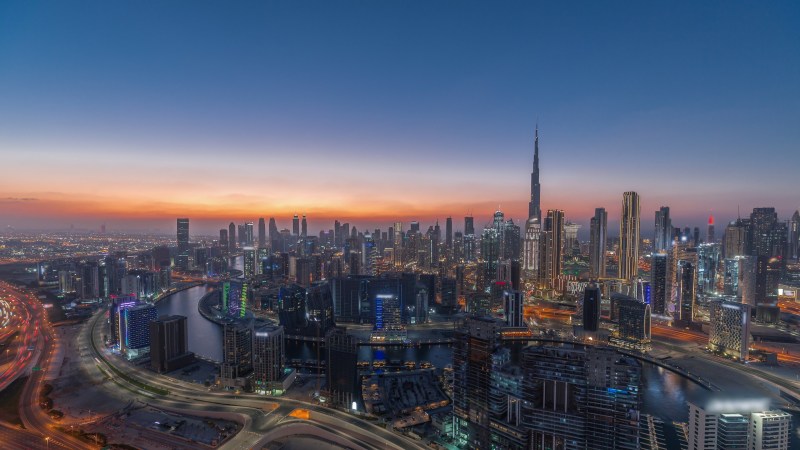
Dubai
Shutterstock
Opinions expressed by Entrepreneur contributors are their own.
You're reading Entrepreneur Middle East, an international franchise of Entrepreneur Media.
It’s a shame that in times of uncertainty like this, distorted perceptions often challenge businesses more than reality.
Over the past few weeks, I’ve been speaking to startup founders across the Middle East and Africa, and a clear pattern is emerging: the war isn’t just impacting markets—it’s distorting how the entire region is perceived by global investors. And for startups, perception is capital.
On the ground in Dubai, things feel largely unchanged. Meetings are happening, founders are building, and businesses are moving forward. You could spend a full day between offices, cafés, and investor meetings and barely register that the region is being portrayed globally as unstable. And yet, switch on any international news channel, and you’d think the entire Middle East was on fire.
I could write a whole book on this period of humanity—an era defined not by a lack of information, but by an overwhelming flood of it, distorting truth and perception. But I won’t. What I will say is this: we are more connected than ever, yet further from clarity—consuming a relentless stream of headlines, algorithms, and emotionally charged narratives that blur nuance and flatten reality. In this environment, perception moves faster than facts, and sentiment often overrides substance. Entire regions, industries, and individuals can be mischaracterized in an instant—grouped, generalized, and judged from afar. And in markets, where decisions are driven as much by confidence as by data, these distortions don’t just shape opinions—they shape outcomes, redirect capital, and redefine opportunity.
This disconnect is where the real impact lies.
Startups in markets far removed from the conflict—like Egypt—are already feeling the consequences. Founders report that European and U.S. venture capital firms are pulling back from previously committed deals, not because of company fundamentals, but because of a broader “regional risk” narrative. The map, it seems, has blurred.
What we’re seeing isn’t just a slow-down in funding—it’s a repricing of risk. Global LPs are becoming more cautious, reallocating capital to what they perceive as safer geographies. In turn, venture capital firms are facing increased pressure in their own fundraising cycles, which directly impacts their ability to deploy capital into startups. This creates a cascading effect: LP hesitation leads to VC caution, which ultimately tightens funding for founders.
At the same time, rising oil prices are creating a paradox. On one hand, Gulf economies benefit from stronger fiscal positions, with sovereign wealth funds and government-backed initiatives continuing to inject capital into innovation ecosystems. On the other, higher oil prices contribute to global inflationary pressures, reinforcing a broader risk-off sentiment among international investors.
There are, however, structural advantages that continue to position parts of the region—particularly the GCC—favorably. Currency stability, driven by USD pegs, reduces foreign exchange risk for investors. Strong infrastructure, digitally savvy populations, and government-led innovation agendas in markets like the UAE and Saudi Arabia remain firmly intact.
But for founders, the reality is shifting.
This is a moment that demands discipline. The era of growth-at-all-costs is giving way to a renewed focus on fundamentals: revenue generation, sustainable unit economics, and clear paths to profitability. Startups that once relied heavily on venture funding will need to diversify their capital strategies—exploring strategic partnerships, alternative financing, and, in many cases, bootstrapping their way to resilience.
This environment won’t break the ecosystem—but it will reshape it.
Moments like these tend to separate signal from noise. Capital becomes more selective, competition for funding intensifies, and only the most compelling businesses break through. But with that comes opportunity: stronger startups, healthier valuations, and a more disciplined generation of founders.
The Middle East has long been a region misunderstood from the outside. Today, that misunderstanding is being priced into capital markets in real time. But on the ground, the story is different. Founders are still building. Ecosystems are still evolving. And the startups that endure this cycle won’t just survive—they’ll define what comes next. Stay Safe, and Keep Focused.
It’s a shame that in times of uncertainty like this, distorted perceptions often challenge businesses more than reality.
Over the past few weeks, I’ve been speaking to startup founders across the Middle East and Africa, and a clear pattern is emerging: the war isn’t just impacting markets—it’s distorting how the entire region is perceived by global investors. And for startups, perception is capital.
On the ground in Dubai, things feel largely unchanged. Meetings are happening, founders are building, and businesses are moving forward. You could spend a full day between offices, cafés, and investor meetings and barely register that the region is being portrayed globally as unstable. And yet, switch on any international news channel, and you’d think the entire Middle East was on fire.

Erika Masako Welch • Chief Content Officer, Lucidity Insights
Erika Masako Welch is the Chief Content Officer of Lucidity Insights.