The Ecosystem Builder: Arada’s Ahmed Alkhoshaibi On Building Lifestyle-Driven Ecosystems Beyond Real Estate
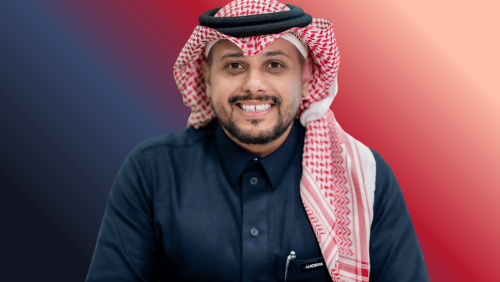
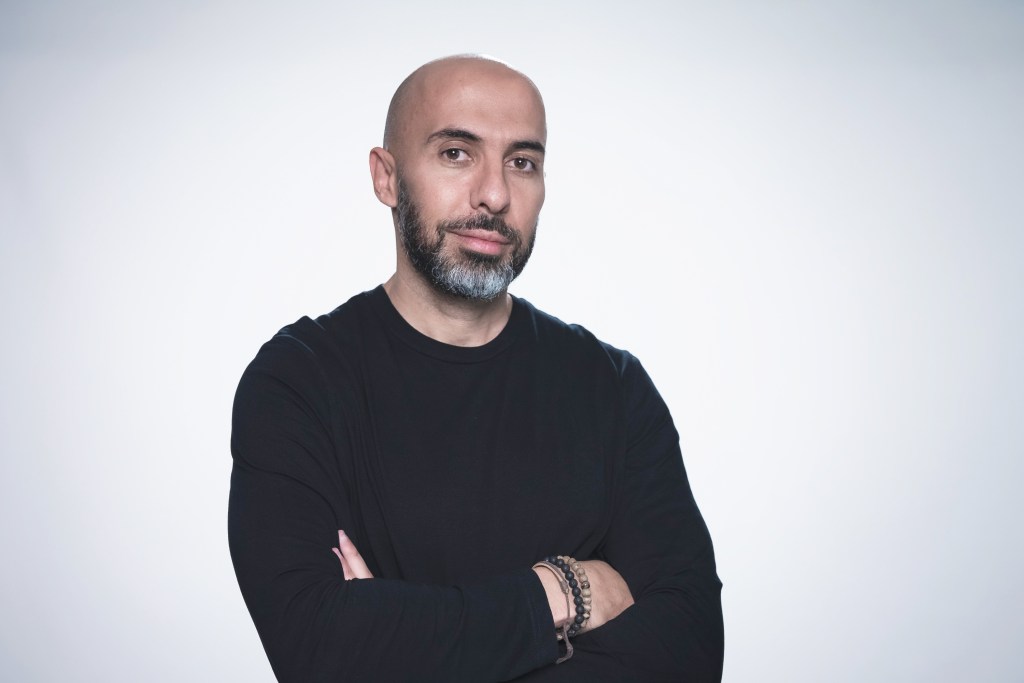
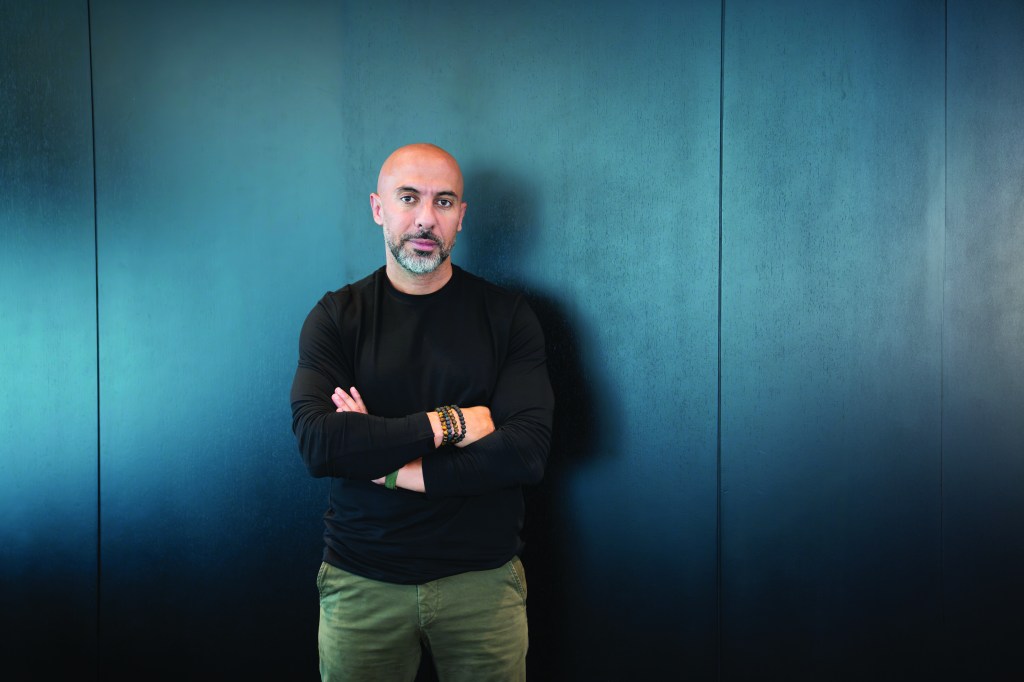
Ahmed Alkhoshaibi does not build properties. He builds cities — complete communities woven together with schools, hotels, gyms, cafes, and branded residences. As Group CEO of Arada, he kept construction sites humming and sales teams busy throughout one of the most testing periods in regional memory.
You're reading Entrepreneur Middle East, an international franchise of Entrepreneur Media.
This article is part of the cover story for the Entrepreneur Real Estate Leaders May 2026 Edition.
Ahmed Alkhoshaibi does not see Arada as a property developer in the conventional sense. Ask him what the company does and he will describe something considerably more ambitious: an ecosystem builder, a creator of communities, a group that weaves gyms and schools and hotels and cafes and wellness destinations into every project it delivers — because bricks and mortar alone have never been enough. That philosophy has served Arada well during a period that tested the entire region.
As Group CEO, Alkhoshaibi navigated the recent weeks of geopolitical turbulence with a clarity of purpose that comes from knowing exactly what you are building — and why people will always want it. “The UAE has been reinventing itself since the decision was made, decades ago, to diversify away from oil and build an economy around trade, connectivity and services,” he says.
“Every cycle since then has followed a similar pattern: there has been external shock, rapid adaptation, and accelerated growth on the other side. Whether it was the global financial crisis or the pandemic, the UAE has always found a way to come out stronger. What has made this period different has been the level of preparedness. The UAE protected its people, kept its institutions running, and demonstrated a quality of governance that has been noticed globally. For those of us who have been here for years, this does not come as a surprise — and it explains why we believe that the long-term trajectory for this country remains as strong as it has ever been.”
The statistics from those weeks are striking. In March 2026 — by any measure an extraordinarily challenging month for the region — Dubai processed over 13,500 real estate transactions worth AED 37 billion. For Alkhoshaibi, that figure is not just a number. It is proof that the foundations of this market run deeper than any short-term shock can reach. Arada’s own experience during the period mirrors the broader data.
Across March and April, activity held up across the group’s portfolio. The picture was not uniform — and Alkhoshaibi is the kind of leader who speaks honestly about differentiation within the market, rather than painting everything with the same optimistic brush — but the headline finding was clear: demand is broad, real, and does not depend on any single buyer profile.
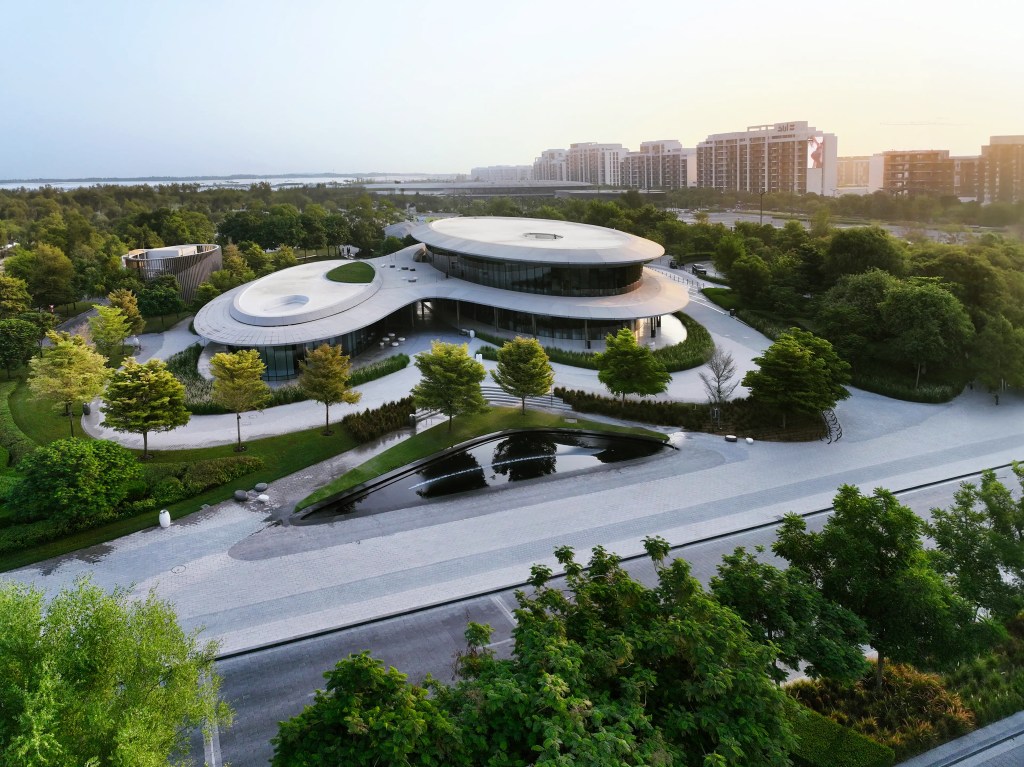
“Our own experience tells us that demand is broad, real and does not depend on any one single buyer profile,” he says. “Over the course of March and April, we have seen activity hold up across our portfolio, with some areas performing better than others. In Sharjah, our Masaar forest communities continue to be among the fastest-selling suburban developments in the UAE, while we have also seen no dip in investor and end-user interest in the Aljada community — Sharjah’s largest ever urban megaproject. At the same time, our ultra-luxury portfolio in Dubai, including Armani Beach Residences at Palm Jumeirah, has continued to draw demand, including via the sale of a AED 92.5 million penthouse in March. This tells us that not only is our product offering strong, but that the fundamentals of our markets have not diminished either.”
That product offering is worth examining in some detail, because it is central to understanding why Arada has been able to maintain momentum where others might have faltered. The company operates across Sharjah and Dubai, spanning mid-market family homes and ultra-luxury branded residences, across residential, commercial, hospitality, and fitness.
It is a deliberate diversification — one that ensures no single segment can derail the whole, and that the value proposition for buyers goes far beyond the price per square foot. Akala, located between Downtown Dubai and DIFC, is what Arada calls the world’s first precision wellness destination — a concept that reframes what luxury urban living can mean.
Inaura Downtown is creating a new benchmark for fitness-led hospitality, positioning wellness not as an amenity but as an architecture of daily life. The group opened its first hotel at the end of last year, with a pipeline of more to follow alongside a full portfolio of food and beverage brands.
And then there is Formative — Arada’s newly formed fitness collective, which has become the UAE’s largest gym operator by revenue, with 40,000 members across 19 clubs, now embedded across Abu Dhabi, Dubai and the group’s communities in Sharjah, and scaling faster than at any point in its history.
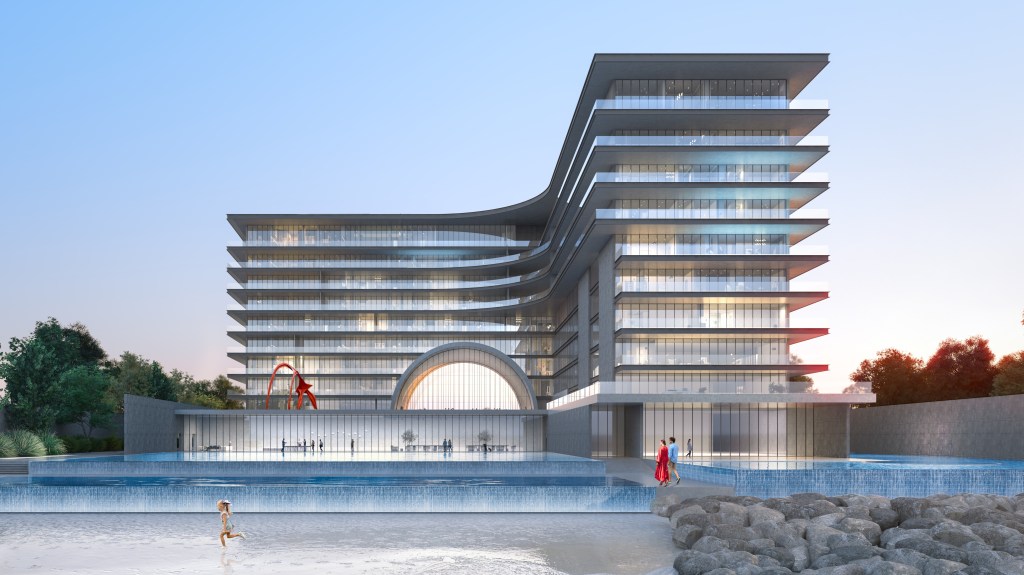
“What separates us is that we are not just a developer selling units,” Alkhoshaibi says. “We are building an ecosystem. Akala, located between Downtown Dubai and DIFC, is what we call the world’s first precision wellness destination. Inaura Downtown is creating a new benchmark for fitness-led hospitality. We opened our first hotel at the end of last year, and have many more to come, alongside a full portfolio of F&B brands. And Formative — our newly formed fitness collective, which became the UAE’s largest gym operator by revenue, with 40,000 members across 19 clubs — is now embedded across Abu Dhabi, Dubai and our communities in Sharjah, and scaling faster than ever. So from gyms to hotels, and from schools to cafes, our revenue-generating businesses deepen the value of everything we build and give buyers a reason to commit that goes far beyond price per square foot.”
The practical consequence of that model was visible throughout the recent weeks. The numbers from the period at Arada are instructive. In just eight weeks, the group handed over 13 premium apartment blocks in Aljada, held three separate sales launches, awarded the main construction contract for an international school, and opened a flagship fitness centre in Abu Dhabi. Sales teams in Sharjah were busier in April than they were in February.
“In the past eight weeks we have continued to sell, continued to build, and continued to launch,” he says. “Our ultra-luxury pipeline in Dubai, including Armani Beach Residences and Akala, continued to convert at the levels we were seeing before the disruption began. This level of activity is a direct result of how this business is structured. In the UAE, we operate across Sharjah and Dubai, across mid-market family homes and ultra-luxury branded residences, across residential, commercial, hospitality and fitness.”
Much of that operational continuity was made possible by the UAE government’s decisive response. From a supply chain perspective, logistics were swiftly redirected through Khorfakkan and Fujairah, removing a potential bottleneck before it could disrupt construction timelines. Financial infrastructure remained intact. The ecosystem around development — from banks to contractors to logistics partners — kept moving.
“Across the ecosystem we’ve seen an agile approach that has put us in a position where we have been able to build without pause or interruption,” Alkhoshaibi says. “We know that the UAE’s financial community are well-placed to support us if required, and there was no disruption to the financial infrastructure that underpins a country’s success. From a supply chain perspective, logistics were moved to flow through Khorfakkan and Fujairah. This enabled us to focus on delivery and ensure that we can meet our timelines without delay. That is the practical consequence of a well governed country, and it is a competitive advantage that very few markets can match.”
The broader macro context only strengthens the case for the UAE as a destination for global capital. In April alone — in the midst of the regional pressure — nearly AED 45 billion worth of transformational infrastructure was announced.
The new Dubai Metro Gold Line. The completion of the world’s first purpose-built air taxi station. The Fourth Federal Corridor connecting the Emirates. While other countries in similarly pressured situations might have deferred, the UAE announced expansions.
“Given the ongoing regional complications, other countries might have paused,” Alkhoshaibi says, “but the UAE has a track record of building its way out of challenges. From ease of doing business to quality of living, progressive regulation, full foreign ownership, long-term residency pathways and no income tax — the UAE has built an environment that actively welcomes capital. At the same time, the country is investing at enormous scale in infrastructure.”
The structural case for the region, he argues, is one that holds up to any rigorous analysis. Full foreign ownership rights, long-term residency pathways, zero income tax, a regulatory environment that continues to improve — these are not marketing slogans. They are the architecture of a market that was designed, from the ground up, to attract and retain global capital over the long term.
“In March 2026 — arguably the most challenging month this city has ever faced — Dubai still processed over 13,500 real estate transactions worth AED 37 billion,” he says. “That tells me that the foundations of the local property market are deep enough to withstand this kind of short-term shock.”
For Alkhoshaibi, the past two months have been, ultimately, a validation of the choices Arada made long before the pressure came: to build across multiple segments, to create communities rather than just developments, to establish businesses that generate revenue and community in equal measure. The diversification that might once have seemed complex proved its worth when conditions became difficult.
The pipeline ahead reflects that ambition. Armani Beach Residences at Palm Jumeirah — one of the most distinctive branded residential addresses in the Dubai market — continues to draw buyers. Akala, the precision wellness destination between Downtown Dubai and DIFC, represents a new chapter in what urban luxury can mean. And across Sharjah, the Aljada and Masaar communities continue to set the benchmark for what master-planned suburban living looks like in the UAE.
“The long-term trajectory for this country remains as strong as it has ever been,” Alkhoshaibi says — and for those who have watched Arada grow from a single development company into a multi-dimensional real estate and lifestyle group, that is not a hope. It is a plan backed by data, by execution, and by a decade of building things that last.
The ecosystem keeps expanding. The conviction has not wavered. And somewhere between a penthouse sale in Palm Jumeirah and a gym opening in Abu Dhabi, Arada’s broader thesis about what the UAE property market truly represents is being proved, one community at a time.
This article is part of the cover story for the Entrepreneur Real Estate Leaders May 2026 Edition.
Ahmed Alkhoshaibi does not see Arada as a property developer in the conventional sense. Ask him what the company does and he will describe something considerably more ambitious: an ecosystem builder, a creator of communities, a group that weaves gyms and schools and hotels and cafes and wellness destinations into every project it delivers — because bricks and mortar alone have never been enough. That philosophy has served Arada well during a period that tested the entire region.
As Group CEO, Alkhoshaibi navigated the recent weeks of geopolitical turbulence with a clarity of purpose that comes from knowing exactly what you are building — and why people will always want it. “The UAE has been reinventing itself since the decision was made, decades ago, to diversify away from oil and build an economy around trade, connectivity and services,” he says.

Entrepreneur Middle East Staff
Entrepreneur Staff