Your MVP Is Too Perfect — Oasis Taught Me Why
In 1994, Oasis scrapped a perfect album because it was too polished to
connect. Thirty years later, founders are making the exact same mistake with their MVPs.
Opinions expressed by Entrepreneur contributors are their own.
You're reading Entrepreneur Middle East, an international franchise of Entrepreneur Media.
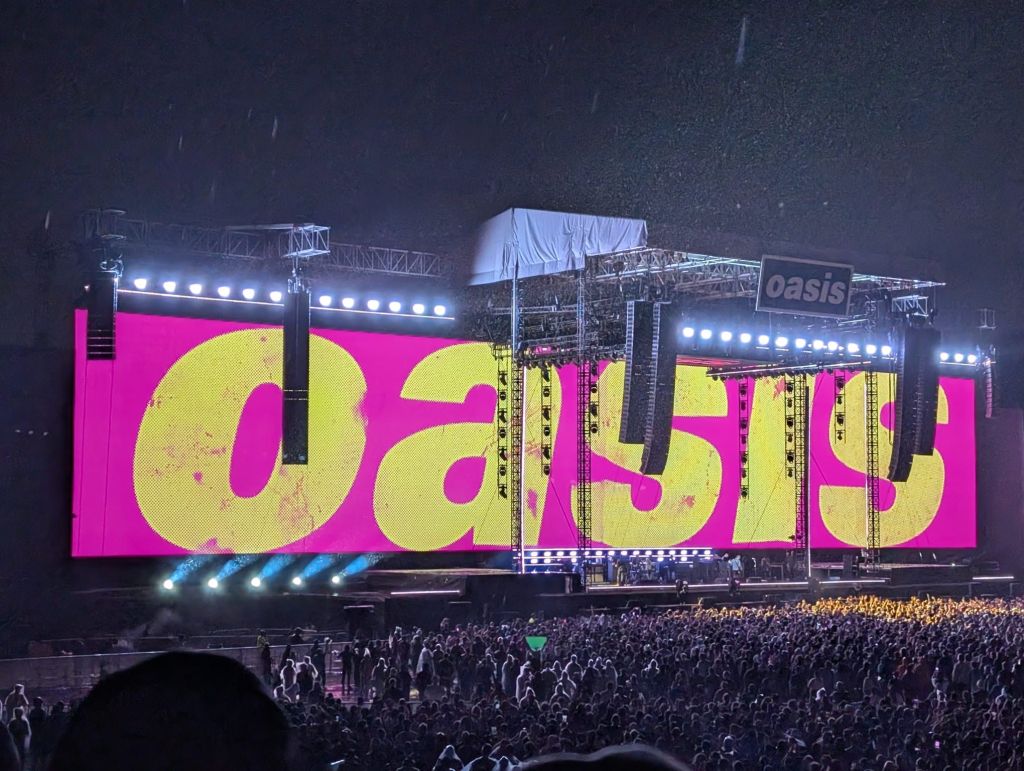
In January 1994, Oasis walked into Monnow Valley Studio in Wales to record what would become Definitely Maybe, the debut album that would eventually make them the biggest band in the world. They recorded the whole thing – Noel thought it sounded great, and then they scrapped every last bit of it.
Not because it was bad, because it was too good. The initial recordings felt overly technical and polished, failing to capture the essence of the band. When the band came into the control room to listen back, Bonehead’s reaction was immediate: “That doesn’t sound like it sounded in that room. It was thin. Weak. Too clean.” It wasn’t Oasis. It was a technically competent version of Oasis with all the hunger and swagger sandpapered right off. So they walked away from the tapes, went to a studio in Cornwall, set up in one room with no soundproofing between the amps, noise and spill everywhere, and recorded the whole thing again like they were playing a live gig.
Those Monnow Valley tapes sat untouched for thirty years. They resurfaced in 2024, just ahead of Oasis’ epic 2025 reunion. If you love the band, sitting down to listen to the Monnow Valley version of “Live Forever” is almost a jarring experience. It’s melodic, technically pristine, layered, beautiful. You can hear it now, three decades on, and genuinely appreciate the production. But I am absolutely convinced, and so, clearly, was their management at the time, that if those recordings had been the debut album Oasis released to the world in 1994, they would not have become Oasis. The polish would have gotten in the way. The rawness, the urgency, the feeling that this band had something to prove and nothing to lose, that was the whole thing. And you cannot engineer that. The moment you try, it disappears.
I think about those tapes a lot, probably more than is normal for someone who advises startup founders for a living. Because founders are making the exact same mistake, every single day.
The “I-Need-To-Build-It” Disease Has Gotten Worse
The MVP – Minimum Viable Product, was never supposed to be what it has become. Somewhere along the way, the startup world warped it into a polished pre-launch product with a refined UI, a comprehensive feature set, a thought-through competitive landscape, and a brand identity that feels premium before a single customer has validated any of it. That is not an MVP. That is a Monnow Valley recording, technically impressive, emotionally disconnected from the market it needs to reach.
The whole point of an MVP is to answer one brutally uncomfortable question: does anyone actually care? That’s it.
DoorDash famously launched their first version over a single weekend with a simple website, PDFs of restaurant menus, and a forwarded phone number, all under a hundred dollars and a core hypothesis.
The version that went live was, by most objective measures, a mess. But it worked, because it was honest, it was functional, and it put a real problem in front of real customers fast enough to learn something. The rawness was a feature, not a liability. It gave the early users a sense of momentum, of being part of something that was figuring itself out. They weren’t customers of a finished thing. They were participants in something alive.
Early Facebook understood this instinctively. The News Feed was basic. The Poke button was ridiculous. The entire platform was no-frills in a way that would never survive a modern product review meeting. But it solved something fundamental – connection, identity, belonging – and it let the market shape everything that came after. Over the years, Facebook evolved publicly, iterating in front of their users in real time. Many features became enormous. Others failed spectacularly and we barely remember them – Facebook Deals, Facebook Places, Facebook Home… and that’s fine, because that failure happened in the open, after launch, in dialogue with actual users. That’s healthy iteration. What founders do now, obsessing before launch, perfecting in a vacuum, is something else entirely.
The “Almost Perfect” Is The Most Dangerous Trap
I had a client come to me with a genuinely compelling idea, not compelling in the overhyped pitch deck sense, compelling because it was solving a real problem and the gap in the market was obvious from the first conversation. With the AI tools available today, with some no-code infrastructure, with a bit of grunge energy and a few targeted paid tests to find out what resonated, we could have had something bare-bones in market quickly. It was an opportunity to collect early feedback, get customer buy-in, understand whether we were truly solving the problem we thought we were solving. We could have iterated the product from there. That was the path.
Perfection took over instead. Every flow had to be tighter. Every edge case had to be anticipated. Every visual had to feel like a finished product. Hundreds of thousands of dollars later, the product is still not live. And here is the part that genuinely haunts me: the latest iteration of the “almost perfect” is now so far removed from the original idea that failure is the only possible outcome. The thing that made the concept compelling in the first place has been completely buried under layers of refinement. The founder became so focused on avoiding the possibility of failure that they accidentally avoided the market entirely, and in doing so, built something that can no longer succeed even when it launches – because it no longer remembers what it was trying to solve.
Perfection doesn’t just delay your launch. It disconnects you from your original problem. That is the danger nobody talks about.
The Monnow Valley Process
I’ve started using a phrase with clients. I call it the Monnow Valley Process – a diagnostic I run against any MVP before we talk about timelines or development sprints or go-to-market strategy. The question is simple: has this become too perfect to connect?
Because customers don’t connect with perfect. They connect with honesty, momentum, usefulness… with the feeling that something is alive and that they are part of watching it grow. The rough edges are sometimes the product. The rawness is often the differentiator. The imperfection, the exposed wiring, the thing that makes a founder wince slightly when they hit publish, is often what makes early users feel like they discovered something real rather than encountered something manufactured. Overly polished first versions feel emotionally closed-off, signaling a product that has already decided what it is, leaving no room for the customer to become part of the story.
When I apply the Monnow Valley Process with a client, I’m asking them to do what Oasis management did in 1994 – walk into the control room, listen back honestly, and ask whether what they’ve built still sounds like them. Still sounds hungry. Still sounds like it has something to prove.
A true MVP should make you a little uncomfortable when you ship it, not because it’s broken, but because it still feels exposed, still evolving, still alive. If it feels completely polished and emotionally risk-free, there is a very good chance you have been in that studio too long.
The Monnow Valley tapes are genuinely beautiful, and the world can appreciate them now. Thirty years later, and after the context of everything Oasis became, that kind of beauty is now legible. But in 1994, that beauty would have gotten in the way. The rawness was the right call.
Ship the scrappy version. Let the market in. Let the product become what it’s supposed to become in the open, in front of the people you’re building it for. That is how something thin and weak and too clean becomes the biggest band in the world.
In January 1994, Oasis walked into Monnow Valley Studio in Wales to record what would become Definitely Maybe, the debut album that would eventually make them the biggest band in the world. They recorded the whole thing – Noel thought it sounded great, and then they scrapped every last bit of it.
Not because it was bad, because it was too good. The initial recordings felt overly technical and polished, failing to capture the essence of the band. When the band came into the control room to listen back, Bonehead’s reaction was immediate: “That doesn’t sound like it sounded in that room. It was thin. Weak. Too clean.” It wasn’t Oasis. It was a technically competent version of Oasis with all the hunger and swagger sandpapered right off. So they walked away from the tapes, went to a studio in Cornwall, set up in one room with no soundproofing between the amps, noise and spill everywhere, and recorded the whole thing again like they were playing a live gig.
Those Monnow Valley tapes sat untouched for thirty years. They resurfaced in 2024, just ahead of Oasis’ epic 2025 reunion. If you love the band, sitting down to listen to the Monnow Valley version of “Live Forever” is almost a jarring experience. It’s melodic, technically pristine, layered, beautiful. You can hear it now, three decades on, and genuinely appreciate the production. But I am absolutely convinced, and so, clearly, was their management at the time, that if those recordings had been the debut album Oasis released to the world in 1994, they would not have become Oasis. The polish would have gotten in the way. The rawness, the urgency, the feeling that this band had something to prove and nothing to lose, that was the whole thing. And you cannot engineer that. The moment you try, it disappears.

Vickram Agarwal • Chief Marketing Officer
Vickram Agarwal is a visionary entrepreneur, blending digital innovation with bold leadership to create and... Read more