Inside the Precision Built Franchise Taking Kids’ Movement Global
“What we’ve built is a complete system for teaching children how to move,” says Samer Hijazi, founder of Pinpoint Fitness. “Every class follows a clearly defined structure, every skill follows a progression, and every athlete follows a pathway.”
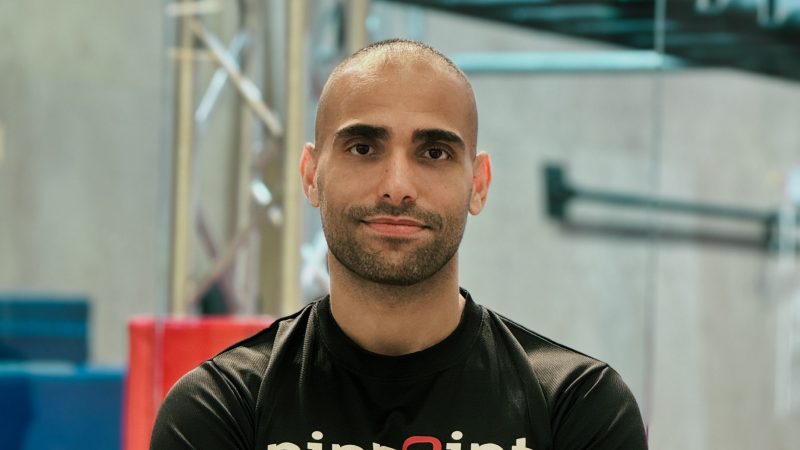
Samer Hijazi
You're reading Entrepreneur Middle East, an international franchise of Entrepreneur Media.
A lot of children’s fitness programs are built around play, entertainment, and unstructured activity. While movement and fun are important, they don’t always provide a clear pathway for skill development, measurable progress, or long-term athletic growth.
Pinpoint Fitness was built on a different philosophy. Founded in Dubai in 2018, the company developed a structured movement education system that teaches children how to move with greater skill, control, confidence, and athletic ability. At the heart of the program is a simple principle: accuracy before speed.
The thinking has research behind it. A WHO-led study found that more than four in five 11- to 17-year-olds aren’t active enough, while reviews of childhood development point to a broader decline in the fundamental movement skills — running, jumping, balancing, climbing, and coordinating movement — that form the foundation of lifelong physical activity.
The growing view among experts isn’t simply that children need more activity; it’s that they need better-quality movement experiences that systematically develop competence and confidence. That distinction is the foundation of the Pinpoint method.
“What we’ve built is a complete system for teaching children how to move,” says founder Samer Hijazi. “Every class follows a clearly defined structure, every skill follows a progression, and every athlete follows a pathway. The goal isn’t simply to keep children active — it’s to help them develop exceptional movement skills, confidence, and physical capability through a method that delivers measurable progress. We’ve created a framework that develops technique, skills, athletic ability, and self-belief in a way that is structured, repeatable, and scalable.”
Rather than relying on repetitive drills or random activity, children work through carefully designed obstacle-based movement challenges that become progressively more demanding as their abilities develop.
The sessions build agility, coordination, balance, spatial awareness, strength, and body control while ensuring continuous improvement and learning. Every class is designed to introduce new challenges, refine technique, and help children steadily expand their capabilities through a structured curriculum and progression system.
The program is also intentionally inclusive. Over the years, Pinpoint has worked with thousands of children of varying abilities, including many on the autism spectrum and with other neurodiverse needs. Unlike many programs that focus primarily on participation or recreation, Pinpoint’s approach is built around coaching, progression, skill acquisition, and meaningful development.
The company has become particularly known for the results achieved by neurodiverse athletes. Through a highly structured curriculum, clear progressions, individualized coaching, and a consistent methodology, children who may struggle in traditional sporting environments are given the opportunity to develop coordination, confidence, social engagement, physical literacy, and advanced movement skills in a supportive setting.
“We firmly believe that neurodiversity should never place a ceiling on a child’s potential,” says Hijazi. “Our responsibility as coaches is to find the pathway that allows each child to learn, grow, and succeed. We hold every athlete to meaningful standards while providing the support they need to reach them.”
It’s a formula that has taken the brand from a single Dubai location to five locations across Dubai, Abu Dhabi, and Nairobi, including its first international franchise launched this year in Kenya.
“The model only works if the quality comes with it,” he says. “Every location follows the same curriculum, the same coaching standards, the same assessment systems, and the same progression pathways. We don’t franchise a logo; we franchise a method, and we protect that method relentlessly.”
That commitment to consistency is supported by the company’s internal training systems. Coaches are trained through the Pinpoint Coaches Academy, a dedicated platform that standardizes coaching methodology, safety procedures, teaching techniques, and class delivery across all locations.
That’s also why the brand grows the way it does.
New locations don’t open until the coaching team is fully trained, the curriculum is audited, and the standards are signed off. Every aspect of the operation — from coach certification and class delivery to curriculum implementation and athlete progression — is reviewed before a branch begins operating.
“I’m at every opening,” Hijazi says. “You can’t protect what children get out of this if you start letting the details slide.”
Pinpoint takes a more deliberate approach to an industry that often prioritises rapid expansion. It believes the key is to build systems that can be replicated without compromising quality, ensuring every child receives the same standard of coaching and development regardless of location. Turn the method into something that can be delivered consistently rather than simply a brand name that can be licensed, and this way growth becomes sustainable.
The ambition, however, is firmly global. Nairobi, the company says, is just the beginning of a wider international network. The goal is to bring the same structured movement education system to children around the world while maintaining the coaching standards and curriculum that define the brand.
The Gulf remains a major focus, but expansion plans extend well beyond the region.
“Abu Dhabi felt like a homecoming,” Hijazi says of the recent capital launch. “But the goal hasn’t changed. We want every child, regardless of ability or background, to have access to world-class movement education, exceptional coaching, and a place where they can develop confidence through achievement. That’s what we’re building, and that’s what we want to make accessible everywhere.”
A lot of children’s fitness programs are built around play, entertainment, and unstructured activity. While movement and fun are important, they don’t always provide a clear pathway for skill development, measurable progress, or long-term athletic growth.
Pinpoint Fitness was built on a different philosophy. Founded in Dubai in 2018, the company developed a structured movement education system that teaches children how to move with greater skill, control, confidence, and athletic ability. At the heart of the program is a simple principle: accuracy before speed.
The thinking has research behind it. A WHO-led study found that more than four in five 11- to 17-year-olds aren’t active enough, while reviews of childhood development point to a broader decline in the fundamental movement skills — running, jumping, balancing, climbing, and coordinating movement — that form the foundation of lifelong physical activity.

Entrepreneur Middle East Staff
Entrepreneur Staff