Inside Arianna Scapola’s Approach to Real Estate and Capital
Capital then determines what can be sustained beyond the purchase. A building may need refurbishment before it becomes suitable for occupation, followed by maintenance and eventual adaptation. Those demands can arrive before the income or operating benefits expected from the investment.
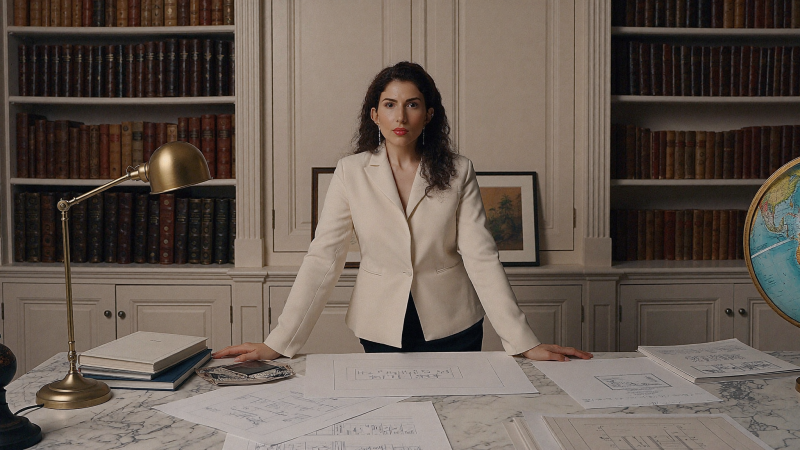
Arianna Scapola
You're reading Entrepreneur Middle East, an international franchise of Entrepreneur Media.
A building does not stop shaping a place when its owner sells it. Its condition, location and use remain part of the neighborhood around it. Capital can move between investments while the physical consequences of earlier decisions persist. Real estate asks investors to think across both timelines: the period during which they hold an asset and the life that asset may have beyond them.
For Arianna Scapola, real estate sits alongside financial architecture within her work as a chairwoman and strategic director. Her stated priorities connect the allocation of capital with lasting value. In property, that connection raises a specific question: how does an investment serve the institution behind it while contributing to the place in which it exists?
“Real estate strategy, done well, is inseparable from institutional strategy,” Arianna states. In the same statement, she treats the placement of physical assets as an expression of an institution’s thinking about the future. The implication is that choosing a property also gives an organization’s plans a location, a physical form and a set of constraints.
An institution buying premises, for example, commits to a place from which it expects to operate. Distance from customers, access to transport and suitability for its work become part of that decision. An investor acquiring space for rental income faces a different question about who will want to use it and why. In either case, the intended function gives the financial proposition something concrete to be tested against.

Capital then determines what can be sustained beyond the purchase. A building may need refurbishment before it becomes suitable for occupation, followed by maintenance and eventual adaptation. Those demands can arrive before the income or operating benefits expected from the investment. Assessing the initial price alone leaves out the funding needed to make the intended use possible. The financial commitment therefore includes the work required to turn the proposed use into something a building can actually support.
Arianna’s real estate priorities extend that assessment to responsible development and a lasting contribution to urban life. Her website identifies both as criteria for allocating capital. Read alongside her emphasis on institutional strategy, the position brings two interests into the same discussion: what ownership delivers for an organization and what the asset contributes to its surroundings.
Assessing that contribution requires attention to how a property is used. Space for local businesses or premises that bring an essential service closer to its users can meet needs beyond a building’s ownership. The relevant contribution depends on the site and the people who use it. A general promise of positive impact explains little unless it can be connected to a specific function that the investment is capable of supporting.
Financial viability remains essential to that argument. A socially useful proposal may still require more capital than is available, while an apparently attractive financial projection may depend on demand that has not been established. Neither an urban benefit nor an expected return settles the other question. Taking both seriously means recognizing where they reinforce each other and where the proposed investment leaves a tension unresolved.
There is a further distinction between a long investment horizon and the resources needed to support one. A willingness to wait does not itself fund repairs, cover a period without rental income or pay for alterations. For an owner, patience has practical requirements. The capital available over the holding period matters alongside the intention to remain invested. Otherwise, a strategy described as enduring can become dependent on conditions staying unusually favorable.
Changing conditions also make adaptability relevant. Space designed around one use may need a different layout or specification later. Some alterations will be feasible; others may demand expenditure that the proposed use cannot justify. The question is how much room a property leaves for future decisions. An asset that fits a plan at acquisition can still restrict its owner if that plan changes.
Arianna’s position invites a test that extends beyond the sale. The next owner inherits a building’s condition and capacity for use, while the neighborhood continues to experience its presence. A successful exit can demonstrate that an investment met its owner’s objectives. A claim to lasting urban value needs another answer: what can the property continue to contribute once that owner has moved on?
A building does not stop shaping a place when its owner sells it. Its condition, location and use remain part of the neighborhood around it. Capital can move between investments while the physical consequences of earlier decisions persist. Real estate asks investors to think across both timelines: the period during which they hold an asset and the life that asset may have beyond them.
For Arianna Scapola, real estate sits alongside financial architecture within her work as a chairwoman and strategic director. Her stated priorities connect the allocation of capital with lasting value. In property, that connection raises a specific question: how does an investment serve the institution behind it while contributing to the place in which it exists?
“Real estate strategy, done well, is inseparable from institutional strategy,” Arianna states. In the same statement, she treats the placement of physical assets as an expression of an institution’s thinking about the future. The implication is that choosing a property also gives an organization’s plans a location, a physical form and a set of constraints.

Entrepreneur Middle East Staff
Entrepreneur Staff