Sarah Shaw, CEO of Majra, on Aligning Business Impact With National Priorities
According to Shaw, a functioning impact economy requires coordinated action across sectors, supported by clear governance, measurable impact, and the integration of ESG into business and investment decisions.
You're reading Entrepreneur Middle East, an international franchise of Entrepreneur Media.
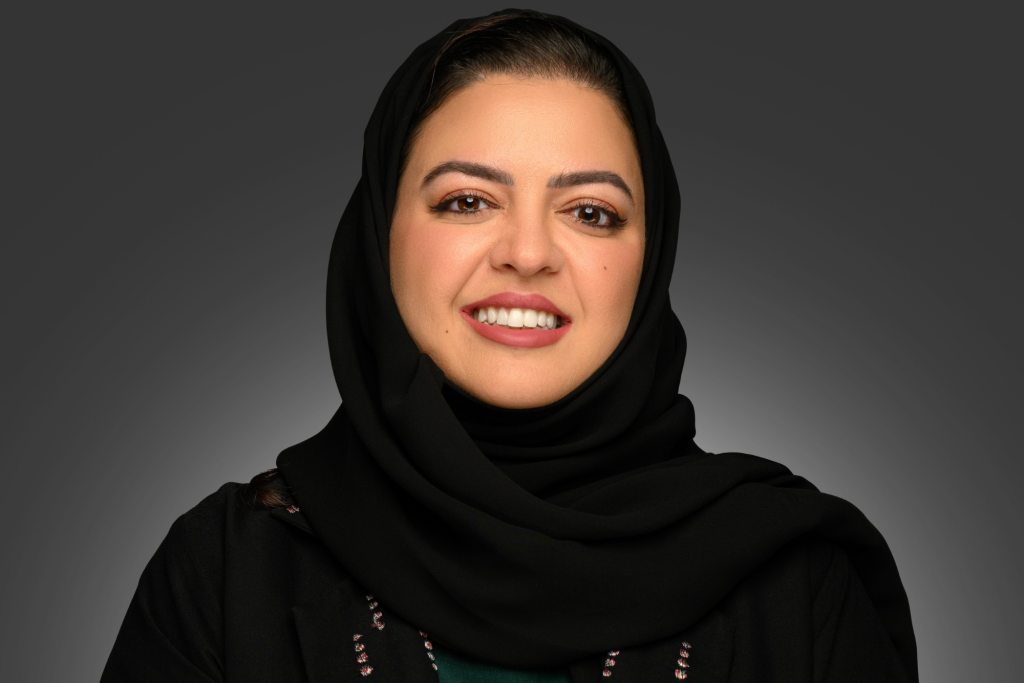
As the UAE works to embed social and environmental impact more deeply into its economy, Majra – National CSR Fund is seeking to bring greater structure, measurement, and accountability to how companies contribute to national priorities.
Led by CEO Sarah Shaw, Majra serves as the UAE’s federal entity and national umbrella for corporate social responsibility (CSR), environmental, social, and governance (ESG), and sustainability, bringing together government, businesses, community organizations, and academic institutions to support measurable impact.
Entrepreneur Middle East met with Shaw to learn more about the UAE’s approach to building an impact economy and how Majra is working to make corporate impact more measurable, transparent, and aligned with the country’s long-term economic and sustainability goals.
The term “impact economy” is increasingly used in policy and business circles. What are the essential pillars required to build a functioning impact economy, capital, regulation, data, and corporate governance?
A functioning Impact Economy requires institutional design, not isolated initiatives.
There are five essential players:
First, the Government directs business, philanthropy, academia, and community towards national priorities and strategic governmental agendas.
Second, the Business community galvanizes its strength and force in the form of capital, assets, and human capability to achieve these national priorities and strategic agendas.
Third, the Philanthropic community aligns its programs and initiatives with these national priorities and collaborates with the Business Community to deliver on its missions. The government plays a role in incentivizing the private sector to work closely with both not-for-profit organizations and social entrepreneurs in the ecosystem.
Lastly, the Academic community develops unbiased research and studies to assess the efficacy of the programs, initiatives, and outputs of these collaborations on the beneficiaries. They provide impact measurement tools that enable a truly data-driven oversight of any nation’s “Impact Economy”.
For this to be achieved, a clear governance architecture must be outlined. Impact must be embedded within structured national frameworks, ensuring alignment with economic priorities under We the UAE 2031. Governance frameworks that are inclusive of all various parties will ensure a harmonious approach to delivering on impact.
Majra’s UAE Companies for Good 2031 strategy would act as a guiding mechanism to ensure that Corporate Social Responsibility (CSR), Environmental, Social, and Governance (ESG), and Sustainability performance within companies are reviewed and assessed through structured and comparable indicators between all relevant authorities, both federally and locally. These indicators are also applied in the evaluation framework for the Impact Seal award, which is the highest governmental recognition for private sector companies’ impact in the UAE.
Additionally, an Impact Economy integrates ESG into capital allocation decisions, ensuring that financial performance and sustainable impact are mutually reinforced across the nation.
CSR must evolve into strategic ESG integration embedded within board-level structures and ultimately begin to be relatable to overall strategic business performance and accountability of businesses in the nation.
The UAE is not approaching impact as philanthropy; it is institutionalizing impact as an economic and social competitive advantage in the nation.
Different countries have taken different routes toward building an impact economy. What model has the UAE chosen to pursue (regulatory-led, market-led, or partnership-driven) and why?
The UAE has adopted a partnership-driven, nationally enabled and incentivized model.
Rather than relying solely on regulatory mandates or purely market-led evolution, the UAE has established an integrated framework through Majra – National CSR Fund, combining:
- National ambition under We the UAE 2031
- Strategic implementation through the UAE Companies for Good 2031 Strategy
- Structured measurement via the Impact Index
- Performance recognition through the Impact Seal
This model aligns government leadership with private sector capability, ensuring that CSR and ESG contributions are measurable, verifiable, and nationally aligned.
It is performance-driven, scalable, and economically embedded.
The National CSR Fund, Majra, was established to empower the private sector to amplify the impact of its social responsibility efforts by directing corporate contributions toward priority areas of national need. How does this more organized approach make CSR initiatives more efficient and effective, particularly in addressing underserved or previously overlooked areas?
Historically, CSR contributions both globally and regionally have been fragmented and based on personal preferences of board-level leadership in companies.
Today, in the UAE, Majra has restructured this landscape by:
- Aligning corporate contributions with priority national sectors
- Applying an established framework to measure CSR, ESG, and Sustainability performance
- Verifying initiatives to ensure credibility and transparency of these CSR, ESG, and Sustainability endeavors
- Aggregating impact data to inform national policy and promote incentive policies for businesses
RELATED: Sustainability Innovation Forum and Awards 2026 Brings Industry Leaders Together in Dubai
This structured approach ensures that CSR contributions, whether financial or non-financial, are strategic and impactful.
It increases efficiency and enhances effectiveness through measurable outcomes, and transforms corporate contributions into verified national impact aligned with the SDGs.
Most importantly, it supports the national objective of elevating CSR contributions’ value toward 1% of the UAE’s economy size by 2031 under the UAE Companies for Good 2031 Strategy.
Could you outline the key achievements to date of Majra’s main initiatives such as the Impact Seal, the CSR project verification mechanism, the Sustainable Impact Challenge initiative, and others?
The recent Impact Seal cycle demonstrated strong market adoption.
We received nearly 160 applications and awarded 114 companies across Platinum, Gold, and Silver levels in two categories: Large Corporate and SMEs. This reflects growing corporate readiness to adopt governance-based CSR, ESG, and Sustainability frameworks.
Our project verification mechanisms have strengthened accountability and credibility within the ecosystem. This ensures that when businesses invest in these projects, they are assured of the efficacy and expected outcomes of their social investment.
Collectively, these initiatives signal early-stage systemic integration of the UAE’s Impact Economy architecture.
How does the Impact Seal introduce precise metrics to measure sustainable impact, particularly in areas where impact has traditionally been difficult to quantify?
The Impact Seal acts as a purely voluntary program for companies to assess their level of impact in the nation. The metrics used are based on the mandatory CSR disclosures which are stipulated in the establishing law of Majra in 2018. Together with partnering entities such as MoHRE, MoIAT, MoET and MoCCAE, we ensured that all the ways in which a company can “do good” in the UAE are captured, measured, and evaluated for efficacy.
Companies are evaluated through structured ESG indicators aligned with national priorities and the SDGs. This includes:
- Defined performance benchmarks
- Governance and reporting standards
- Verification of CSR initiatives
- Alignment with measurable national outcomes
Impact becomes transparent, comparable, and auditable.
This precision enables aggregation at the national scale, reinforcing accountability while strengthening investor confidence and stakeholder trust. This also aligns with the government’s effort to incentivize doing good in the UAE through the business community.
The UAE also launched its Companies for Good 2031 strategy: What early results stand out as this vision moves from concept to execution? What unique insights have you gained from working closely with companies that are embedding social and environmental impact into their core business models?
The UAE Companies for Good 2031 Strategy represents Majra’s flagship national strategy.
Its ambition is twofold:
- Elevate voluntary CSR contributions value to 1% of the UAE’s economy by 2031
- Mobilize 50% of all large mainland companies within Majra’s ecosystem.
Early signals show that companies are increasingly embedding ESG into core governance structures rather than treating CSR as peripheral. In 2025, we identified over AED 3.2 billion in total value of CSR (including donations, volunteer efforts, programs, waqfs, grants, zakaat, and much more). This gives us a great indicator that businesses are already adopting CSR as an integrated element of their strategy of doing business in the UAE.
We are observing stronger board-level engagement, improved reporting maturity, and growing alignment between corporate strategy and national development objectives under We the UAE 2031.
Impact is becoming a driver of competitiveness for businesses in the UAE.
What is the long-term vision for the UAE’s impact economy?
The long-term vision is to position the UAE as the regional reference point for responsible business and sustainable investment.
By 2031, we aim to see:
- CSR integrated into macroeconomic performance
- ESG embedded within corporate governance frameworks
- Impact is measured consistently through the Impact Index.
- Cross-sector collaboration generating collective national outcomes
- Alignment between private sector capabilities and national priorities
The objective is systemic integration, where impact becomes inseparable from economic growth.
What concrete milestones or action plans should the private sector expect over the next five years as the UAE scales its impact economy ambitions?
Over the next five years, companies should expect:
- Expanded participation in the Impact Seal
- Deeper integration of the Impact Index into corporate ESG frameworks
- Accelerated progress toward the 50% large mainland company participation target
- Enhanced transparency and verification mechanisms for CSR-based projects and programs
- Measurable national progress toward the 1% total value of CSR contribution target
The direction is clear: Under the UAE Companies for Good 2031 Strategy, responsible business is not an optional positioning exercise; it is a structured, measurable, governance-based operating model, backed by incentives that are both fiscal and intrinsic.
And Majra – National CSR Fund exists to enable that transformation at national scale.
RELATED: Dr. Reem Osman: Building Businesses With Purpose Through Reem Holding
As the UAE works to embed social and environmental impact more deeply into its economy, Majra – National CSR Fund is seeking to bring greater structure, measurement, and accountability to how companies contribute to national priorities.
Led by CEO Sarah Shaw, Majra serves as the UAE’s federal entity and national umbrella for corporate social responsibility (CSR), environmental, social, and governance (ESG), and sustainability, bringing together government, businesses, community organizations, and academic institutions to support measurable impact.
Entrepreneur Middle East met with Shaw to learn more about the UAE’s approach to building an impact economy and how Majra is working to make corporate impact more measurable, transparent, and aligned with the country’s long-term economic and sustainability goals.

Entrepreneur Middle East Staff
Entrepreneur Staff