From Insight to Impact: How Budoor Khaled Is Building Datafirst
Budoor sees an opportunity for organizations to rethink and reengineer how they operate around data and AI. That could mean redesigning processes, identifying opportunities differently and ultimately creating new forms of business value.
You're reading Entrepreneur Middle East, an international franchise of Entrepreneur Media.
This article is part of Entrepreneur Middle East’s support for the Entrepreneurship Resilience Fund by Sheraa, a grant-based initiative designed to support startups based in Sharjah and companies within Sheraa’s portfolio.
Businesses have access to more data than ever before. The harder question is whether they know what to do with it.
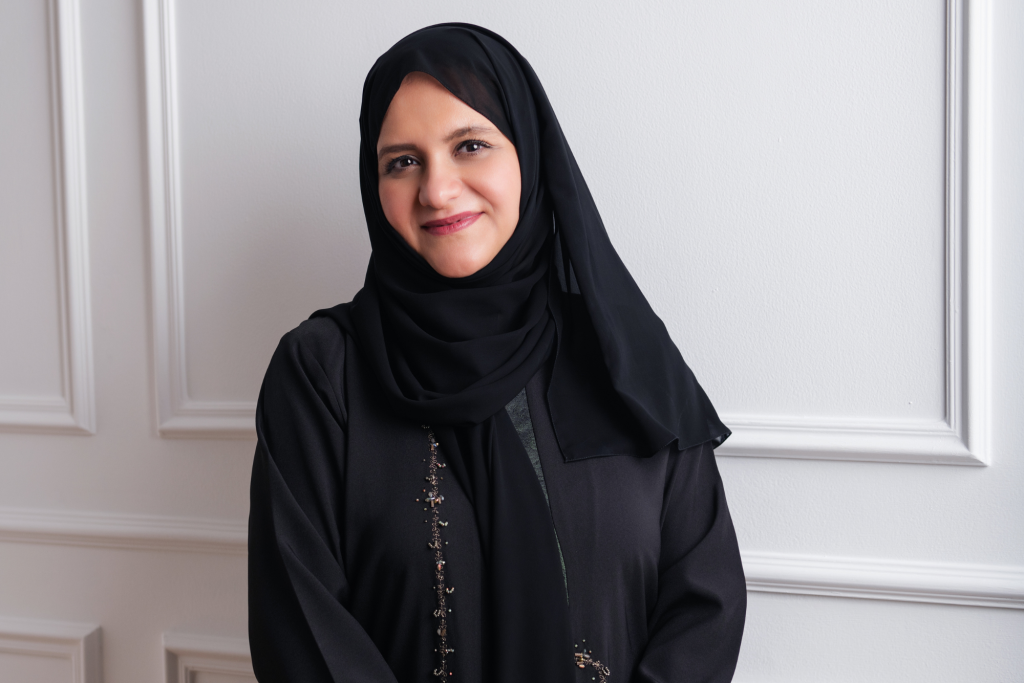
For Budoor Khaled, Founder of Datafirst Solutions Analysis Services, this was not a challenge she encountered overnight. It was one she had watched persist throughout more than 18 years working in data and analytics. Businesses were generating and collecting significant amounts of information, yet many continued to struggle with the same fundamental question: how could that data be translated into insights that lead to better decisions?
That persistent gap became the foundation for Datafirst.
The company was built around a straightforward premise: make data simpler, more accessible and ultimately more valuable to the businesses using it. As artificial intelligence increasingly changes what organizations can do with that data, Datafirst’s work has expanded into a much bigger conversation about how businesses can use both data and AI to rethink the way they operate.
Yet Budoor’s approach remains grounded in the principle that led her to entrepreneurship in the first place. Technology should not determine the problem a company tries to solve. The problem should determine how technology is used.
The problem comes before the technology
The rapid rise of AI has created enormous interest in what the technology can do. For founders building in the sector, that excitement can also create pressure to start with the technology itself.
Budoor takes the opposite approach.
“Don’t start with the technology; start with a real problem worth solving,” she says. “Stay close to your customers, understand what they actually need, and don’t wait for everything to be perfect. Build, learn, adapt and keep moving.”
That philosophy is reflected in the way Datafirst works with its customers. Rather than approaching data and AI as abstract technological capabilities, the company focuses on the business challenges behind them. Those challenges have ranged from finding new revenue opportunities and improving operations to reducing food waste.
For Budoor, the value lies in what happens after the technology is applied: whether it solves a meaningful problem and whether the result can be measured.
“We built trust by staying close to our customers and focusing on real problems they face every day,” she explains. “For us, data and AI are not just about technology; they are about solving real problems and creating measurable impact.”
It is a distinction that has become increasingly important as AI moves further into mainstream business conversations. For Datafirst, adopting AI is not an objective in itself. The opportunity lies in understanding where it can improve decisions, redesign processes and create real business value.
From industry expertise to entrepreneurship
Deep technical and industry experience may have given Budoor a clear view of the problem she wanted to solve, but building a company around that insight required an entirely different set of capabilities.
Entrepreneurship placed her across almost every part of the business. Sales, delivery, product and operations all became part of the founder’s role, alongside the smaller details that inevitably come with building a company.
Among those responsibilities, one challenge stood out: building the right team.
For Budoor, learning to prioritize, adapt quickly and trust other people became an important part of moving from experienced industry professional to entrepreneur. Building Datafirst was no longer only about what she could personally deliver. It was also about creating a team that believed in the vision and could grow with the business.
That transition also required becoming more comfortable with something entrepreneurs encounter constantly: not knowing exactly what comes next.
If her younger self could see her today, Budoor believes one of the biggest surprises would be how her relationship with uncertainty has changed.
“I always had ambition, but building Datafirst taught me that you don’t need to have everything figured out before you start,” she says. “You learn, adapt and grow along the way.”
It is an insight that captures an important part of the founder experience. Expertise can provide a starting point, but building a business requires a willingness to keep learning beyond it.
The ecosystem around the entrepreneur
No founder builds entirely alone, and for Budoor, the community surrounding Datafirst has been an important part of its journey.
Through the Sharjah Entrepreneurship Center (Sheraa), Datafirst gained access to networks, connections and opportunities as the company continued to grow. Just as importantly, being part of a community of entrepreneurs and mentors gave Budoor access to different perspectives.
“Sheraa has been a great support throughout the journey, especially through the network, connections and opportunities it gave us access to,” she says. “Being surrounded by other founders and mentors also helped us get different perspectives and opened doors as we continued to grow Datafirst.”
For an entrepreneur moving from industry expertise into company-building, that surrounding network can become part of the learning process itself. Budoor’s experience with Sheraa reflects the role an entrepreneurship ecosystem can play beyond individual programs or interventions: connecting founders with people, perspectives and opportunities that complement what they are building themselves.
In Datafirst’s case, that support became part of a broader journey of learning how to build the company, strengthen the team and prepare the business for its next stage.
When the founder cannot remain at the center
As a company grows, another challenge begins to emerge: the qualities that help a founder start a business are not always the same ones needed to make that business less dependent on them.
For Budoor, one of the least visible sacrifices of entrepreneurship has been time.
Building Datafirst has demanded significant time and energy, but it has also taught her that simply continuing to give more of both is not a sustainable model for growth. The founder eventually has to create the systems that allow the company to operate without requiring their involvement in everything.
“Time is probably the biggest sacrifice,” she says. “Building a company requires a lot of time and energy, but also the discipline to step back and build the right systems so everything doesn’t depend on you.”
That balance between doing the work and building a company capable of running and growing without its founder has been one of the hardest parts of the journey.
It also marks an important shift in how Budoor thinks about leadership. Building the right team is only one part of the equation. The other is learning to trust that team and create the structures that allow people to take greater ownership as the company grows.
RELATED: New AI Longevity Research Lab Set to Open at Dubai Science Park
AI is moving faster than many organizations are ready for
While Datafirst has been evolving as a company, the market around it has also changed significantly.
AI is advancing rapidly, and Budoor sees a growing gap between what the technology can enable and how prepared some organizations are to use it.
For her, the debate has therefore moved on.
“The challenge is no longer whether to adopt AI, but how to adopt it responsibly,” she says.
As customers become more open to using AI, Budoor has also seen greater recognition of the importance of AI governance, trust and appropriate controls.
This is central to Datafirst’s view of the future. The company sees data as the foundation and AI as the intelligence built on top of it. But the potential goes further than using AI to make existing processes more efficient.
Budoor sees an opportunity for organizations to rethink and reengineer how they operate around data and AI. That could mean redesigning processes, identifying opportunities differently and ultimately creating new forms of business value.
In this view, the next phase of AI adoption is not simply about adding new technology to an existing business. It is about asking what the business could do differently because that technology now exists.
Building from the UAE, with ambitions beyond it
For Budoor, the next stage of Datafirst’s story is increasingly international.
Asked what would make her proudest five years from now, her ambition is clear: seeing Datafirst grow from the UAE into an international company.
The UAE’s position and ambitions in AI form part of that vision. Budoor wants Datafirst to contribute by building data and AI solutions from the UAE, expanding them into international markets and creating impact globally.
It is a significant ambition, but one that remains connected to the same idea that inspired Datafirst in the first place.
Before the company, there was a problem Budoor had observed repeatedly throughout her career. Before the ambition to expand internationally, there was a decision to build something that could address that problem. And before AI became one of the most discussed technologies in business, there was the understanding that technology only becomes valuable when it solves something that matters.
That principle continues to shape both the company and the entrepreneur behind it.
For Budoor, building Datafirst has meant learning to move before everything is perfect, surrounding the company with the right people and perspectives, and gradually building a business that can grow beyond its founder. It has also reinforced a lesson that feels particularly relevant in an era defined by rapid advances in AI: the technology may change, but meaningful innovation still begins with understanding the problem.
This article is part of Entrepreneur Middle East’s support for the Entrepreneurship Resilience Fund by Sheraa, a grant-based initiative designed to support startups based in Sharjah and companies within Sheraa’s portfolio.
Businesses have access to more data than ever before. The harder question is whether they know what to do with it.
For Budoor Khaled, Founder of Datafirst Solutions Analysis Services, this was not a challenge she encountered overnight. It was one she had watched persist throughout more than 18 years working in data and analytics. Businesses were generating and collecting significant amounts of information, yet many continued to struggle with the same fundamental question: how could that data be translated into insights that lead to better decisions?

Entrepreneur Middle East Staff
Entrepreneur Staff