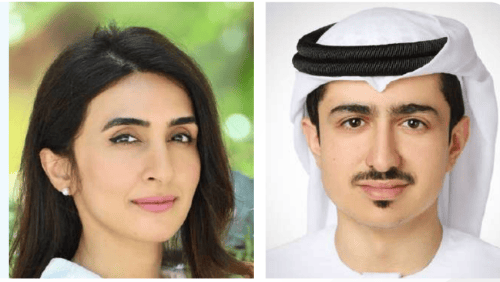
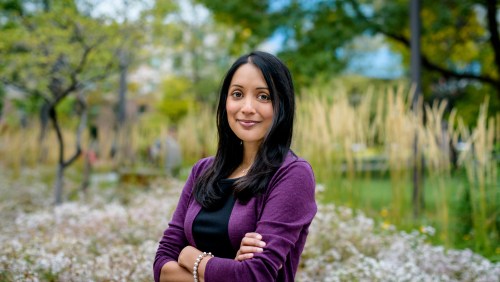
EGF and Sheraa Vice Chairperson Najla Al Midfa: The UAE Economy Refuses to Pause
While many economies show early signs of hesitation under pressure, the UAE has continued to
move forward with clarity, confidence, and momentum.
Opinions expressed by Entrepreneur contributors are their own.
You're reading Entrepreneur Middle East, an international franchise of Entrepreneur Media.
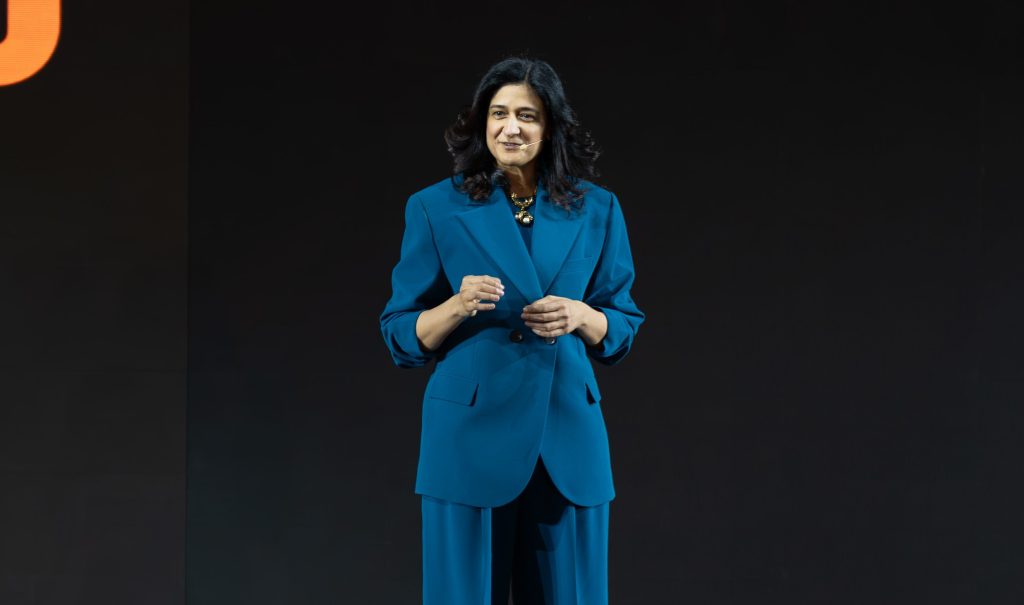
History shows that economies under pressure don’t collapse suddenly. They hesitate first. An expansion gets reconsidered. A supplier extends payment terms beyond what’s sustainable. An approved hiring decision gets suspended. None of these are headline-worthy, and individually each is manageable, but collectively they can change the direction of an economy in ways that are slow to appear and difficult to reverse.
Entrepreneurs feel the strain first. They don’t have the reserves of large corporations, which means that when conditions tighten, they’re the leading indicator, not the lagging one. Their decision to hire, to invest, and to commit is the earliest honest signal of whether an economy is moving or beginning to stall.
Which is why what I witnessed last week here in the UAE matters. Not as anecdote, but as a sign of an economy still very much in motion, and one that has no intention of pausing.
Last week, in the middle of one of the most volatile periods in recent regional memory, Emirates Growth Fund wired its investment to a new portfolio company.
Whereas in other places, funds may have reacted to the deteriorating news cycle by opting to “revisit timing”, we closed the deal unwaveringly. Not because we were indifferent to the risk, but because we had decided, long before this crisis began, what kind of investors we were going to be: bold, patient, and committed for the long run — through turbulence and through growth.
The same week, Sami Khoreibi, founder of Wisewell, a water tech startup I met through Sheraa, the Sharjah Entrepreneurship Center, told me he signed an offer letter for a Finance Director he had been recruiting for months. Where others may have counseled caution, he pressed ahead, because he is expanding into the US and knew he needed the leadership bench to support the vision.
Two decisions made in the same week, when the choice could have been to wait. Neither hesitated.
That confidence rests on a deep foundation that was years in the making.
It starts with leadership. From its founding, the UAE’s leaders have championed values such as ambition, coexistence, and an unshakeable belief in what this nation could become regardless of changing circumstances. When the attacks began, that foundation showed up in the most human way possible. UAE President His Highness Sheikh Mohamed bin Zayed Al Nahyan didn’t issue a statement. He walked through Dubai Mall, stopped to speak with residents, and posed for photos with children. He visited the injured in hospital and told them: you are among your family. The message wasn’t delivered in words alone. It was delivered in presence, and the country read it clearly.
It continues with systems that move when they are needed most. The Central Bank activated a five-pillar resilience package backed by over one trillion dirhams, keeping credit flowing, easing capital buffers, and ensuring banks could keep lending at exactly the moment entrepreneurs needed it most. That sits alongside years of deliberate architecture, with legal and regulatory frameworks designed to let entrepreneurs build, operate, and scale with clarity. The system worked precisely as intended, holding firm so that the people building within it could do the same.
And it is sustained by something harder to legislate: a contagious culture of confidence. The belief, held widely enough to become self-fulfilling, that this is a place worth building in, not despite the challenges, but because of what they reveal: that the ecosystem was built to endure.
What’s happening across the UAE right now is not the absence of pressure. It is the absence of hesitation.
The evidence is in the behavior. Businesses that could have renegotiated supplier contracts chose not to, and payments that could have been deferred were made on time. Commitments made in calmer times were honored when it mattered most. This is what preparation looks like when it finally meets the moment it was made for.
The coming months will not be easy. Capital will remain selective, costs will rise, and not every business will hold. That’s the deal when you’re building something. It is never linear, and always a negotiation with uncertainty, conducted in real time, with incomplete information and real consequences on both sides of every decision.
The question isn’t whether difficulty comes, because it always does. The question is whether the ecosystem surrounding an entrepreneur was built to help them keep going when hardship hits. In the UAE, the answer is an unequivocal yes.
That audacity seems to have drawn the ire of commentators around the world. What they fail to understand is that the structural confidence to keep going, and the refusal to be shaken, is not bravado. It is a disposition that was built over many years, through deliberate choices made long before this moment arrived. The absence of hesitation is not accidental. It is the whole point.
Related: Strength Through Uncertainty: A Founder’s View from the UAE
History shows that economies under pressure don’t collapse suddenly. They hesitate first. An expansion gets reconsidered. A supplier extends payment terms beyond what’s sustainable. An approved hiring decision gets suspended. None of these are headline-worthy, and individually each is manageable, but collectively they can change the direction of an economy in ways that are slow to appear and difficult to reverse.
Entrepreneurs feel the strain first. They don’t have the reserves of large corporations, which means that when conditions tighten, they’re the leading indicator, not the lagging one. Their decision to hire, to invest, and to commit is the earliest honest signal of whether an economy is moving or beginning to stall.
Which is why what I witnessed last week here in the UAE matters. Not as anecdote, but as a sign of an economy still very much in motion, and one that has no intention of pausing.

Najla Al-Midfa • Chief Executive Officer of Sheraa - Sharjah Entrepreneurship Center
Najla Al-Midfa is the Chief Executive Officer of Sheraa -Sharjah Entrepreneurship Center, a government entity... Read more