A Foundation Designed to Endure: Anax Holding’s Satish Sanpal Lays the Groundwork for Dubai’s Next Chapter
As geopolitical tremors rippled through global markets, Satish Sanpal, Founder and Chairperson of ANAX Holding, barely flinched. Here is why the man behind one of Dubai’s most dynamic property groups believes the UAE’s greatest chapter is still ahead
You're reading Entrepreneur Middle East, an international franchise of Entrepreneur Media.
This article is part of the cover story for the Entrepreneur Real Estate Leaders May 2026 Edition.
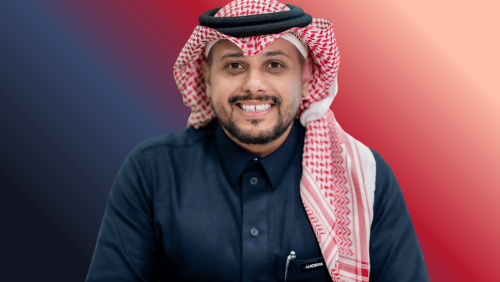
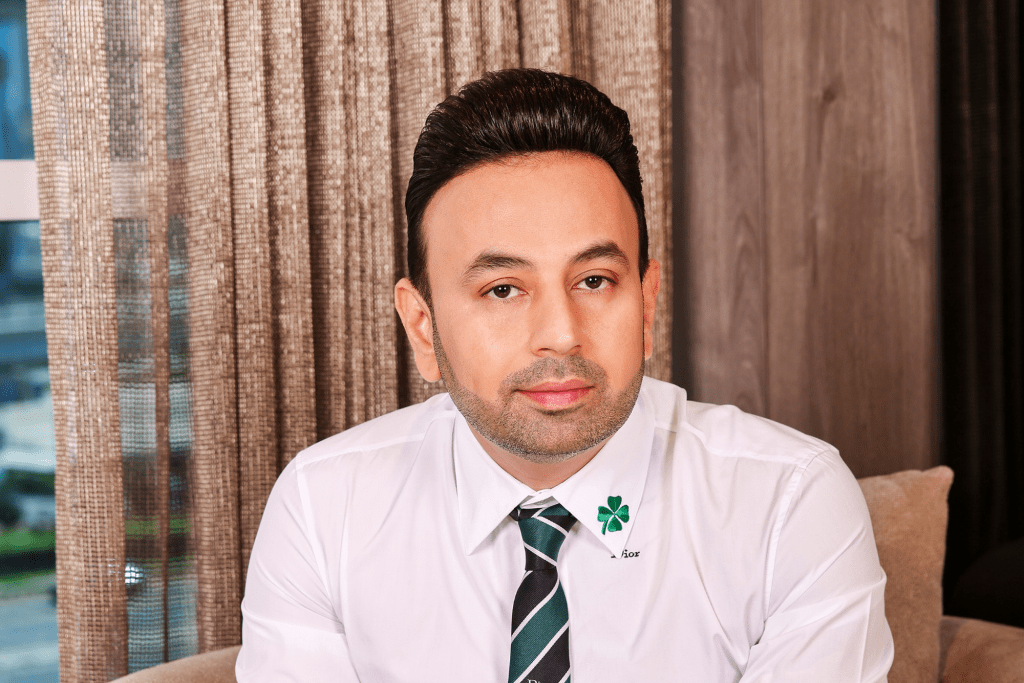
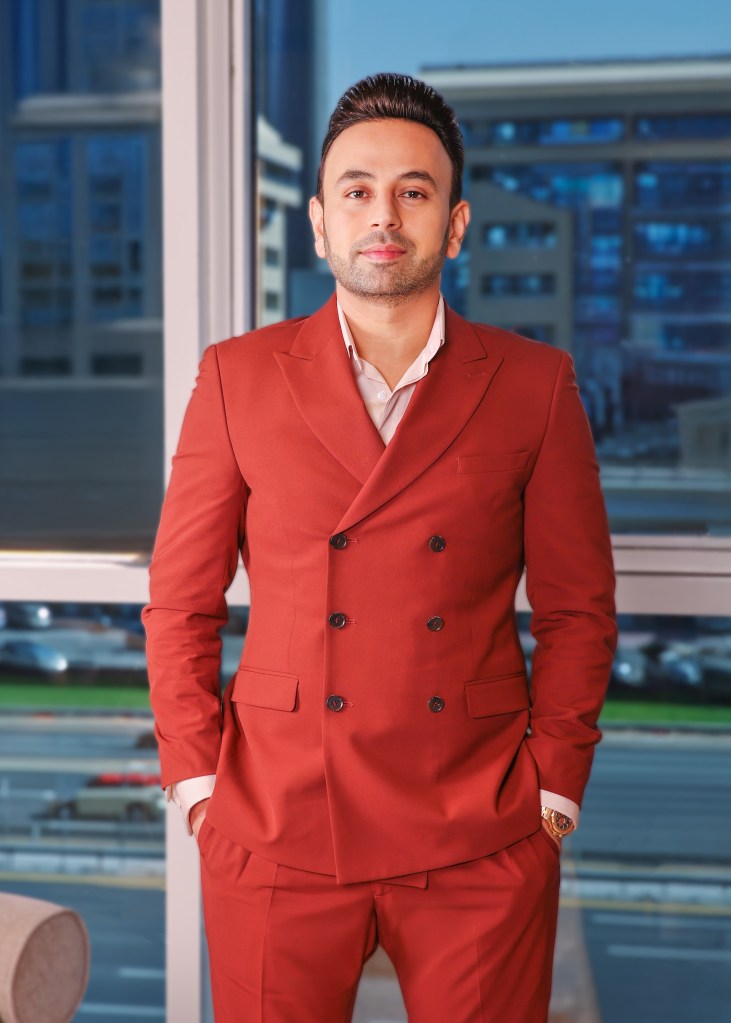
There is a particular kind of calm that comes only from experience. Satish Sanpal has it in abundance. The Founder and Chairperson of ANAX Holding sits with the unhurried confidence of a man who has watched Dubai reinvent itself multiple times — and backed it every time.
When recent geopolitical turbulence sent shockwaves through financial markets and caused more than a few investors to pause, Sanpal was not among those reaching for the exit. If anything, he was looking at the entry points. His optimism is not the breezy, unexamined kind. It is rooted in data, in the lived reality of building a business empire in the UAE, and in a forensic understanding of what actually drives this market.
And what it tells him, unambiguously, is that the story of Dubai real estate is far from over.
The numbers back him up. Dubai recorded its best-ever year for property transactions in 2024, with deal volumes surpassing AED 760 billion. The first quarter of 2026 continued that momentum, with off-plan sales hitting their highest monthly total of the year in April — a 4.2 per cent increase over the same month in 2025.
Population growth continues to underpin demand, with Dubai’s population having crossed the 3.8 million mark and the emirate targeting 5.8 million residents by 2040 under its Urban Master Plan. Against that backdrop, Sanpal’s confidence looks less like optimism and rather more like arithmetic.
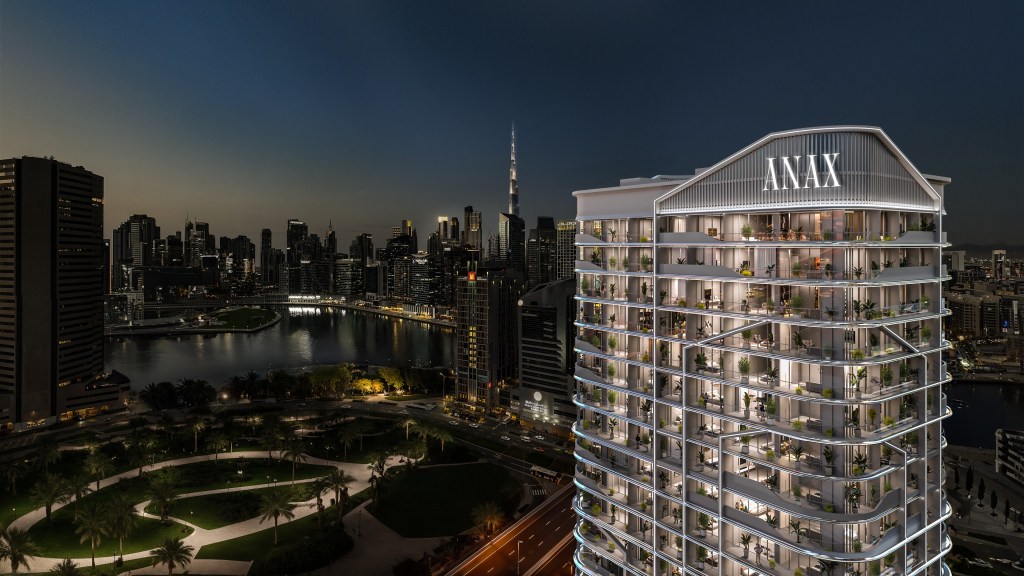
ANAX Holding was founded in 2018 as a diversified investment group spanning real estate, hospitality, and strategic investments, with ANAX Developments as its flagship vehicle in the property space. From its base in Dubai, the group has expanded its influence steadily, earning recognition from Forbes Middle East for its role in transforming the emirate’s luxury landscape.
Sanpal himself relocated to Dubai in his early twenties with modest investments, a sharp instinct for opportunity, and a determination to build something lasting. What he built is a group that today competes at the very top of the market.
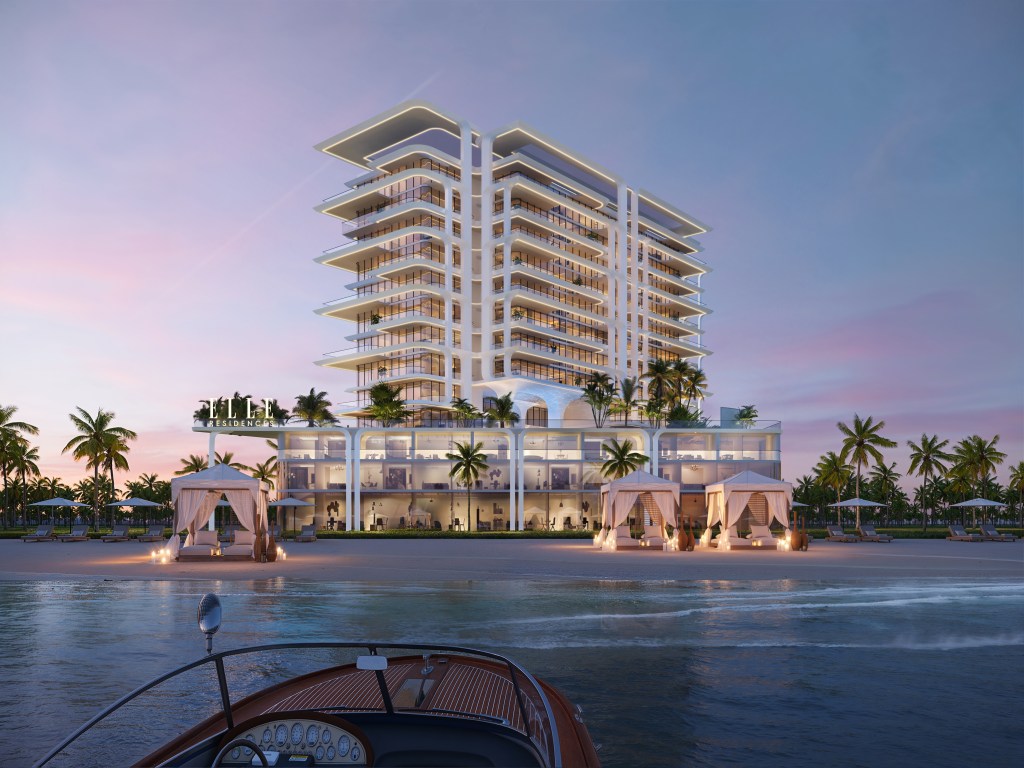
That trajectory reached a defining moment in September 2025, when ANAX Developments unveiled ELLE Residences Dubai Islands — the Middle East debut of the globally iconic ELLE brand in the residential property space.
Developed under a licensing agreement with Lagardère News, the project brought together two internationally acclaimed design firms: The One Atelier, known for luxury branded residences created for Dolce & Gabbana, Fendi Casa and Karl Lagerfeld, and ARQUINAUT, the creative studio founded by Gregory Martínez de Riquelme.
Situated on Dubai Islands with direct beachfront access, ELLE Residences offers one-bedroom apartments to four-bedroom townhouses spanning up to 4,592 square feet, with floor-to-ceiling glazing, wraparound terraces, panoramic Arabian Gulf views, rooftop pools, private spas, yoga decks, and a 24-hour concierge service. Sales officially opened on 26 September 2025 and the development is slated for completion by Q3 2027. ELLE Residences sold out shortly after launch.
It was, by any measure, a statement of intent. ELLE had previously entered the branded residential market in Miami, where its 180-residence Edgewater tower set a benchmark for lifestyle living in the United States. Dubai was next, and it was ANAX that earned the right to bring the brand to the region — a vote of confidence in both the company and in Dubai itself.
That launch came before the geopolitical disruption that would rattle global confidence in the weeks that followed.
The real test of any developer is not how they perform when conditions are perfect, but how they hold their nerve when they are not. On that measure, Sanpal is clear about what the past months have revealed. “The property market is transitioning from rapid growth to a more mature and stable phase,” he says. “What we have seen is a clear shift in buyer behaviour. Investors are taking longer to make decisions, transaction timelines have extended, and there is greater scrutiny on pricing, product quality, and developer credibility. But as a result, demand is becoming more disciplined and more genuine.”
That shift, he insists, is not a threat to the market. It is a sign of its growing sophistication. Dubai has long been characterised by fast money and speculative heat; the emergence of more deliberate, quality-conscious buyers represents a structural evolution rather than a cooling.
For a developer whose philosophy has always centred on quality and strategically located product, it is, if anything, a tailwind. “We are still seeing consistent activity, particularly in projects that offer clear value to today’s buyer,” Sanpal says.
“The demand is still there — it’s just more considered now, and that plays to our approach.”
This is a point worth dwelling on. Dubai’s real estate market is no longer the raw, speculative frontier it was in the early 2000s. It has been through cycles — the crash of 2008, the slowdown of 2015 to 2016, the pandemic-driven pause of 2020 — and has emerged from each one with stronger regulatory architecture, better-informed investors, and a broader international buyer base.
The introduction of long-term residency visas, the Golden Visa programme, and the continued liberalisation of business ownership rules have fundamentally altered the pool of people who see Dubai as home rather than simply a transaction. Those structural advantages were on full display when regional turbulence arrived.
Sanpal watched closely as the government moved quickly and decisively, maintaining the alignment between public institutions and the private sector that has become one of the UAE’s most distinctive competitive advantages. “We saw a strong alignment between leadership, institutions, and the private sector,” he says. “Decisions were made quickly, and there was clear direction — which is critical in moments like this. Achieving a high level of coordination between all parties is essential to preserving economic resilience and avoiding any setbacks for the private sector, and that translated into continued project execution and long-term planning across the sector.”
The speed and clarity of that response did not go unnoticed by investors. While some markets saw capital pause or rotate away in search of safer harbours, the UAE’s financial system remained stable, supported by prudent regulation, strong liquidity, and what Sanpal describes as proactive policy measures. The message sent to international capital was unambiguous: this is a jurisdiction that manages uncertainty, not one that is managed by it.
For investors who did pause — and there were some — Sanpal has a direct message. “Think long-term,” he says, simply. “We have seen the market slow down before, and it has consistently come back stronger. Q1 2026 confirmed that Dubai’s fundamentals remain intact. For investors, this is where the opportunity lies — there is more flexibility in pricing and payment plans today, and that level of negotiating leverage is unlikely to exist once the market strengthens again.”
The global conversation about capital allocation has, if anything, intensified the focus on the Gulf. In a world where yield is scarce, regulatory certainty is precious, and geopolitical risk is everywhere, the UAE’s combination of economic fundamentals, proactive governance, and a genuinely transparent regulatory framework looks increasingly rare.
“The region benefits from a combination of strong economic fundamentals, proactive governance, and a business environment that consistently attracts capital,” Sanpal says. “The regulatory framework and infrastructure here provide a level of transparency and execution certainty that investors value. The UAE is moving forward steadily and remains one of the world’s most trusted destinations in which to live, work, and do business.”
It is a view backed by the flow of institutional capital into the emirate. The past three years have seen a wave of family offices, sovereign wealth-adjacent funds, and international high-net-worth individuals establish a permanent footprint in Dubai — drawn not just by tax efficiency but by the quality of infrastructure, the stability of the legal system, and a lifestyle offer that has matured considerably. Private school places, world-class healthcare, direct long-haul flight connectivity, and a cultural scene that has expanded dramatically all play their part.
ANAX itself is a beneficiary and a driver of that evolution. The group has expanded its team, brought in new leadership, and is continuing to build its pipeline in prime areas of Dubai. New project launches are in the pipeline for 2026 across several strategic locations — a signal that, whatever the short-term noise, the company is firmly focused on the years ahead.
“Even amid volatility, our strategy has been to stay the course and continue investing in future growth,” Sanpal says. “This has not stopped well-positioned developers from continuing with launches, construction, and planning.”
Beyond the commercial logic, there is something in Sanpal’s story that speaks to a larger truth about Dubai. He arrived as a young man with ambition and not much else, built his network through years of careful relationship-building, and turned that foundation into a group that is now featured by Forbes Middle East and counted among the emirate’s most prominent property voices.
His journey is, in miniature, the journey of the city itself — relentlessly forward-looking, built on international talent and capital, and underpinned by a governance model that has consistently prioritised long-term credibility over short-term convenience.
He speaks, too, about what a market that is truly built to last actually looks like — and leaves little doubt that he believes Dubai fits the definition. “A market that is truly built to last comes down to a few key factors: strong regulatory frameworks that enforce discipline through each cycle, consistent policies that can absorb global disruption without changing direction, and infrastructure that is planned well ahead of demand,” he says. “The UAE fits that definition. As a long-term resident of Dubai, I have seen this first-hand, alongside a consistent focus on the safety and wellbeing of citizens and residents.”
Sanpal’s personal philanthropy runs alongside his commercial ambitions. Through the Sanpal Foundation, he supports initiatives in food security, education, and community development — an expression of the philosophy that success, in his view, is incomplete unless it creates impact beyond the balance sheet.
His efforts have been recognised with the Loomba Foundation Award, presented by Lady Cherie Blair, for dedication to social impact and empowerment. Looking ahead, his conviction is total. Over the next 24 months, ANAX will continue its upward trajectory, with investment across its ventures, an expanded team, and new pipeline projects in prime Dubai locations. For Sanpal, the question of where to place capital is not complicated.
“My conviction remains firmly in the UAE,” he says. “When you look at the fundamentals and long-term trajectory, it’s hard to see a more compelling place to be over the next 24 months. We are confident in where the market is heading.”
In a world full of uncertainty, that is the kind of clarity that capital finds hard to resist. And if the past two decades of Dubai’s story have proven anything, it is that Satish Sanpal has a habit of being right.
This article is part of the cover story for the Entrepreneur Real Estate Leaders May 2026 Edition.
There is a particular kind of calm that comes only from experience. Satish Sanpal has it in abundance. The Founder and Chairperson of ANAX Holding sits with the unhurried confidence of a man who has watched Dubai reinvent itself multiple times — and backed it every time.
When recent geopolitical turbulence sent shockwaves through financial markets and caused more than a few investors to pause, Sanpal was not among those reaching for the exit. If anything, he was looking at the entry points. His optimism is not the breezy, unexamined kind. It is rooted in data, in the lived reality of building a business empire in the UAE, and in a forensic understanding of what actually drives this market.

Entrepreneur Middle East Staff
Entrepreneur Staff