Built To Last: Innovate Living CEO Kareem Fahmy on Why Dubai’s Property Boom is Bigger Than a Market Cycle
When the region’s headlines darkened and lesser markets flinched, the CEO of Innovate Living kept building.
You're reading Entrepreneur Middle East, an international franchise of Entrepreneur Media.
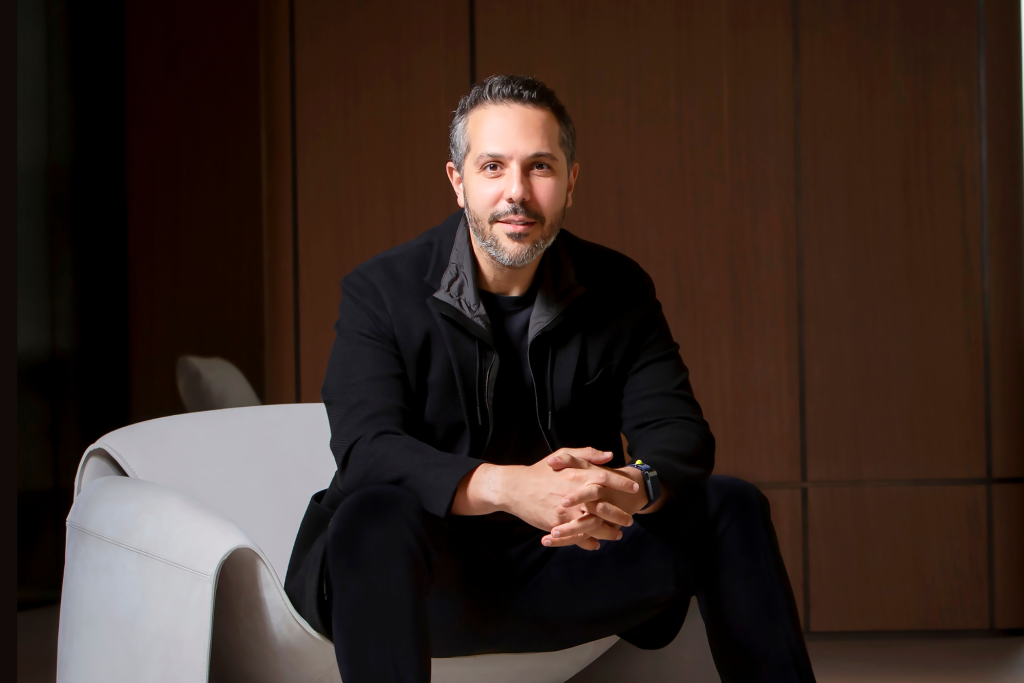
This article is part of the cover story for the Entrepreneur Real Estate Leaders May 2026 Edition.
There is a particular kind of calm that comes with genuine conviction. Kareem Fahmy has it.
The founder and CEO of Innovate Living — the boutique ultra-luxury developer that has spent 17 years reshaping what is possible on Palm Jumeirah and beyond — speaks about Dubai’s property market the way a seasoned architect talks about a building he knows is properly load-bearing. Not with bravado. With certainty.
That certainty has been tested. In the weeks following the regional conflict that sent jitters through international markets in spring 2026, some investors paused. Some developers went quiet. Fahmy did neither. He continued construction on Innovate Living’s expanding portfolio, pressed ahead with the company’s landmark AED 1.4 billion (USD 400 million) pipeline on Dubai Islands, and co-launched Omoria Private Residences — the world’s first ultra-luxury boutique residential hospitality brand — with H.E. Dr. Omar BinSulaiman.
For a company that built first and sold second because the pipeline projects are off plan, it was business as usual. Which, in a rattled market, is an act of profound confidence. The numbers behind his confidence are formidable. Dubai’s real estate transactions rose 36.5 per cent year-on-year in 2024. Prime residential capital values climbed 6.8 per cent that year, with projections pointing to growth of up to 9.9 per cent in 2025. Dubai has consistently ranked among the world’s top three cities for ultra high-net-worth population growth.
Against that backdrop, a period of regional instability was always going to be a bump, not a cliff. Fahmy agrees — and goes further. He describes the weeks of the crisis with a striking specificity — not the view from a boardroom, but from the street.
‘From safety measures to flight delays, from accommodation to food and general support, the authorities moved quickly to make life easier for residents, visitors and families,’ he says. ‘Security was present. Services continued. Life carried on with a remarkable sense of calm.’
He is particularly pointed about the role of international media. ‘Much of the noise came from outside the country, which exaggerated the situation significantly,’ he says. ‘For those of us living here, the reality felt very different. Children were still playing outside, people were still going about their daily lives, and there was no sense of chaos. I personally had plans to travel, but I chose to stay because I felt completely comfortable and safe here.’ It is the kind of testimony that is difficult to manufacture.
Fahmy founded Innovate Living in 2008 — one of the more courageous moments to launch a luxury property company, given that the global financial crisis was simultaneously detonating across world markets. That contrarian instinct has defined the company ever since. Where others see disruption, Innovate Living sees design opportunity.
The company’s track record bears this out. Its first major project came in 2012, when Innovate Living acquired plots on Palm Jumeirah and began constructing a series of signature villas. N Frond Villa followed, with 6,150 square feet of space, private swimming pools and jacuzzis. Villa Allegra, on the G Frond — a grand 28,000-square foot residence inspired by Southern Californian architecture — was listed at AED 230 million and sold in 2024.
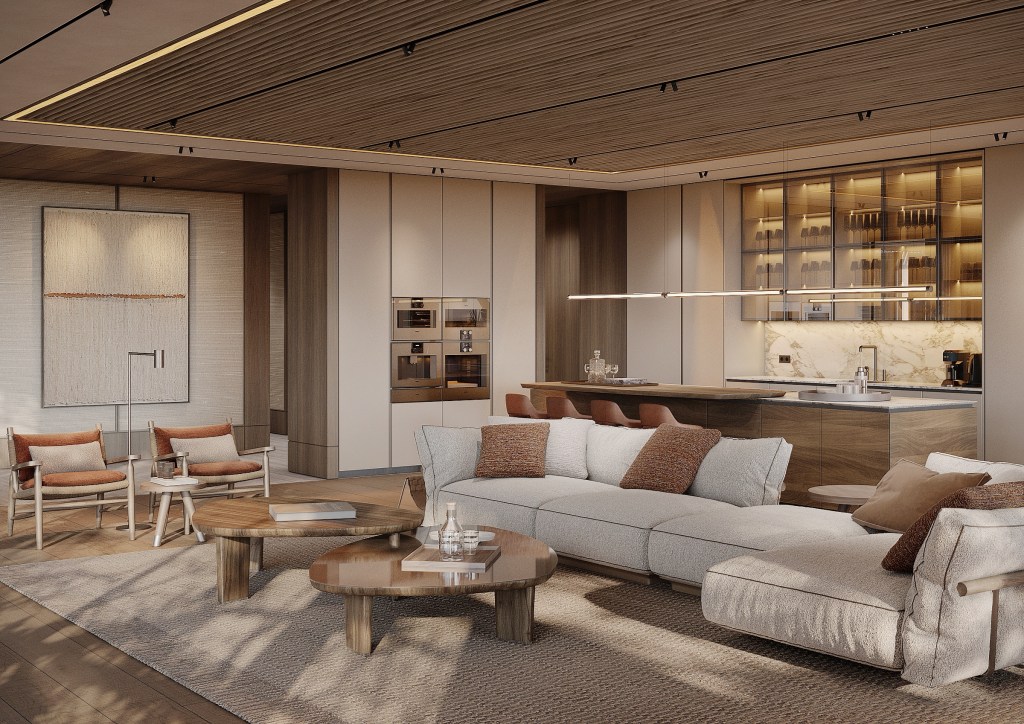
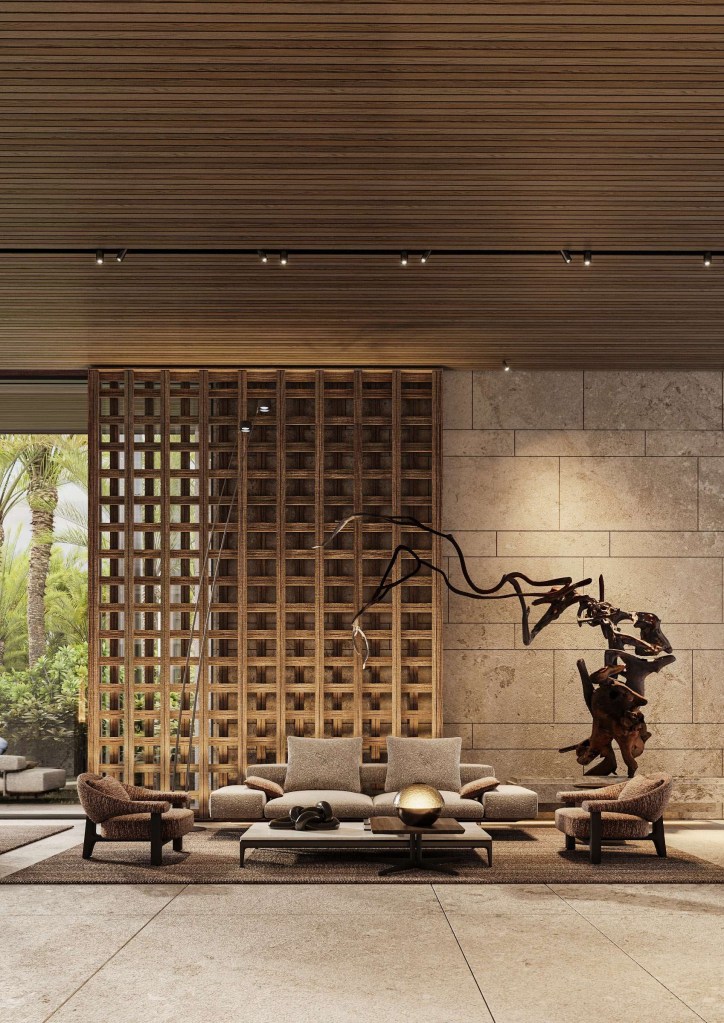
Each project sold before broader competitors caught up. Each set a new standard. The flagship Palme Couture Residences — launched in 2018 on Palm Jumeirah — crystallised Innovate Living’s brand proposition: a curated collection of just 14 residences, combining three bedroom apartments, four-bedroom townhouses and five-bedroom duplexes, every detail sourced from Italy’s finest furniture houses, every finish chosen with the obsessive attention to material quality that has become the company’s signature.
As Innovate Living itself puts it, the company resonates with those who ‘recognise quality at a glance.’ That is not a boast. It is a business model. The 2026 turbulence caused by the conflict, Fahmy says, was a real-time test of the market’s structural depth. And the market, on his reading, passed.
‘We were actively looking for investment opportunities and distressed sales, but there were very few,’ he admits. ‘Some sellers reduced slightly, and some people delayed final payments around handovers, but that can happen in any market cycle.’ The important distinction, he argues, is psychological. ‘People are moving with caution, not panic.’
That distinction matters enormously to developers reading demand signals. Panic selling distorts markets. Cautious pausing is merely the market breathing. And what Fahmy saw in this period was the UAE’s resident base — people who had built lives, businesses and families here — concluding, fairly quickly, that there was nowhere better to go.
‘Some people left temporarily, but many of them came back,’ he says. ‘Others who considered leaving realised very quickly that it is extremely difficult to find the same lifestyle, safety and opportunity elsewhere.’
This brings him to a question that serious investors have been asking for two decades: are the UAE’s property fundamentals actually real, or is the market permanently one crisis away from correction?
Fahmy’s answer is unequivocal. ‘The fundamentals did not change,’ he says. ‘If anything, this period reminded people how strong they are.’
The data supports him. Population growth in Dubai continues on a trajectory that keeps housing demand structurally ahead of supply in the premium segments. The UAE’s Golden Visa programme — expanded and refined in recent years — has created a new class of long-horizon resident investors who behave very differently from speculative buyers.
Infrastructure investment shows no sign of slowing: the Dubai Metro Blue Line is under construction, new beaches and green urban spaces are being developed, and the planned new international airport — designed to handle 260 million passengers annually, with 400 gates and five runways — is a statement about the scale of ambition at work here. Fahmy nods to all of it, and adds a dimension that pure economics misses.
‘The UAE’s leadership keeps finding new and compelling ways to attract people, families, businesses and capital,’ he says. ‘The government also continues to create initiatives that support families, businesses and residents — from family-focused programmes to payment facilities, SME support, visa flexibility and infrastructure expansion. The direction is clear. The UAE is not standing still. It is constantly improving.’
He makes an observation that will interest portfolio investors particularly: the market was, in his view, running hot before the disruption hit. ‘We were already expecting some form of market correction because the market had been moving very fast,’ he says.
The turbulence, in other words, may have delivered organically what the authorities might otherwise have had to engineer — a pressure release valve on a market that had been sprinting.
Against this backdrop, Innovate Living’s own business model has proved its worth. The company’s philosophy — finish first, sell second — is notably unusual in a market where off-plan sales dominate and developers routinely sell units that exist only as renders.
‘Our previous projects were completed before being sold,’ Fahmy explains, ‘and that gives us a very different level of confidence and control.’ This discipline extends to how the company approaches risk at the outset of every project. ‘When we start any project, we think carefully about risk, market cycles and possible disruption,’ he says. ‘So this period did not change our direction.’
The company continued construction throughout. ‘We believe that once our products are ready, they will be worth significantly more because of their quality, delivery and positioning.’ That confidence in long-run value creation is now being channelled into the company’s most ambitious bet yet.
In March 2025, Innovate Living announced the acquisition of prime waterfront plots on Dubai Islands — a 17-square kilometre, five-island development spanning more than 20 kilometres of beach, aligned with the Dubai 2040 Urban Master Plan — laying the foundation for an AED 1.4 billion development pipeline.
‘Dubai Islands is an extraordinary opportunity for us to bring ultra-luxury waterfront living to life in a way that reflects our core values of being intentional, curated and design-led in everything we do,’ Fahmy said at the time.

The acquisition positions Innovate Living at the epicentre of Dubai’s next generation of premium residential development. Simultaneously, the company has co-founded what may be its most conceptually adventurous venture.
Omoria Private Residences — launched in partnership with H.E. Dr. Omar BinSulaiman — bills itself as the world’s first ultra luxury boutique residential hospitality brand, rooted in the Japanese philosophy of Omotenashi: the art of anticipatory, unconditional hospitality. Its first operational project, Omoria Palme Couture on Palm Jumeirah — formerly known as Palme Couture Residences, now reimagined and elevated under the Omoria brand — will mark the brand’s arrival.
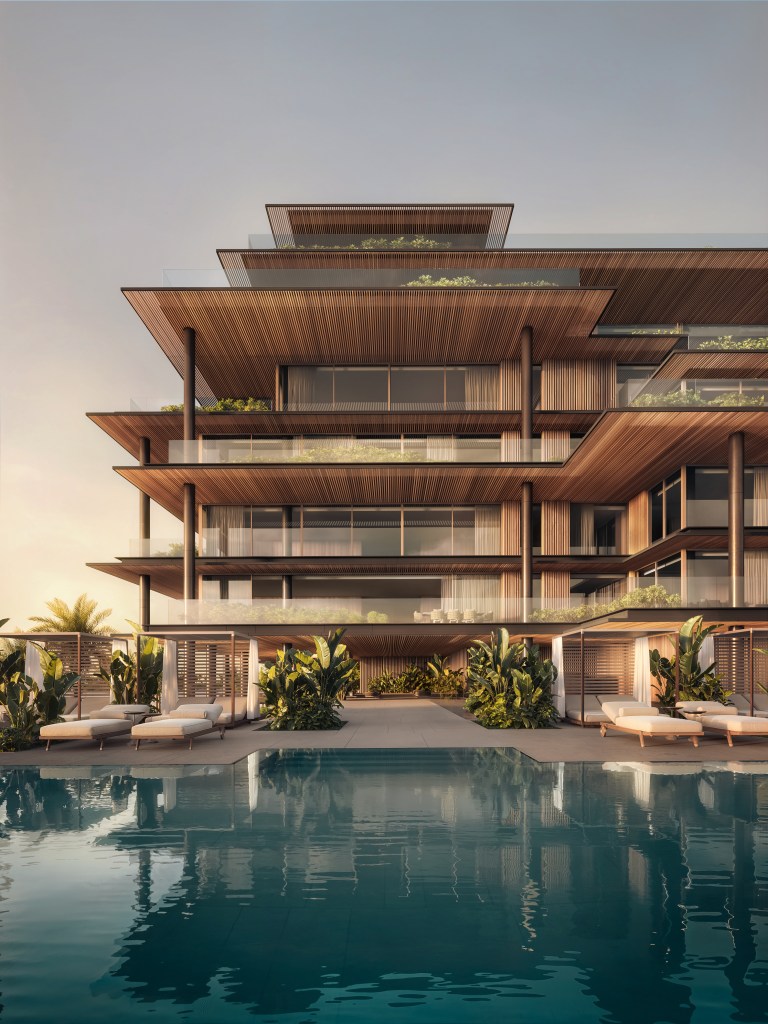
The debut project on Dubai Islands, meanwhile, will be the first to carry Omoria’s DNA from concept to delivery: a limited collection of waterfront residences with direct beach access, bespoke Italian interiors, a penthouse-level padel court with panoramic sea views, infrared saunas, salt rooms, ice baths, oxygen therapy, and centralised air and water purification systems.
It is, in conception, a wellness resort that you own rather than visit. The ambition behind Omoria reflects something Fahmy returns to throughout the conversation: the idea that Innovate Living’s work is not merely commercial, but participatory in a larger national project.
‘Working in the UAE is not only about profit,’ he says. ‘At Innovate Living, we want to be part of the growth of this country. We want to create products that matter, that contribute to the UAE’s vision, and that reflect the values of innovation, creativity and difference.’
He draws an explicit connection between the company’s philosophy and the leadership model he observes around him. ‘The leadership always finds solutions. They treat people like family. They build infrastructure not only for business, but for health, happiness, safety and quality of life.’
He cites the Dubai Fitness Challenge, the Year of Giving, the Year of the Family, SME support initiatives. ‘That matters because it shows that the government cares about every layer of the economy. We try to follow the vision of the leaders here: to always improve, to always innovate, and to always think about how to create something meaningful.
For international investors currently watching the UAE from a distance, Fahmy’s message is not a sales pitch. It is something closer to an invitation. ‘Come and see it for yourself,’ he says. ‘Do not make a decision about this market from outside, based only on headlines or secondhand opinions. Visit the UAE. Walk the streets. Meet the people. Study the numbers. Look at the safety, the infrastructure, the quality of life and the scale of opportunity.’
He argues that the UAE’s competitive position as a global capital magnet is structural, not circumstantial. ‘As a business hub, the infrastructure here is mature, holistic and advanced. You have safety, connectivity, logistics, regulation, lifestyle, technology, talent and opportunity all in one place. The UAE is not following the direction of the world; in many ways, it is already ahead.’ The global conversation about where capital belongs, he suggests, keeps returning the same answer. ‘Global investors want stability, growth, safety and long-term vision. The UAE offers all of that.’
His personal conviction for the next 24 months is unambiguous. ‘I believe the rebound will be stronger than many people expect,’ he says. Investors who are present and committed, he suggests, will be disproportionately rewarded. ‘Those who stay positioned, or who come back quickly, are likely to benefit the most.’
He pauses before offering what might be his cleanest encapsulation of the UAE’s enduring appeal to high-conviction investors. ‘Once international investors truly see what has been built here,’ he says, ‘the question will no longer be whether to invest in the UAE. It will be: why did they wait so long. It is a line that lands because he has earned the right to say it.’
Seventeen years of building in Dubai — through the financial crisis, through Covid, through regional turbulence — has given Kareem Fahmy a reading of this market that is not theoretical. Innovate Living’s villas on Palm Jumeirah stand as proof. The AED 1.4 billion Dubai Islands pipeline stands as commitment. Omoria stands as vision.
The UAE, he says, is ‘built on vision, faith, ambition and execution.’ For a man who has spent nearly two decades turning exactly those qualities into bricks, glass and sea views, that is not a slogan. It is a business plan.
This article is part of the cover story for the Entrepreneur Real Estate Leaders May 2026 Edition.
There is a particular kind of calm that comes with genuine conviction. Kareem Fahmy has it.
The founder and CEO of Innovate Living — the boutique ultra-luxury developer that has spent 17 years reshaping what is possible on Palm Jumeirah and beyond — speaks about Dubai’s property market the way a seasoned architect talks about a building he knows is properly load-bearing. Not with bravado. With certainty.

Entrepreneur Middle East Staff
Entrepreneur Staff