The Foundation Never Moves: Ali Al Gebely on Why Demand in UAE Real Estate Market Held Firm Amid Uncertainty
As geopolitical uncertainty rattled global markets, Ali Al Gebely — Founder and Chairman of ONE Development and heir to a 44-year regional legacy — never wavered. Here, he explains why the UAE is not just weathering the storm but is built to make the storm irrelevant.
You're reading Entrepreneur Middle East, an international franchise of Entrepreneur Media.
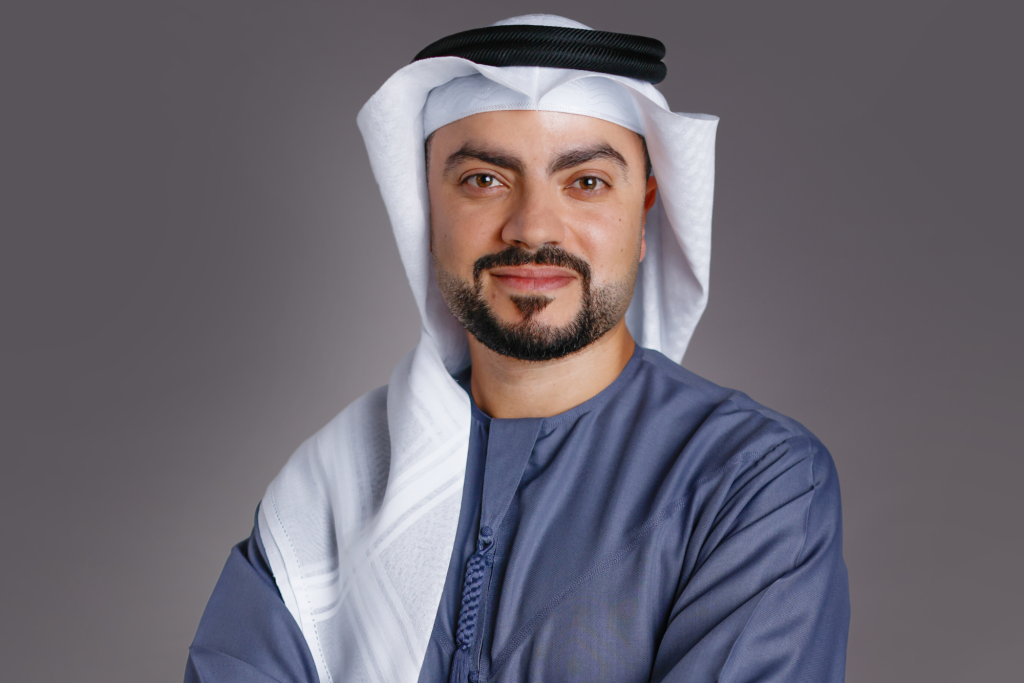
There is a version of the story that says the UAE real estate market wobbled. That conversations dried up, confidence drained away, and investors sat on their hands waiting for the clouds to pass. Ali Al Gebely would like to correct the record.
“Demand never disappeared,” he says, with the unhurried certainty of a man who has been watching markets for a very long time. “It simply paused for a moment of reassessment — before returning with clarity.” Pause. Return. Clarity. These are not words you typically hear in the middle of a geopolitical storm. But then, Ali Al Gebely is not a typical developer.
As Founder and Chairman of ONE Development, the fast-ascending UAE developer whose AED 4.5 billion portfolio spans three cities and represents one of the most ambitious build programmes in the region, Al Gebely carries more than a business card when he walks into a room. He carries 44 years of Al Gebely Holding’s legacy: a conglomerate that has navigated energy markets, infrastructure cycles, and regional upheaval across decades and geographies. When Al Gebely says he has “watched multiple market cycles,” it is not a talking point. It is biography.
That depth of experience matters now more than ever. The past several weeks have placed the Middle East under a spotlight that no developer asked for. Conflicts in neighbouring theatres, the reverberations of global interest rate volatility, the constant low hum of geopolitical uncertainty — all of it has landed on the desks of developers, investors, and buyers who were, many of them, already deep into commitments in one of the world’s fastestgrowing real estate markets. How the sector responds — and how its leaders speak — says everything about where it is truly headed.
For Al Gebely, the response has been characteristically direct. “Every challenge reveals what truly matters,” he says. “What this moment has revealed about the UAE is that its market is not built on speculation — it is built on structure.”
The numbers behind UAE real estate’s rise are by now well-rehearsed — but they bear repeating in any honest assessment of what is at stake. Dubai’s real estate market recorded transactions worth over AED 500 billion in 2024. The emirate’s population has grown by more than 100,000 people in each of the past several years, driven by Golden Visa uptake, a post-pandemic flight-to-quality among high-net-worth individuals, and a regulatory framework that has been deliberately redesigned to attract and retain global capital. Abu Dhabi is not far behind: the capital has registered recordbreaking land and property transactions in consecutive years, with sovereign confidence flowing from Mubadala and ADQ-backed developments reshaping entire city districts. Against this backdrop, Dubai’s D33 economic plan targets a doubling of the emirate’s GDP by 2033 — a goal that requires, among other things, a real estate sector that does not merely keep pace, but leads.
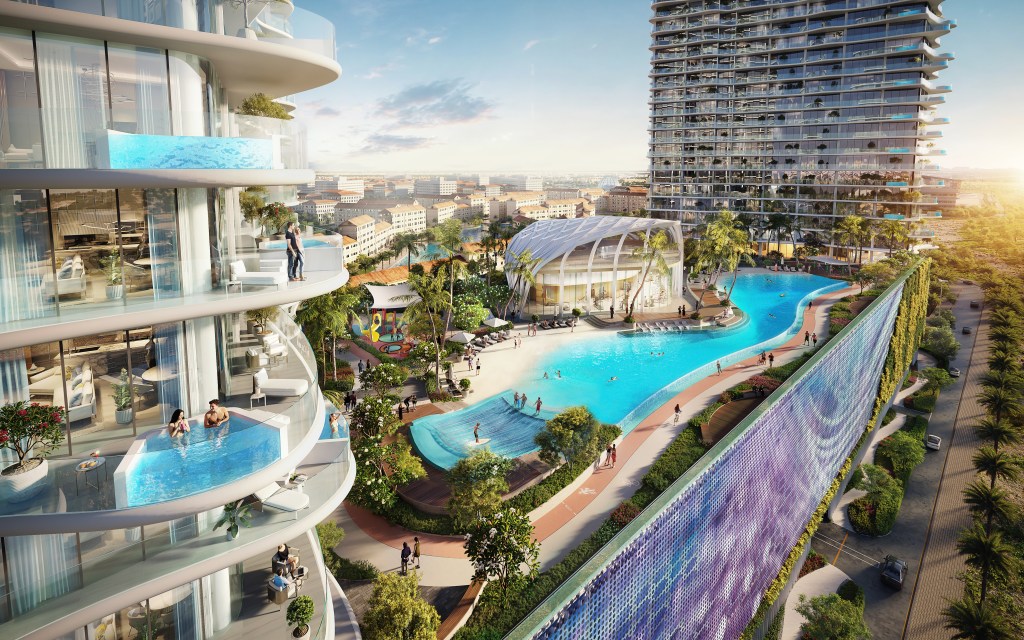
ONE Development is designed to do exactly that. Launched as a boutique developer with headquarters across Abu Dhabi and Dubai, the company has in a remarkably short time assembled a portfolio that its larger, longer-established competitors would not dismiss. Laguna Residence — its flagship — is a twintower development in Dubai’s City of Arabia valued at AED 2.4 billion and distinguished as the UAE’s first fully AI-integrated residential community. The project broke ground just 55 days after launch. DO Dubai Islands brings ONE’s design-forward, tech-integrated sensibility to Dubai’s newest waterfront destination, anchored by the innovative DO Hotels & Residences brand — the world’s first music-themed hotel concept, created in partnership with global superstar Amr Diab. And ONE Residence, the company’s debut in Abu Dhabi, is a 31-storey tower on Al Reem Island that has already made international headlines as the first residential building in the world to feature a fully integrated aerial mobility ecosystem, including rooftop access for eVTOL (electric vertical takeoff and landing) aircraft.
Together, they represent AED 4.5 billion in total projected valuation — and they were all launched within a single year.
“We are talking about a country with sustained population growth, world-class infrastructure investment, policy clarity, and a government that moves decisively when the moment demands it,” Al Gebely says. “That is not a combination you find in many markets in the world right now.”
Ask Al Gebely about the impact of the recent regional conflict, and he does not sidestep the question — but he refuses to allow it to define the narrative. “Honestly? Nothing changed that matters,” he says. “The UAE’s population is growing. Infrastructure investment continues at a pace that most countries can only aspire to. The regulatory environment — RERA, the framework around off-plan sales, investor protections — remains among the most robust in the world.”
He is right on the regulatory front. Dubai’s Real Estate Regulatory Authority has spent years building a framework that insulates investors from the worst risks of off-plan development — mandatory escrow accounts, inspection regimes, transparent registration. These mechanisms did not waver during the recent uncertainty. Nor did Abu Dhabi’s equivalent structures. More broadly, the UAE’s no-income-tax, no-capital-gains-tax environment continued to offer what no amount of geopolitical tension can erode: structural financial advantage.
“Dubai’s D33 plan is not a response to short-term turbulence,” Al Gebely says firmly. “It is a 10-year vision that transcends any headline cycle. In Abu Dhabi, the same discipline and long-term thinking applies.” He pauses, then adds the line that captures his entire worldview: “The noise was external. The foundation is internal. Foundations don’t move.”
Having watched markets through the global financial crisis of 2008-09 — which briefly sent Dubai property values plunging before the market remerged stronger and more regulated than before — Al Gebely understands both the anatomy of a genuine correction and the difference between structural damage and market sentiment. “Having been part of Al Gebely Holding’s 44-year journey across the region, I understand what real structural depth looks like in a market,” he says. “External noise comes and goes.”
At ONE Development’s three active projects, the engagement Al Gebely describes during the uncertain weeks was not the fevered churn of a seller’s market, nor the hollow silence of one in freefall. It was something more substantive — and, he argues, more encouraging. “The conversations remained engaging, with an improved quality and in-depth planning from our clients,” he says. “Serious buyers and investors used the circumstances to go deeper — to ask harder questions about delivery timelines, developer credibility, and long-term value creation. Those are exactly the conversations we want to be having.”
This is the characteristic that most distinguishes the UAE market of today from the one that existed fifteen years ago: the quality of the investor. Where the pre-2008 boom attracted speculative capital that moved at speed and with little due diligence, today’s buyers — particularly in the premium and super-prime segments — are sophisticated, patient, and increasingly focused on developer track record. In that environment, the question is not just whether a project sells, but who is selling it and whether they can deliver.
It is a distinction that plays directly to ONE Development’s strengths. Al Gebely has built the company around what he describes as “phased delivery”: a model designed to de-risk investment while maximising early-stage returns, supported by full pricing transparency, real-time investor dashboards, and governance structures that give buyers visibility at every project milestone. “We are not asking investors to take a leap of faith,” he says. “We are asking them to look at the evidence.”
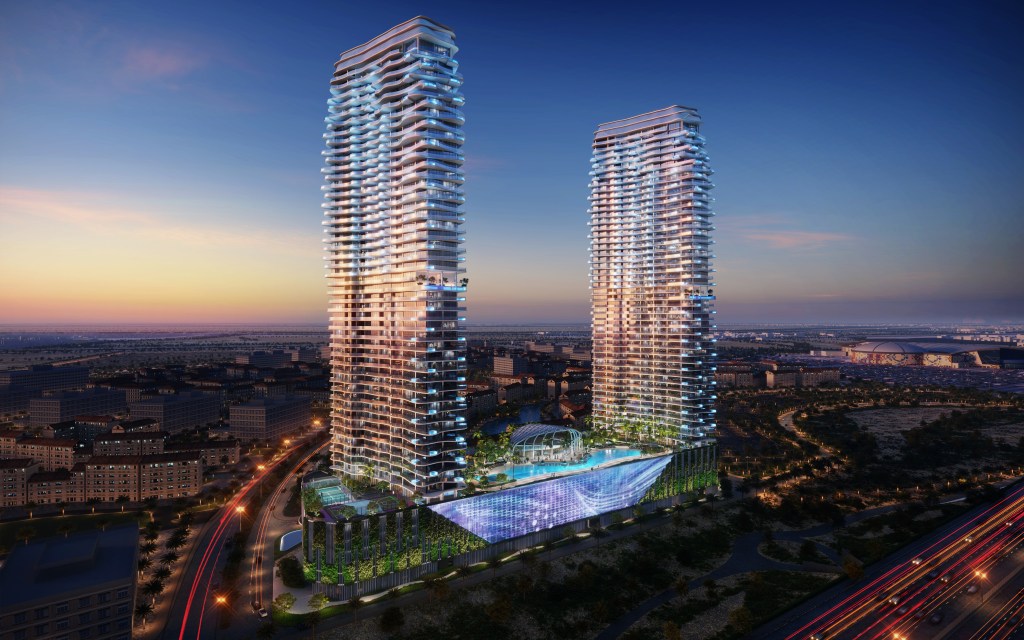
The evidence is, by any measure, compelling. Laguna Residence sold out rapidly following its spectacular launch at Dubai’s Coca-Cola Arena — an event that featured Amr Diab, Bollywood superstar Kareena Kapoor, and Egyptian actor Amir Karara, and set the template for the kind of aspirational, experience-first marketing that has come to define the ONE brand. The project, which features a podium-level sandy beach lagoon, over 40 amenity facilities, and a proprietary AI application that integrates facility management, smart appliances, and resident services into a single ecosystem, is on track for handover in Q4 of 2027. DO Dubai Islands followed, bringing the branded DO Hotels & Residences concept to the water. Then came ONE Residence in Abu Dhabi — launched at Emirates Palace in December 2024, with Kevin O’Leary — “Mr Wonderful” of Shark Tank fame — among the high-profile names drawn into ONE Development’s orbit.
“On track — and accelerating,” is how Al Gebely describes the state of the business today. “Our pipeline is intact. Our partnerships are intact. Our team has not slowed down for a single day.” He allows himself a rare moment of competitive candour: “If anything changed in that period, it is this: the market now has even more clarity about which developers are serious, which ones are structured, and which ones are built for the long term. We know which category we fall into — and so do our investors.”
There is a philosophical dimension to Al Gebely’s approach to development that goes beyond yield and returns. Ask him what a market “built to last” actually looks like, and he responds with a framework: population growth that drives sustained demand; governance depth that creates trust; infrastructure that outpaces development; policy adaptability; and a national vision that extends beyond any single business cycle. “The UAE fits every single criterion,” he says. “And then exceeds them.”
What further differentiates ONE Development within that market, he argues, is the distinction between building projects and building communities. “Communities require long-term thinking: walkability, wellness integration, digital infrastructure, sustainability pathways,” he says. “We embed AI end-to-end. We design for how people will want to live ten years from now — not just how they live today.”
At ONE Residence on Al Reem Island, that philosophy takes its most dramatic form. The 31-storey tower is the first residential building in the world to integrate an autonomous aerial mobility ecosystem — built in collaboration with Advanced Mobility Hub and powered by VertiHub — with rooftop infrastructure for eVTOL aircraft that goes beyond a headline feature to represent a genuine statement about the future of urban living. The inclusion of a drone logistics port for last-mile delivery is no less radical in its implications. In a country whose leadership has already committed to fully autonomous transport representing 25 per cent of all journeys by 2030, ONE Residence is not ahead of its time. It is precisely on time.
At Laguna Residence in City of Arabia, the AI integration operates at the infrastructure level — not layered on as a feature, but embedded into the building’s systems from the ground up. Smart watches allow residents to access amenities, control their environment, and manage services without ever reaching for a phone. The effect, Al Gebely describes, is a community where technology supports life rather than interrupting it.
Global smart-building market forecasts suggest the sector will exceed $570 billion by 2030. ONE Development is positioning itself not merely to participate in that growth but to define what it means in a residential context.
For investors still sitting on the fence — and Al Gebely is too experienced to pretend they do not exist — his message is unambiguous. “Stop waiting for certainty,” he says. “No market in the world can guarantee it today — and those who demand it first are often the ones left watching opportunity pass them by. The UAE does not promise certainty; it delivers clarity.”
The distinction is not semantic. Clarity of regulation means rules that are known, enforced, and investorprotective. Clarity of vision means a national strategy — Dubai D33, Abu Dhabi’s equivalent frameworks — that tells capital exactly where the country is heading and why. Clarity of execution means a government and a development sector that consistently deliver on what they announce. “When government acts with speed and coherence, it sends an assuring signal to the entire ecosystem — to developers, to investors, to international partners — that this is a market that is managed, not just monitored,” Al Gebely says.
He is visibly proud when he speaks of UAE leadership — and the tone is entirely genuine. “I am deeply proud to be building in a country led the way this one is led,” he says. “The vision, the decisiveness, the genuine care for people and for prosperity — it is something that cannot be manufactured. It is something that is felt every single day in the way the market responds, in the way businesses operate, and in the way the UAE presents itself to the world.”
For those who entered during previous moments of UAE uncertainty, the pattern is consistent: they look back and call it the best decision they made. “What are you waiting for that is more compelling than what is already in front of you?” Al Gebely asks, with the directness of someone who has never confused caution with wisdom. “In my experience, the investors who waited for perfect conditions missed the moment when conditions were, in fact, already perfect for them.”
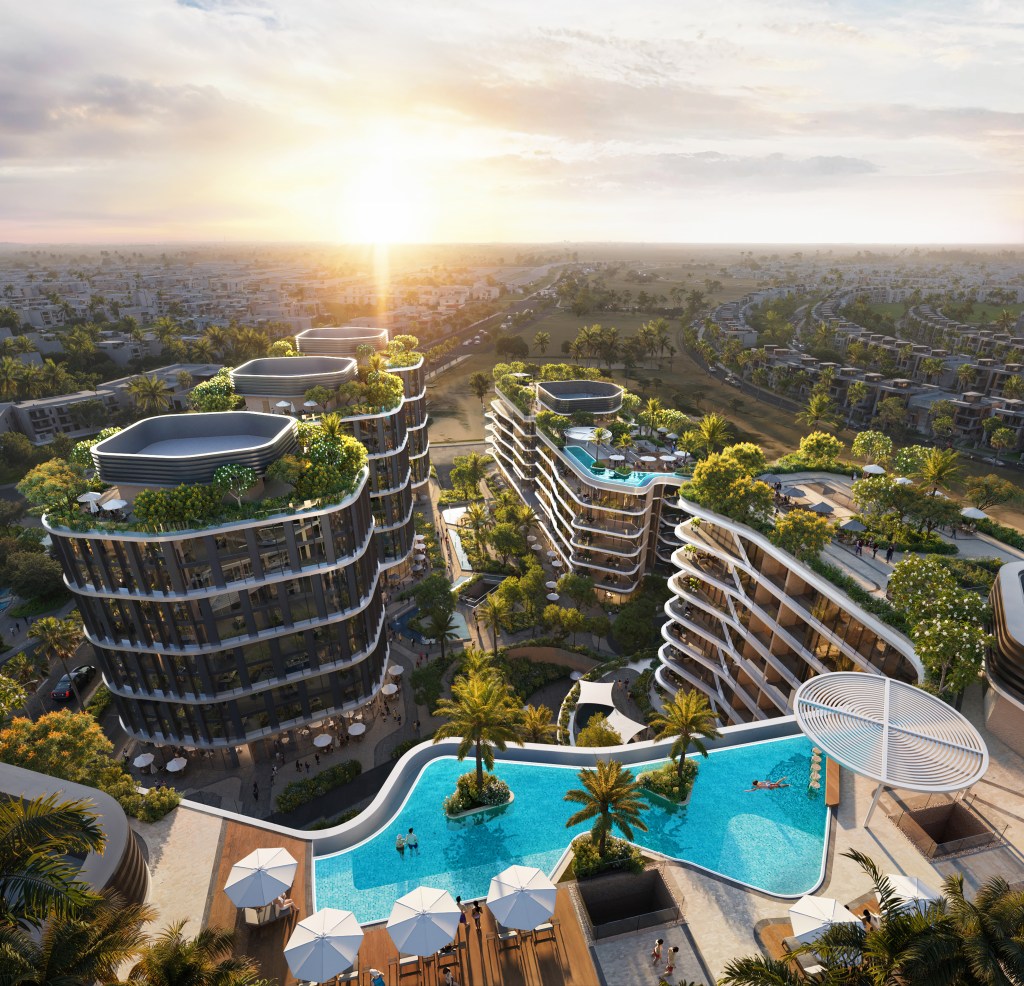
When Al Gebely describes the next phase of ONE Development’s growth, the ambition is striking even against the backdrop of what has already been achieved in a single year. Three upcoming projects in Abu Dhabi are in the pipeline. A landmark launch on Al Marjan Island in Ras Al Khaimah — one of the most hotly anticipated new real estate destinations in the region — is on the horizon. The expansion into Egypt is already under way: DO New Cairo, the company’s first project in the country, completed its first phase sell-out and has broken ground on its second phase, with excavation works started in April 2026. The growth roadmap extends further still: Saudi Arabia, Europe, London, Shanghai.
It is an international vision — but it is rooted in a local conviction. “My deepest conviction is in this country, in its leadership, and in the communities we are creating,” Al Gebely says. “Not just for investors — but for the people who will call these places home for generations to come.”
That framing — communities over projects, generations over cycles, conviction over sentiment — is what ultimately distinguishes Al Gebely and ONE Development from the headline noise of any given month. Markets rise and fall. Geopolitical weather fronts move through. And underneath it all, in the UAE, the foundations remain exactly where they were: solid, structural, and unmoved.
“When external noise creates hesitation elsewhere, capital starts looking for the one place that answers the question: where do the fundamentals actually hold?” Al Gebely says. “The answer keeps coming back here.”
He smiles — the quiet smile of a man who has been saying this for years and is growing accustomed to being proved right.
There is a version of the story that says the UAE real estate market wobbled. That conversations dried up, confidence drained away, and investors sat on their hands waiting for the clouds to pass. Ali Al Gebely would like to correct the record.
“Demand never disappeared,” he says, with the unhurried certainty of a man who has been watching markets for a very long time. “It simply paused for a moment of reassessment — before returning with clarity.” Pause. Return. Clarity. These are not words you typically hear in the middle of a geopolitical storm. But then, Ali Al Gebely is not a typical developer.
As Founder and Chairman of ONE Development, the fast-ascending UAE developer whose AED 4.5 billion portfolio spans three cities and represents one of the most ambitious build programmes in the region, Al Gebely carries more than a business card when he walks into a room. He carries 44 years of Al Gebely Holding’s legacy: a conglomerate that has navigated energy markets, infrastructure cycles, and regional upheaval across decades and geographies. When Al Gebely says he has “watched multiple market cycles,” it is not a talking point. It is biography.

Entrepreneur Middle East Staff
Entrepreneur Staff