The Next Chapter of Islamic Wealth: Connecting Values, Capital and Global Opportunity
Perhaps the biggest misconception that remains is that Islamic wealth management is relevant only to Muslim investors. Its underlying principles — transparency, responsible allocation of capital, disciplined investing and long-term stewardship — have much wider relevance.
Opinions expressed by Entrepreneur contributors are their own.
You're reading Entrepreneur Middle East, an international franchise of Entrepreneur Media.
For decades, Islamic wealth management has been associated primarily with providing Shariah-compliant financial solutions for Muslim investors. While that foundation remains unchanged, the market around it has evolved significantly. Today, Islamic wealth is increasingly part of a much broader global conversation around responsible investing, international diversification and the long-term creation and preservation of wealth.
This shift is being driven by changing investor expectations. Across the UAE and wider GCC, a younger generation of entrepreneurs, professionals, family business leaders and globally mobile investors is taking a more strategic approach to managing wealth. They are digitally connected, internationally minded and increasingly focused on preserving wealth across generations. Just as importantly, they want their investments to reflect both their financial objectives and their values.
This evolution is taking place against a much broader transformation in Islamic finance. Standard Chartered’s latest report, The Islamic Finance Connector Era, estimates that Islamic finance now represents approximately US$6 trillion in assets across nearly 100 jurisdictions. But scale alone tells only part of the story. Islamic finance is increasingly connecting pools of capital with investment opportunities across markets, reflecting its evolution from a predominantly country or regional proposition into a more globally connected financial ecosystem.
For wealth investors, this matters. Many of the principles that have long defined Islamic finance — transparency, prudent risk-sharing, responsible capital allocation and investment linked to real economic activity — increasingly resonate with investors beyond its traditional client base. Around the world, investors are seeking greater clarity over where their money is invested, stronger governance and strategies focused on sustainable, long-term value creation.
A changing wealth proposition
This is also changing the profile of today’s Islamic wealth client.
Clients are no longer simply asking whether an investment is Shariah-compliant. They want to understand how their portfolios can withstand market volatility, how they can diversify internationally, how technology can improve investment decisions and how they can build lasting legacies for future generations.
Entrepreneurs and business owners increasingly expect more than investment products. They are looking for trusted advisers who understand cross-border wealth, international investment opportunities, philanthropy and succession planning. Wealth management has therefore become significantly more holistic.
Recent periods of geopolitical uncertainty and market volatility have also reinforced the importance of diversification. Concentrating wealth within a single market or asset class can create unnecessary risk. International diversification is no longer simply an optional enhancement to a portfolio; it has become an important component of long-term wealth preservation.
The opportunity itself is becoming more international. Our latest research points to increasingly important investment and trade corridors centered around the GCC, China and the Middle East–Türkiye axis. For investors, these evolving connections reinforce the value of being able to access opportunities across markets, currencies and asset classes while maintaining a consistent investment philosophy.
Today’s investors can seek exposure across global equities, sukuk, commodities, funds, structured products and other asset classes, allowing them to participate in long-term growth while building diversified portfolios aligned with their investment principles.
This is where international connectivity becomes particularly valuable. Investors increasingly want global access combined with local expertise and trusted advice. Institutions that can bring together deep regional understanding with an international investment platform are therefore well positioned to serve the next generation of Islamic wealth clients.
At Standard Chartered, this philosophy is reflected in our Chief Investment Office’s disciplined multi-asset approach, combining strategic asset allocation with tactical investment insights to help clients navigate changing market conditions. Our Signature CIO Islamic Funds provide diversified exposure across global asset classes while remaining aligned with Shariah principles, recognizing that successful investing is ultimately about portfolio construction rather than individual product selection.
Technology with a human dimension
Technology is also transforming the wealth experience. Digital capabilities are making sophisticated investment solutions and insights more accessible and allowing investors to monitor portfolios and engage with advisers more seamlessly.
Yet technology has not diminished the importance of trusted human advice. If anything, it has elevated it. As investors gain access to more information and more investment choices, advisers have an increasingly important role in helping them interpret that information and make decisions consistent with their individual objectives, risk appetite and values.
The UAE’s opportunity
The UAE is particularly well positioned to help shape this next chapter.
Over the past two decades, it has established itself as one of the world’s leading financial centers, connecting capital between the GCC, Asia, Africa and international markets. Its regulatory framework, financial infrastructure and openness to innovation continue to attract investors, entrepreneurs and financial institutions from around the world.
This ambition is now reinforced by the UAE Strategy for Islamic Finance and Halal Industry, which seeks to strengthen the country’s position as a global Islamic finance hub. Among its 2031 targets are more than doubling Islamic banking assets to AED2.56 trillion and significantly expanding both local sukuk issuance and international sukuk listings in the UAE.
That creates an opportunity extending well beyond financial institutions. For entrepreneurs, family businesses, family offices and individual investors, a deeper Islamic financial ecosystem can create greater choice, innovation and connectivity to international capital and investment opportunities.
Perhaps the biggest misconception that remains is that Islamic wealth management is relevant only to Muslim investors. Its underlying principles — transparency, responsible allocation of capital, disciplined investing and long-term stewardship — have much wider relevance.
The next chapter of Islamic wealth will therefore be defined not simply by how large the industry becomes, but by how effectively it connects values with opportunity, and local wealth with global markets. Institutions that can combine international investment expertise, digital innovation, trusted advice and enduring values will be best placed to support the next generation of investors as they build wealth with confidence, resilience and purpose.
RELATED: Navigating Shifting Sands – Tracing the Fault Lines of H2 2026
For decades, Islamic wealth management has been associated primarily with providing Shariah-compliant financial solutions for Muslim investors. While that foundation remains unchanged, the market around it has evolved significantly. Today, Islamic wealth is increasingly part of a much broader global conversation around responsible investing, international diversification and the long-term creation and preservation of wealth.
This shift is being driven by changing investor expectations. Across the UAE and wider GCC, a younger generation of entrepreneurs, professionals, family business leaders and globally mobile investors is taking a more strategic approach to managing wealth. They are digitally connected, internationally minded and increasingly focused on preserving wealth across generations. Just as importantly, they want their investments to reflect both their financial objectives and their values.
This evolution is taking place against a much broader transformation in Islamic finance. Standard Chartered’s latest report, The Islamic Finance Connector Era, estimates that Islamic finance now represents approximately US$6 trillion in assets across nearly 100 jurisdictions. But scale alone tells only part of the story. Islamic finance is increasingly connecting pools of capital with investment opportunities across markets, reflecting its evolution from a predominantly country or regional proposition into a more globally connected financial ecosystem.

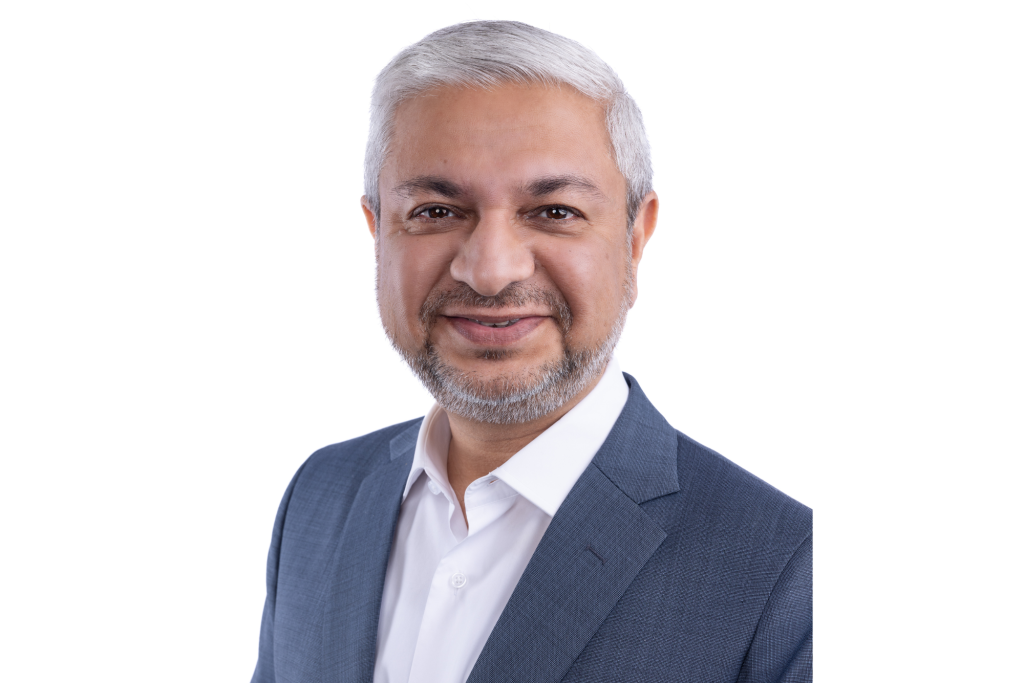
Ali Allawala • Head, Islamic Banking - UAE, and Head, Group Islamic Wealth and Retail, Standard Chartered
Ali Allawala is the Head of Islamic Banking-UAE, and Head of Group Islamic Wealth and... Read more