The Kris Ress Story: 18 Years Across Entrepreneurship, Technology and Global Markets
Speaking with people from different backgrounds gave him a close view of the same business problems appearing in different forms: weak customer value, poor incentive design, short term thinking and growth that looked impressive before the underlying structure was ready.
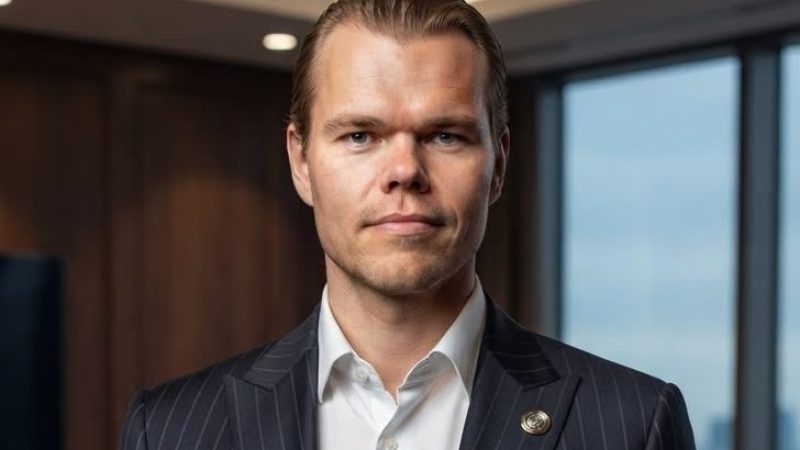
Kris Ress
You're reading Entrepreneur Middle East, an international franchise of Entrepreneur Media.
At 18, Kris Ress entered the world of direct sales expecting a business opportunity. What he found instead was an education in how people, incentives, technology and timing can either strengthen a company or quietly weaken it. Eighteen years later, those lessons still shape how the Estonian entrepreneur, now based in Dubai, thinks about building.
Kris describes his earliest years in business as a period of intense learning. Direct sales taught him how to build teams, communicate ideas, understand customer acquisition and see how distribution can create leverage. It also exposed him to a recurring tension: the priorities that drive short term activity are not always the same ones that create a durable company.
That tension became one of the themes running through his career.
Alongside his commercial experience, Kris says he studied information technology and economics in Estonia. The combination pushed him to look beyond growth figures and sales performance. He wanted to understand whether a product worked, whether the technology behind it could support the promise being made and whether customers had a real reason to keep using it after the excitement faded.
His technical curiosity gradually widened his focus from distribution into digital assets, financial technology and digital systems. It also made him more skeptical of opportunities where the commercial story moved faster than the underlying product.
A planned trip to India became another turning point. Kris traveled there after choosing not to continue with one business opportunity and remained for roughly two years. He explored traditional businesses, worked on import and export activity and built relationships in a market very different from Estonia.
India broadened his understanding of entrepreneurship. Business was no longer a single model or market. It was a process of adapting to different customers, cultures and operating conditions while deciding which principles should remain unchanged.
By late 2016, Kris and a business partner had decided to build rather than continue searching for the right opportunity. Their interests sat at the intersection of organized distribution and emerging digital technology. Kris was interested in whether technology could become useful enough for ordinary people to transact, communicate and participate more easily.
That focus developed into a broader philosophy around practical utility.
Kris says his teams worked on a range of technology concepts alongside their commercial activities. The experience produced an uncomfortable lesson: advanced technology does not automatically create a viable market. A product can work technically and still arrive before customers understand why they need it.
For Kris, being early can be an advantage in research and a disadvantage in adoption. Founders can become so absorbed in what technology is capable of doing that they overlook whether people are prepared to change their behavior. Timing, in his view, is therefore part of innovation itself.
His work also took him across international markets, where he spent years delivering training, presentations and educational sessions to entrepreneurial communities. Speaking with people from different backgrounds gave him a close view of the same business problems appearing in different forms: weak customer value, poor incentive design, short term thinking and growth that looked impressive before the underlying structure was ready.
Those experiences strengthened one of his central principles: sustainable distribution starts with a satisfied customer.
Incentives can accelerate growth, but Kris does not believe they can compensate indefinitely for a weak product experience. When a business becomes too focused on the mechanics of distribution, scale can hide structural problems rather than solve them.
That thinking now sits alongside his emphasis on long term business building. Kris says he prefers reinvesting into products, systems and communities rather than extracting as much value as possible from a successful period. The principle is about judging short term opportunities against what they may do to the business several years later.
His career has also included significant setbacks that forced him to reassess what could be rebuilt and what should be left behind. His approach is persistence with judgment: remain committed to the objective while accepting that a particular strategy or structure may no longer be the right one.
Today, Kris is based in Dubai and continues to work across technology, finance and entrepreneurship, customer acquisition and innovation. He does not want to build a celebrity identity around his work. The positioning he prefers is quieter, centered on substance, technical curiosity and the ability to keep learning across changing markets.
After 18 years, the strongest thread in Kris Ress’s story is not one company, one technology or one market. It is the discipline of asking better questions before growth becomes the goal. Does the customer receive real value? Does the technology solve a useful problem? Is the market ready? Is the structure strong enough to last?
For Kris, experience matters when it improves judgment. Everything else is history.
At 18, Kris Ress entered the world of direct sales expecting a business opportunity. What he found instead was an education in how people, incentives, technology and timing can either strengthen a company or quietly weaken it. Eighteen years later, those lessons still shape how the Estonian entrepreneur, now based in Dubai, thinks about building.
Kris describes his earliest years in business as a period of intense learning. Direct sales taught him how to build teams, communicate ideas, understand customer acquisition and see how distribution can create leverage. It also exposed him to a recurring tension: the priorities that drive short term activity are not always the same ones that create a durable company.
That tension became one of the themes running through his career.

Entrepreneur Middle East Staff
Entrepreneur Staff