The New Entrepreneurial Frontier Connecting AI, FinTech And HealthTech
As AI, FinTech and HealthTech increasingly converge, a new category is beginning to take shape: Longevity FinTech. Dmitry Kaminskiy explores how this emerging space could redefine the way we manage wealth, health, risk and longer lifespans.

Longevity FinTech
You're reading Entrepreneur Middle East, an international franchise of Entrepreneur Media.
As artificial intelligence reshapes industries, a potentially powerful new business category is emerging at the intersection of finance, health and human longevity. Could “Longevity FinTech” become one of the defining entrepreneurial opportunities of the next decade?
For years, artificial intelligence, financial technology and healthcare innovation have largely been discussed as separate growth stories. But as these industries mature, the lines between them are beginning to disappear.
FinTech is becoming more intelligent and personalized. Healthcare is becoming more predictive and data-driven. Wearables are generating an unprecedented stream of information about the human body, while advances in preventive medicine are shifting the focus of healthcare from treating illness to identifying risks before they become serious.
Now, another question is emerging: what happens when these systems begin to converge?
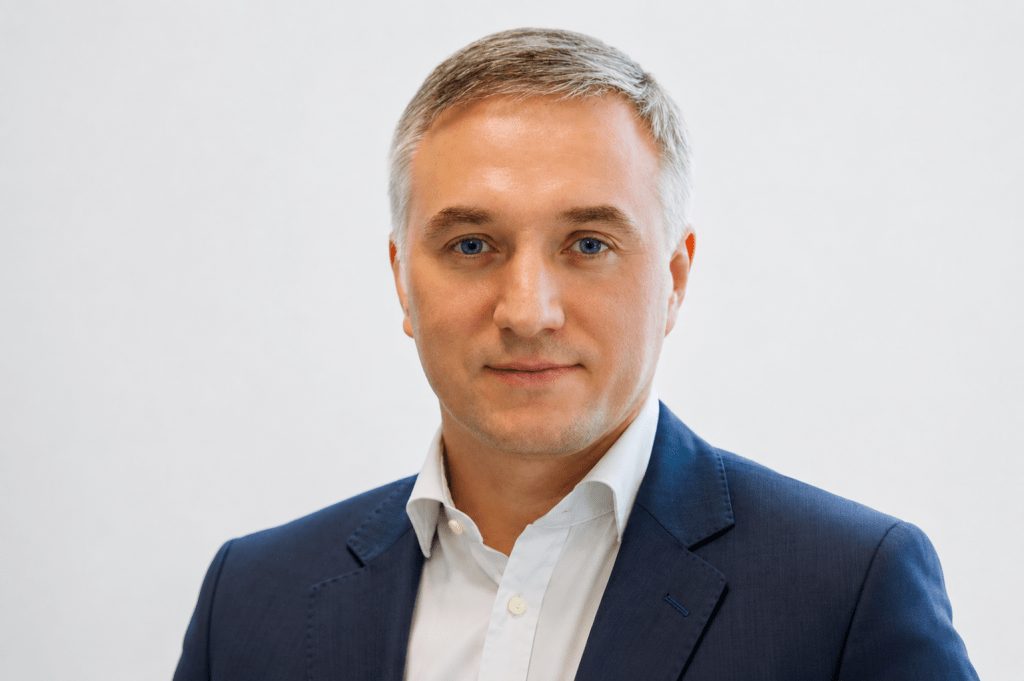
According to Dmitry Kaminskiy, Managing Partner of investment firm and market intelligence group Deep Knowledge Group, the answer could be the creation of an entirely new financial ecosystem built around not only how long people live, but how they finance those longer lives.
It is a concept he describes as Longevity FinTech: financial services designed around the intersection of wealthspan and healthspan.
The premise is relatively simple. As people live longer, traditional approaches to wealth management, insurance, healthcare financing and retirement planning will increasingly need to evolve. Managing a 30-year retirement is fundamentally different from managing a 10-year one. Likewise, protecting someone’s financial assets while ignoring the health risks capable of eroding those assets may eventually become an outdated model.
For entrepreneurs and investors, that creates an opportunity to rethink the relationship between money, health and longevity.
The development reflects a broader transformation already taking place across financial technology.
Five or ten years ago, FinTech was commonly separated into distinct verticals: PayTech, RegTech, WealthTech, InsurTech, MarTech and, increasingly, AI. Today, many of the most sophisticated financial platforms combine several of these capabilities behind a single interface.
A consumer may simultaneously be using payment infrastructure, compliance technology, investment tools, personalization algorithms and artificial intelligence without consciously distinguishing between them. What matters is the experience: one platform capable of understanding and responding to multiple financial needs.
Kaminskiy describes this movement as a transition from fragmented technologies towards integrated “super-tech.”
Healthcare appears to be following a similar trajectory.
HealthTech, AgeTech, InsurTech, mobile health, preventive medicine, wearables and AI are increasingly intersecting. A smartwatch can track biometric information, an AI platform can interpret it, a healthcare provider can use it to inform treatment or prevention, and an insurer could eventually incorporate elements of the same data into risk modelling.
Connect financial services to that ecosystem, and the potential market expands considerably.
AI is already creating opportunities to improve diagnostics, personalize treatment and identify health risks earlier. From a financial perspective, however, the implications extend beyond healthcare itself.
Scaling these technologies requires investment. Their adoption creates new categories of risk. Their data creates new possibilities for insurance. Their users may need new savings, investment and financial planning products. And the businesses building them need sophisticated financial structures to move from research and pilot programmes into commercially sustainable companies.
In that sense, finance becomes part of the infrastructure enabling the longevity economy.
The economic case becomes particularly relevant in societies where people are already living longer.
Greater life expectancy creates a relatively straightforward challenge: financial resources have to last longer too.
But longevity planning is becoming about more than ensuring an investment portfolio survives retirement. Increasingly, the preservation of wealth and the preservation of health are becoming connected considerations.
Healthcare expenditure can significantly affect long-term financial security, while better preventive care may influence both quality of life and future financial requirements. For wealth managers, insurers, family offices and financial institutions, this creates room for products that treat health risk as part of long-term financial risk.
High-net-worth individuals and family offices are already taking a growing interest in biotechnology, preventive medicine, health optimization and longevity-related investments, Kaminskiy notes. As those markets mature, their relationship with wealth management could become increasingly direct.
This could eventually result in financial planning models that consider not simply a client’s age, assets and expected retirement date, but their projected health trajectory, potential medical expenditure and expected lifespan.
The implications for insurance may be even more significant.
AI’s ability to analyse increasingly large and diverse sets of health information could enable more sophisticated assessments of individual risk. Wearables, medical records and other health data could potentially help insurers improve underwriting, anticipate health trends and develop products that are much more closely tied to individual circumstances.
That could lead to new approaches to longevity insurance, wellness-linked financial products or savings products specifically designed around future health expenditure.
At the same time, it raises significant questions around privacy, data governance, fairness and regulation — questions the industry would need to address before such models could achieve mainstream adoption.
The convergence also creates opportunities on the investment side.
Wealth managers and asset managers are increasingly capable of giving investors exposure to sectors that were previously considered highly specialized, including biotechnology, diagnostics, HealthTech and longevity science.
As AI improves the ability to analyse healthcare trends, scientific developments and commercial data, financial institutions may also become better equipped to assess companies operating in these fields.
For investors, the opportunity is therefore not simply to fund another generation of healthcare startups. It is to identify the businesses building the infrastructure connecting health, data, insurance, financial services and longevity.
That could include everything from AI-powered preventive healthcare platforms and digital insurance businesses to wealth management products designed around longer lifespans.
Eventually, the biggest opportunity may lie in combining them.
Imagine a financial super-app that does more than track spending, savings and investments. It could also connect with wearable devices, monitor indicators relating to long-term health, incorporate insurance coverage, estimate future healthcare requirements and adjust financial planning accordingly.
The financial profile and health profile of an individual, historically treated as separate datasets, could begin to inform the same decision-making ecosystem.
That is the essence of Longevity FinTech.
Rather than creating financial services exclusively around wealth accumulation, the category would build them around the broader objective of sustaining both financial security and quality of life for longer.
The concept remains early, and whether it develops into a major commercial category will depend on several factors.
Clinical validation will be one of the most important. Healthcare remains a heavily regulated and understandably cautious industry, meaning AI-driven products will ultimately have to demonstrate that they work outside controlled environments. Technologies capable of producing impressive results in a laboratory or pilot programme must still prove they can deliver measurable benefits in real healthcare systems.
Data interoperability presents another hurdle.
AI systems become significantly more useful when they can analyse information from multiple sources, whether electronic health records, wearable devices, diagnostics or genomic data. If that information remains fragmented across incompatible platforms, many of the most ambitious use cases will struggle to scale.
The industry will also need evidence that AI is moving beyond experimentation and becoming embedded within everyday healthcare workflows.
And then there is capital.
One of the strongest signals that the market is moving from concept to commercial reality will be the arrival of sustained growth-stage investment. Early-stage funding demonstrates interest. Larger rounds, acquisitions, institutional participation and meaningful revenue demonstrate that an industry is becoming established.
For entrepreneurs, that transition could be particularly important.
Some of the biggest technology businesses of the past decade succeeded not because they created entirely new human needs, but because they connected previously fragmented services in dramatically more convenient ways.
Longevity FinTech could follow a similar path.
The building blocks already exist: AI, digital finance, wearables, preventive medicine, biotechnology, insurance and increasingly sophisticated health data. The entrepreneurial opportunity may lie in figuring out how to connect them.
If that convergence continues, the next generation of FinTech companies may no longer ask clients only how they want to manage their money.
They may also ask what kind of life they want that money to sustain — and for how long.
As artificial intelligence reshapes industries, a potentially powerful new business category is emerging at the intersection of finance, health and human longevity. Could “Longevity FinTech” become one of the defining entrepreneurial opportunities of the next decade?
For years, artificial intelligence, financial technology and healthcare innovation have largely been discussed as separate growth stories. But as these industries mature, the lines between them are beginning to disappear.
FinTech is becoming more intelligent and personalized. Healthcare is becoming more predictive and data-driven. Wearables are generating an unprecedented stream of information about the human body, while advances in preventive medicine are shifting the focus of healthcare from treating illness to identifying risks before they become serious.

Entrepreneur Middle East Staff
Entrepreneur Staff