The Invisible Butler: How “Living Algorithms” Are Redefining the 2026 Branded Residence
From AI-driven climate biometrics to the “car-to-couch” automated elevators of the Bugatti Residences, PropTech is no longer an amenity—it is the ultimate luxury.
You're reading Entrepreneur Middle East, an international franchise of Entrepreneur Media.
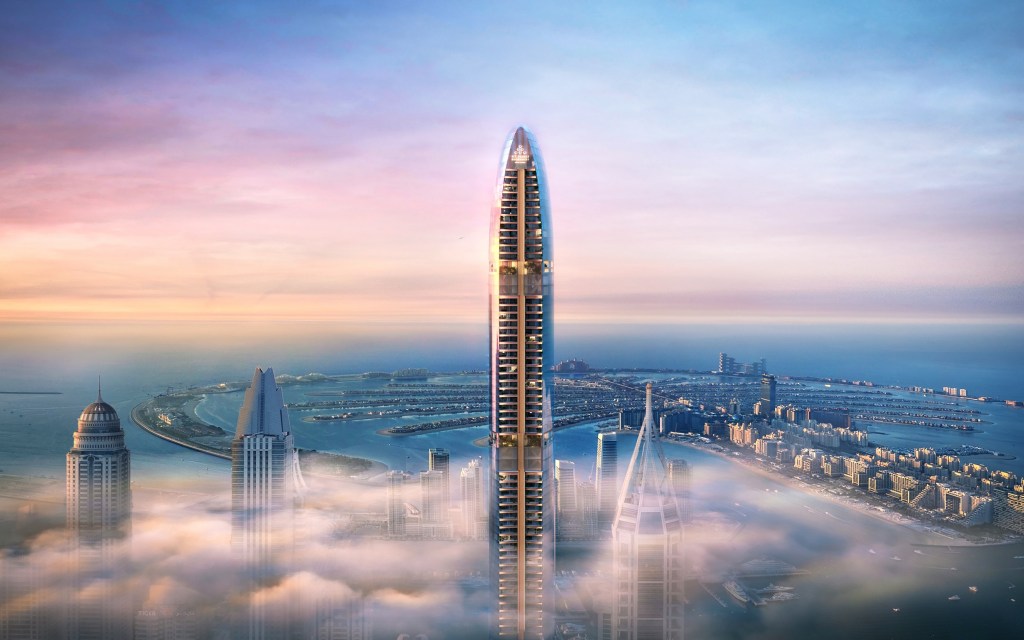
In the hyper-competitive corridors of Dubai’s real estate market, the word “luxury” has undergone a profound transformation. In 2024, it was defined by marble finishes and celebrity-branded lobbies. By 2026, those are merely the baseline.
Today, the ultra-high-net worth individual (UHNWI) isn’t looking for a home that just looks expensive; they are looking for a home that “thinks.” The rise of the “Living Algorithm” marks a shift where Property Technology (PropTech) has moved from the back office of developers to the very heart of the resident experience.
Led by visionary collaborations between automotive titans and architectural disruptors like Binghatti, the Middle East is now the global testing ground for the world’s most advanced residential tech. For years, the “Smart Home” was a collection of fragmented gadgets—a tablet to dim the lights or an app to check the security camera. In 2026, that era is over. We have entered the age of Spatial Intelligence.
In the latest penthouses across Downtown Dubai and Business Bay, homes are equipped with biometric sensors and AI “co-pilots” that operate invisibly. These systems don’t wait for a command; they anticipate needs. Utilizing Agentic AI, the residence monitors the owner’s circadian rhythms, adjusting the Kelvin temperature of the lighting and the oxygen-to-nitrogen ratios of the HVAC system to optimize sleep or focus.
In these residences, luxury is the total absence of friction. Nowhere is the intersection of tech and prestige more visible than in the Bugatti Residences by Binghatti. Taking a page from the engineering manuals of Molsheim, the building treats the automobile not as a tool for transport, but as a piece of high art.
The standout feature of 2026 is the Cité des Sciences car lift system. These aren’t your standard freight elevators. They are high-speed, vibration-dampened platforms that allow residents to drive their vehicles—be it a Chiron or a customized SUV—directly into their glass-walled “Sky Mansions.”
This “Car-to-Couch” philosophy integrates the garage into the living room, utilizing AI-driven docking systems that ensure the vehicle is perfectly aligned with the home’s aesthetic. It is a mechanical ballet that turns the simple act of arriving home into a multi-sensory performance.
The PropTech revolution in the Middle East is also tackling the region’s greatest challenge: the climate. But in 2026, sustainability is being sold as a premium feature. Developments like Mercedes Benz Places are pioneering the use of Integrated Photovoltaic (BIPV) façades.
The very “skin” of the building acts as a massive solar farm, wrapped in the iconic Mercedes-Benz pattern. This isn’t just about saving on DEWA bills; it’s about “Energy Autonomy.” Furthermore, Kinetic Architecture— façades that move and tilt based on the sun’s trajectory—uses AI to minimize heat gain while maximizing natural light.
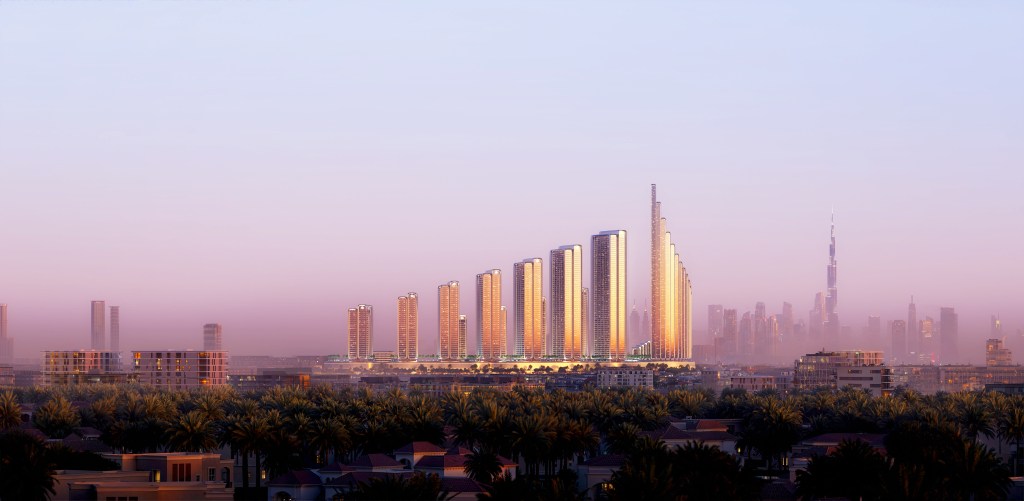
For the resident, this means a home that is perpetually comfortable, whisper-quiet, and environmentally responsible, all without a single manual adjustment. Luxury is defined by what you don’t see.
The most sophisticated PropTech in 2026 is the Digital Twin—a 1:1 virtual replica of the building that lives in the cloud. Every pipe, wire, and elevator motor in Dubai’s newest “Hyper-Towers” is fitted with IoT sensors. The building’s AI monitors these components in real-time, predicting a failure weeks before it occurs.
This is “Predictive Maintenance.” In a 2026 branded residence, you will never see a “Repair in Progress” sign on an elevator or deal with a sudden leak. The “Invisible Butler” has already dispatched a technician to fix the issue before the resident even realizes it exists.
This technology has reduced operational costs by up to 18%, a margin that is being reinvested into even more concierge level services for the residents. Finally, the technology has spilled out of the apartment and into the neighborhood. With the “People of Downtown” project highlighting the diverse, high-velocity lifestyle of the area, PropTech is facilitating a new “Membership” model of living.
Through blockchain-backed digital keys, residents of these top-tier towers have frictionless access to a network of VIP lounges, private gyms, and beach clubs across the city. Whether you are at the Armani Hotel for a gala or a coffee meeting in DIFC, your digital identity ensures the city treats you as a “Global Citizen” of the brand you live in.
Dubai has officially surpassed New York and London as the capital of Branded Residences. In this city, the future isn’t just something we wait for—it’s somewhere we live.
This evolution is fueled by a massive surge in PropTech investment within the UAE, which is projected to reach over $1.6 billion by 2032. The Dubai Land Department’s “DLD Strategic Plan 2026” has been a primary catalyst, moving beyond digital title deeds into blockchain-secured smart contracts that allow for “fractional ownership” of these ultra-luxury assets.
Now, an investor can own a “slice” of a Burj Khalifa-view penthouse for as little as AED 2,000 via platforms like Stake or Prypco. This democratization of the high-end market is creating a new class of digital landlords, further cementing Downtown Dubai as the epicenter of real estate innovation.
As we look toward the second half of the decade, the line between hospitality, automotive design, and residential living will continue to blur. The branded residence is no longer just a home; it is a high-performance machine designed to optimize every second of the human experience.
In the 2026 landscape of Dubai, the ultimate status symbol is no longer the key to the door, but the algorithm that knows when you’re coming home and has already prepared the perfect environment for your arrival.
In the hyper-competitive corridors of Dubai’s real estate market, the word “luxury” has undergone a profound transformation. In 2024, it was defined by marble finishes and celebrity-branded lobbies. By 2026, those are merely the baseline.
Today, the ultra-high-net worth individual (UHNWI) isn’t looking for a home that just looks expensive; they are looking for a home that “thinks.” The rise of the “Living Algorithm” marks a shift where Property Technology (PropTech) has moved from the back office of developers to the very heart of the resident experience.
Led by visionary collaborations between automotive titans and architectural disruptors like Binghatti, the Middle East is now the global testing ground for the world’s most advanced residential tech. For years, the “Smart Home” was a collection of fragmented gadgets—a tablet to dim the lights or an app to check the security camera. In 2026, that era is over. We have entered the age of Spatial Intelligence.

Entrepreneur Middle East Staff
Entrepreneur Staff