Leading The Change: Sami Daud, Managing Director, Daud Group
Daud Group
You're reading Entrepreneur Middle East, an international franchise of Entrepreneur Media.
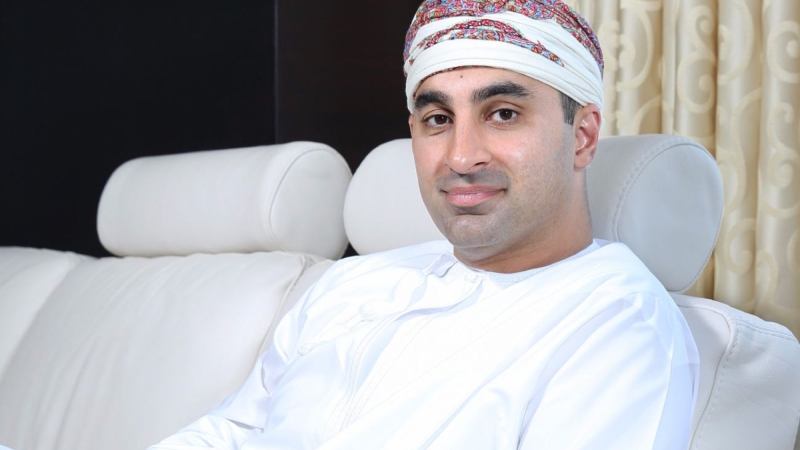
Omani businessman Sami Daud still remembers the day when he first learnt that about 20% of school age children in Dubai have special educational needs (SEN), or require additional learning support. To his dismay, those children had to be either home schooled or involved in dedicated special needs centers, while enrolled in one of the city’s mainstream schools. It was the only option their parents had, he explains, shaking his head in disbelief as we chat at his office in Dubai Media City’s Business Central Tower. “Historically, it’s been a taboo to talk about it or to say that a family member has special needs,” he notes. In the following few minutes of our conversation, he doesn’t boast about his charitable activities aimed at solving this societal issue, as one may expect from businessmen of his ilk.
To add some context to this observation- Daud is the Managing Director of the Oman-based Daud Group, a private business conglomerate founded by his father in 1964. Apart from his family business, Daud has built a successful business of his own of note- he is the founder and Executive Chairman of Gourmet Gulf, a food and beverage company owning franchise rights for seven international F&B brands. So, when he came across the problems children with special educational needs face, he was dubious about whether a generous donation to some of the relevant initiatives would foster the positive changes he wanted to see in society. Instead, Daud did what he knew best- he built a business to solve the problem.
In 2014, he partnered with the Belhasa Group to set up Tarbia -meaning “education” or “training of the spirit” in Arabic- an education-specific joint venture company that now operates in three education sub-sectors: early childhood education, special needs diagnostic and therapy centers, and international schools. Today, it is an umbrella company for the Riverston Children’s Centre (RCC) for Special Educational Needs, opened in Umm Suqeim earlier this year via a joint venture with the Riverston Group, a Londonbased provider of services for children with special educational needs, and Busy Bees Tarbia, a joint venture with Busy Bees Childcare, a UK nursery provider. Daud plans to own and operate 20 nurseries by 2021. Lastly, a SEN-focused K-12 school is now also in the pipeline. “We decided to establish an education company, and bring in the best in class,” Daud says.
“I was thinking about the different verticals I wanted to be in. I chose a school and a nursery, both to be the best in class, and a special needs center, also the best in class. We’ve never been in the education business, so I’m not going to try to reinvent the wheel here. I have partnered with big names. The Riverston Children’s Centre (RCC) for Special Educational Needs has taken off really well. The feedback I’m getting from parents whose children have enrolled in the center is that now they have seen a difference in their child. For me, that is a huge tick.” And what’s next? “The next phase is that we are close to closing a property for a SEN school,” Daud continues. “It will be a full-time school. For now, there are no such schools here. This one will be up to the eighth grade, and after that we will open another one for the eighth to the 12th grade. Today, if your kid has special needs, where can you take him/her? To a mainstream school. But they will not be able to learn at the same pace as others in the mainstream school. Very quickly and easily, they will fall behind. So, what do you do? My idea is to provide them with a school to enable them to graduate and go to a university. So, the idea is not to forget the kids with special needs. In our region, historically, they’ve been forgotten.”

The Riverston Children’s Centre (RCC) for Special Educational Needs, opened in Umm Suqeim earlier this year.
Source: Daud Group
to join the family businessOpen at the right place with the right operations and make sure that everything is rightSource: Daud Group

Gourmet Gulf employs 1,250 people and enjoys a 75% year-on-year growth.
Source: Gourmet Gulf
Source: Gourmet Gulf
Daud’s plans for Gourmet Gulf are ambitious, to say the least. By 2020, he aims to have 114 operating units for all the seven casual dining brands under the company’s belt. When asked whether he has considered developing an original F&B concept, Daud explains that his approach is more pragmatic despite F&B being his true passion in business. “If you show me this and that, I can tell you what I like, but, if you tell me to create this, no,” he says. “I have neither the time nor the brain that can create a concept. Frankly, it [a homegrown F&B concept] is a pain, you will make so many mistakes until you get it right. There is a winning formula that I can just take, tweak slightly and that’s it. Yet, I would encourage everybody who has that creative spark to do it. I don’t, and I’m the first one to say it. Also, I’ve never been a brand collector, as I pick my brands very carefully. I have to make sure that there is a gap in the market and that what I am bringing is the best in class. If there isn’t any gap in the market for a brand and the competition is already there, I then check whether the brand is the best in class. Can I come and beat the competition? What is also important is that the brand I’m thinking about is big enough, and structured enough to franchise, meaning are they ready to support you? I gave up a big brand in the past, because they were franchising just to get money and not because they believed in it.”
One of the secrets to his success is making the right hires, he says. “You have to be honest with yourself,” Daud notes. “It is easy for somebody to have their head grow big as their business grows. I think it is important to stay grounded and be honest with yourself because that will also help you in hiring. You cannot hire great people and then micromanage them. The great ones will not stay with you. We have separate teams for each of our companies, but I’m able to have time for my personal life because I have hired well and because I have been able to delegate.”
Towards the end of our conversation, he recalls a chat with a friend in Los Angeles last summer. The friend proposed they opened a restaurant in this Southern Californian city, but Daud immediately asked who would run it. “You cannot do it by remote control,” he explains, adding that every entrepreneur needs to put in his/her sweat first. “Don’t live life with “what ifs,’ take calculated risks, but do your homework,” he advises young entrepreneurs. “Business is not easy. For example, my restaurant business is most probably my most difficult business because when you are a restaurant, you are a manufacturer, a retailer, and so on. Also, the reality is that three people have different tastes. But, in this business, you have to satisfy all three of them. You will have thousands of people coming through your door and you have to make sure that everyone is happy. It is a difficult business, but get involved and get your hands dirty. There’s no shame in it.”
It seems that Daud’s entrepreneurial journey rests on three pillars- his family business, which is a reflection of his pride in his ancestors; his restaurant business, which is his passion; and his SEN-focused initiative, which appears to be his legacy. “No child should be left behind,” a statement he reiterates a few times, before I turn off the recorder.
Related: Batting It Out Of The Park: Zomato Founder And CEO Deepinder Goyal
Omani businessman Sami Daud still remembers the day when he first learnt that about 20% of school age children in Dubai have special educational needs (SEN), or require additional learning support. To his dismay, those children had to be either home schooled or involved in dedicated special needs centers, while enrolled in one of the city’s mainstream schools. It was the only option their parents had, he explains, shaking his head in disbelief as we chat at his office in Dubai Media City’s Business Central Tower. “Historically, it’s been a taboo to talk about it or to say that a family member has special needs,” he notes. In the following few minutes of our conversation, he doesn’t boast about his charitable activities aimed at solving this societal issue, as one may expect from businessmen of his ilk.
To add some context to this observation- Daud is the Managing Director of the Oman-based Daud Group, a private business conglomerate founded by his father in 1964. Apart from his family business, Daud has built a successful business of his own of note- he is the founder and Executive Chairman of Gourmet Gulf, a food and beverage company owning franchise rights for seven international F&B brands. So, when he came across the problems children with special educational needs face, he was dubious about whether a generous donation to some of the relevant initiatives would foster the positive changes he wanted to see in society. Instead, Daud did what he knew best- he built a business to solve the problem.
In 2014, he partnered with the Belhasa Group to set up Tarbia -meaning “education” or “training of the spirit” in Arabic- an education-specific joint venture company that now operates in three education sub-sectors: early childhood education, special needs diagnostic and therapy centers, and international schools. Today, it is an umbrella company for the Riverston Children’s Centre (RCC) for Special Educational Needs, opened in Umm Suqeim earlier this year via a joint venture with the Riverston Group, a Londonbased provider of services for children with special educational needs, and Busy Bees Tarbia, a joint venture with Busy Bees Childcare, a UK nursery provider. Daud plans to own and operate 20 nurseries by 2021. Lastly, a SEN-focused K-12 school is now also in the pipeline. “We decided to establish an education company, and bring in the best in class,” Daud says.
“I was thinking about the different verticals I wanted to be in. I chose a school and a nursery, both to be the best in class, and a special needs center, also the best in class. We’ve never been in the education business, so I’m not going to try to reinvent the wheel here. I have partnered with big names. The Riverston Children’s Centre (RCC) for Special Educational Needs has taken off really well. The feedback I’m getting from parents whose children have enrolled in the center is that now they have seen a difference in their child. For me, that is a huge tick.” And what’s next? “The next phase is that we are close to closing a property for a SEN school,” Daud continues. “It will be a full-time school. For now, there are no such schools here. This one will be up to the eighth grade, and after that we will open another one for the eighth to the 12th grade. Today, if your kid has special needs, where can you take him/her? To a mainstream school. But they will not be able to learn at the same pace as others in the mainstream school. Very quickly and easily, they will fall behind. So, what do you do? My idea is to provide them with a school to enable them to graduate and go to a university. So, the idea is not to forget the kids with special needs. In our region, historically, they’ve been forgotten.”

Tamara Pupic • Editor in Chief, Entrepreneur Middle East
Entrepreneur Staff
Tamara Pupic is the Editor in Chief of Entrepreneur Middle East.