RJ Phillips Is Aiming to Rewrite Who Gets Paid In The Attention Economy
Before he built ZOOP, the social platform focused on challenging legacy platforms, RJ Phillips spent years learning exactly how much value creators generate, and how little of it usually reaches them.
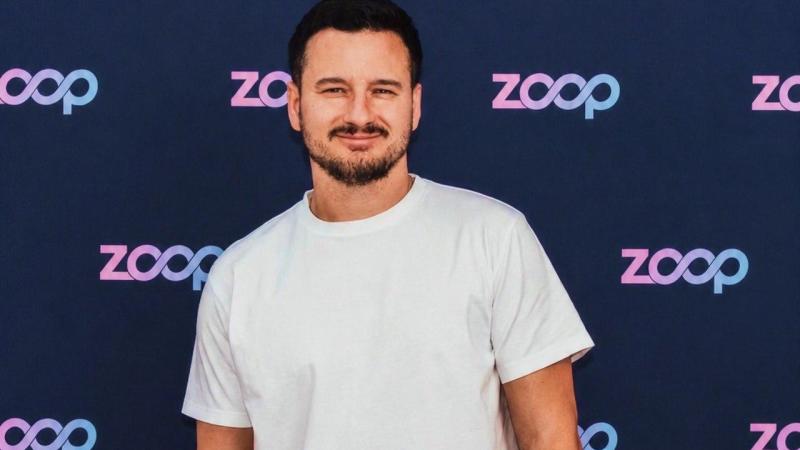
RJ Phillips
You're reading Entrepreneur Middle East, an international franchise of Entrepreneur Media.
RJ Phillips spent the first part of his career doing what accountants do: reading numbers until they told the truth about a business, whether it wanted to hear it or not. It is an unusual training ground for someone who would go on to build a social media platform, but Phillips has rarely followed the obvious path. Today he is the founder and CEO of ZOOP, a platform that spent much of 2026 connecting with notable live moments in music and sport, including the Eurovision Song Contest. Ask him what ZOOP is actually for, though, and the answer has little to do with feeds or follower counts. It comes down to a simpler, more stubborn question: who keeps the money content generates, and why has the answer for so long been almost nobody who actually made it.
Finding His Footing Beyond The Spreadsheet
Phillips did not arrive at the creator economy through Silicon Valley. He arrived through finance. Trained as a chartered accountant, his early credentials read more like a compliance officer’s resume than a tech founder’s: chartered membership with the Chartered Institute of Securities and Investment and an executive MBA delivered jointly by Kellogg and the Hong Kong University of Science and Technology. It is the kind of background that teaches a person to be suspicious of a good story until the numbers agree with it.
That instinct proved useful when Phillips moved into a senior leadership role at one of the world’s largest creator subscription platforms, helping steer the platform through a period in which its annual revenue grew substantially. It was there, watching millions of creators build entire livelihoods on a single platform, that he began forming a thesis he still repeats today: creators and athletes have quietly built much of the modern internet, and captured only a fraction of the value they created while doing it.
Building A Platform Around A Simple Idea
That thesis became ZOOP, launched under Phillips’s own company, ii Corporation, as a platform designed around a different approach to creator participation and value-sharing. While many large social networks rely heavily on advertising-based models, ZOOP was designed with a stronger emphasis on sharing value directly with creators. According to the company, creators can earn up to 80% of the revenue their content generates, while fans earn ZOOPies, a rewards currency tied to a global partnership with TLC Worldwide, active in more than 50 countries, that can also convert to cash.
Rather than one algorithmic feed competing for every kind of attention at once, ZOOP is organized into channels: dedicated spaces for sport, music, crypto, extreme sport and more, each built around a specific community rather than a single unpredictable scroll. The platform runs on infrastructure built on the Hedera network, a choice Phillips frames less as a speculative bet and more as a transparency mechanism, a way to make value move visibly instead of disappearing into a black box.
Competing Against Giants
None of this makes the competitive landscape any easier. The legacy platforms do not just have larger user bases. They have advertiser relationships, data infrastructure and habits built up over more than a decade of daily use. Persuading creators to build a following somewhere new is difficult enough. Persuading fans to change a habit as automatic as opening an app is harder still.
Phillips has responded by resisting the instinct to grow at any cost. ZOOP spent much of its first year in what the company calls preview mode, letting people build profiles while limiting who could post to those invited by an existing creator or handed a code at a live event. It is a slower, more deliberate approach to growth, one that favors steady growth and long-term community engagement over rapid expansion.
Proof Before Scale
The platform’s progress has been gradual, with notable developments along the way.
ZOOP entered 2026 with a prominent partnership naming it the official social platform of the Eurovision Song Contest for its seventieth year, along with a dedicated creator house in Vienna. According to the company, close to a million users had signed up or joined the waitlist by the time of ZOOP’s global launch.
For a platform still early in its development, the Eurovision partnership offers an example of how ZOOP is beginning to connect with established cultural events and broader audiences.
The Discipline Behind The Vision
Phillips describes his approach to leadership in terms that sound closer to risk management than growth hacking, perhaps a habit left over from years spent reading balance sheets. He talks about discipline in choosing partners, about resisting the pressure to chase every trend a platform in his position might be tempted to chase, and about treating creators less like content suppliers and more like stakeholders with a direct claim on the business’s success.
“I didn’t set out to build another app people scroll through,” Phillips says. “I set out to build one where the people doing the work get paid what they’re worth, and where staying disciplined about who we work with matters more than how fast we grow.”
That discipline extends to how ZOOP measures itself internally, with transparency tools that let creators track their own reach and earnings rather than guess at an algorithm’s mood.
What Comes Next
The next phase of growth, Phillips says, is less about adding features than about adding categories: expanding ZOOP’s channels beyond music, sport and crypto into new communities, deepening its rewards partnership network, and pursuing the kind of institutional relationships that come from his own advisory work.
The Middle East sits close to the centre of that thinking. Phillips says ZOOP’s management is actively exploring a deeper footprint in the region, including plans to open an office in Abu Dhabi, as its creator academy continues to grow across the Gulf. The logic is straightforward. The region combines a young, digitally fluent population with governments that have made the creator economy an explicit part of their diversification agendas, and Phillips sees an opportunity for a platform that arrives offering creators ownership rather than another feed to fill. An Abu Dhabi base would put ZOOP inside one of the fastest-growing creator markets in the world, and closer to the institutional partners already shaping his advisory work in the region.
Whether ZOOP becomes a genuine rival to the platforms it was built to challenge remains an open question. Phillips has never seemed interested in the safe version of that answer.
The Long Game
Phillips’s story is shaped not by any single partnership or milestone, but by the consistency of the argument underlying his approach: that a platform’s long-term value depends on how honestly it treats the people who create that value in the first place. It is an old idea wearing new infrastructure, and whether or not ZOOP ultimately wins its corner of a crowded market, Phillips has articulated a perspective that may resonate with other founders: build the thing that pays people fairly first, and worry about scale once that part is true.
RJ Phillips spent the first part of his career doing what accountants do: reading numbers until they told the truth about a business, whether it wanted to hear it or not. It is an unusual training ground for someone who would go on to build a social media platform, but Phillips has rarely followed the obvious path. Today he is the founder and CEO of ZOOP, a platform that spent much of 2026 connecting with notable live moments in music and sport, including the Eurovision Song Contest. Ask him what ZOOP is actually for, though, and the answer has little to do with feeds or follower counts. It comes down to a simpler, more stubborn question: who keeps the money content generates, and why has the answer for so long been almost nobody who actually made it.
Finding His Footing Beyond The Spreadsheet
Phillips did not arrive at the creator economy through Silicon Valley. He arrived through finance. Trained as a chartered accountant, his early credentials read more like a compliance officer’s resume than a tech founder’s: chartered membership with the Chartered Institute of Securities and Investment and an executive MBA delivered jointly by Kellogg and the Hong Kong University of Science and Technology. It is the kind of background that teaches a person to be suspicious of a good story until the numbers agree with it.
That instinct proved useful when Phillips moved into a senior leadership role at one of the world’s largest creator subscription platforms, helping steer the platform through a period in which its annual revenue grew substantially. It was there, watching millions of creators build entire livelihoods on a single platform, that he began forming a thesis he still repeats today: creators and athletes have quietly built much of the modern internet, and captured only a fraction of the value they created while doing it.

Entrepreneur Middle East Staff
Entrepreneur Staff