The Finance Frontier 2026: Haisam Odeimeh, Chief Executive Officer – FS, Al Ramz
Entrepreneur Middle East
You're reading Entrepreneur Middle East, an international franchise of Entrepreneur Media.
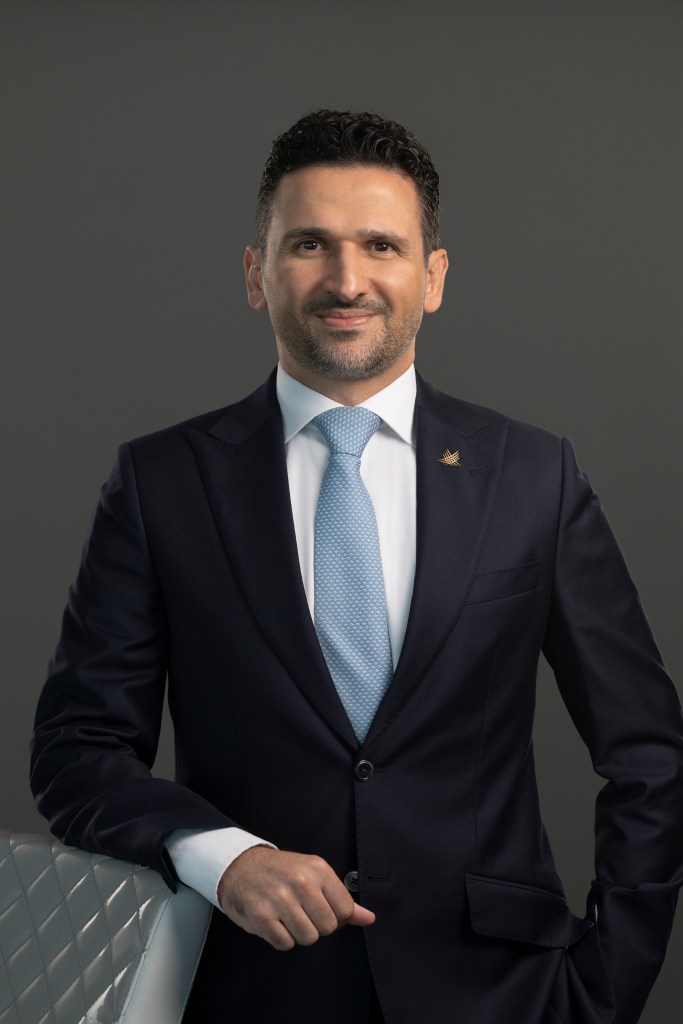
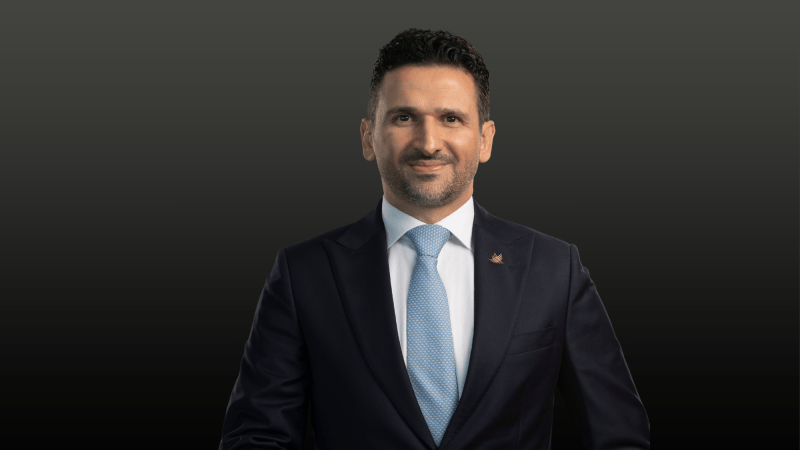
When Haisam Odeimeh joined Al Ramz as Chief Financial Officer in 2017, he became part of a UAE financial institution with an established legacy spanning nearly two decades. Today, as Group CEO – Financial Services, he is leading the firm’s next phase of growth by combining its traditional strengths with a strong focus on fintech-driven innovation.
Against the backdrop of the GCC’s accelerating digital and economic transformation, Odeimeh says the challenge lies in balancing rapid innovation with long-term stability. “In financial services, trust is the product,” he emphasizes. “Technology only matters if it strengthens that trust, improves access, reduces friction, or creates better outcomes for clients. As leaders, our role is to move fast without becoming reckless. That means building strong governance around innovation, testing ideas properly, investing in infrastructure, and making sure the client experience improves without compromising controls. I often say that in finance, you cannot ‘move fast and break things’ unless you are very clear about whose things you are breaking. We prefer to move fast and build things that last.”
As such, Odeimeh believes unlocking the full potential of the finance industry lies in shifting from transactional services to intelligent, integrated financial platforms. “Clients no longer want isolated products; they want access, insight, execution, reporting, and advice in one connected experience,” he says. “That requires firms like Al Ramz to rethink the operating model: stronger data architecture, digital onboarding, automated workflows, better client intelligence and more seamless integration between trading, advisory and reporting. The hype is usually about the tool. The real value is in redesigning the machinery behind the tool. A chatbot is interesting; a fully connected financial institution that knows how to serve clients faster, safer, and more intelligently is transformational.”
In enabling this transformation, Odeimeh believes artificial intelligence (AI) will be instrumental—but he stresses such progress can be fully realized only when paired with human judgment and responsible leadership. “AI will become very good at processing information, detecting patterns, automating workflows and improving decision support,” he says. “That is a major opportunity for finance. But human leadership still matters most where judgment, accountability, ethics and context are required. Markets are not just mathematical systems; they are human systems. Fear, confidence, incentives, politics, reputation and timing all matter. AI can help identify what is happening. Leaders still need to decide what it means and what to do about it. That requires experience, instinct and sometimes the courage to act when the model is useful but not complete. The future is not humans versus machines. It is humans with better machines, hopefully making fewer expensive mistakes.”
Odeimeh, who, before joining Al Ramz, has also held senior leadership roles at Al Hilal Bank and KPMG Lower Gulf, knows a thing or two about what it takes to be an effective leader. “Five years ago, leadership was often about having the clearest plan,” he says. “Today, it is just as much about building teams that can adjust the plan without losing discipline. In markets, you need analytical people because numbers matter. But you also need adaptable people because numbers do not always behave politely. My leadership philosophy has evolved toward creating teams that combine intellectual honesty with speed. I want people who can challenge assumptions, change their minds when the facts change and still execute with confidence. The best teams today are not the ones that pretend to know everything. They are the ones that learn faster than the environment changes. That is not easy, but it is where real competitive advantage comes from.”
A Master’s degree holder in Banking and Finance from Sorbonne University, Odeimeh also has a Bachelor’s degree in Accounting from the University of Toledo, and is a U.S. Certified Public Accountant (CPA). Under his leadership, Al Ramz has expanded its digital investment ecosystem with an AI-powered trading platform offering access to UAE and U.S. markets, robo-advisory, copy trading, real-time market data, and streamlined digital onboarding, reinforcing its position as one of the UAE’s leading financial services firms.
But he is also quick to attribute the company’s success to the nation it is headquartered in. “The UAE ecosystem gives companies permission to think bigger,” Odeimeh says. “That is extremely powerful. The regulatory environment, government digital infrastructure, investor appetite and national ambition all create a setting where financial institutions are encouraged to modernize, not merely maintain. Initiatives around digital identity, open infrastructure, market development and capital market reform have allowed firms like Al Ramz to move faster and rethink how financial services should be delivered. What is unique about the UAE is that ambition is not abstract. It is translated into policy, infrastructure, platforms and execution. For companies operating here, that creates both an opportunity and a responsibility. The opportunity is to build faster. The responsibility is to build properly.”
Having led his company through the geopolitical crisis that took place in early 2026, and continues to have a ripple effect across businesses in the region, Odeimeh notes that periods of market uncertainty often provide the clearest lessons for both institutions and investors alike. “Recent market volatility reminded us that liquidity, confidence and sentiment can shift very quickly, sometimes faster than fundamentals,” he says. “In those periods, the instinct may be to pause, but the better response is to sharpen your focus. For us, uncertainty forced a closer look at where we allocate attention, capital and technology. It pushed us to become more disciplined in reading flows, understanding client behavior and separating short-term noise from real structural movement.”
“What it revealed about the organization was encouraging: resilience is not created during volatility; it is revealed by it,” Odeimeh continues. “We saw our teams become more focused, more collaborative and more practical. Markets have a habit of removing unnecessary decoration from strategy. What remains is usually the truth.”
With a strong company culture in place, and a clear-cut vision in mind for Al Ramz, Odeimeh believes the evolution of financial services is only just beginning. “By 2030, financial companies will operate with far more automation, personalization and integration than they do today,” he declares. “Client onboarding, reporting, portfolio analytics, compliance monitoring and execution workflows will become far more connected. Financial institutions will need to become technology-driven organizations with strong regulatory and risk foundations, not traditional institutions with technology added on top. Companies will compete on intelligence, responsiveness, trust and experience. But one thing will not change: clients will still want to know that someone responsible is thinking carefully about their money. Technology will transform finance, but trust will still be the currency that matters most.”
When Haisam Odeimeh joined Al Ramz as Chief Financial Officer in 2017, he became part of a UAE financial institution with an established legacy spanning nearly two decades. Today, as Group CEO – Financial Services, he is leading the firm’s next phase of growth by combining its traditional strengths with a strong focus on fintech-driven innovation.
Against the backdrop of the GCC’s accelerating digital and economic transformation, Odeimeh says the challenge lies in balancing rapid innovation with long-term stability. “In financial services, trust is the product,” he emphasizes. “Technology only matters if it strengthens that trust, improves access, reduces friction, or creates better outcomes for clients. As leaders, our role is to move fast without becoming reckless. That means building strong governance around innovation, testing ideas properly, investing in infrastructure, and making sure the client experience improves without compromising controls. I often say that in finance, you cannot ‘move fast and break things’ unless you are very clear about whose things you are breaking. We prefer to move fast and build things that last.”
As such, Odeimeh believes unlocking the full potential of the finance industry lies in shifting from transactional services to intelligent, integrated financial platforms. “Clients no longer want isolated products; they want access, insight, execution, reporting, and advice in one connected experience,” he says. “That requires firms like Al Ramz to rethink the operating model: stronger data architecture, digital onboarding, automated workflows, better client intelligence and more seamless integration between trading, advisory and reporting. The hype is usually about the tool. The real value is in redesigning the machinery behind the tool. A chatbot is interesting; a fully connected financial institution that knows how to serve clients faster, safer, and more intelligently is transformational.”

Entrepreneur Middle East Staff
Entrepreneur Staff