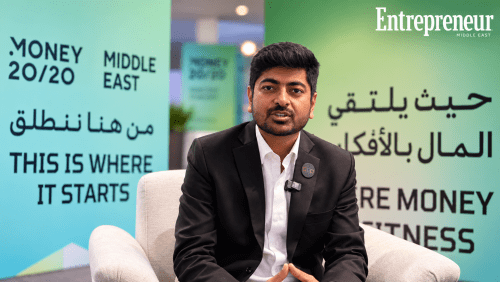
Barq Co-Founder Abdallah Abu-Sheikh On The Need For More Homegrown Brands In The Middle East

The co-founder of UAE-grown ventures Barq and Rizek gets candid on the inspiration behind his business journey, why he doesn’t like the idea of allowing “somebody else build it for us”, and how failure can lead to entrepreneurial feats in the long run.

You're reading Entrepreneur Middle East, an international franchise of Entrepreneur Media.

“What are we telling to those that come after us? That we were so passive and we’ve allowed for somebody else to build everything for us, and at any given moment they can say they can take it back? I don’t like that, and I think that shapes my attitude on building.” For Abdallah Abu-Sheikh, co-founder and CEO of UAE-grown ventures Barq and Rizek, the idea of allowing “somebody to build it for us,” – and by “us”, he refers to the entire Middle East region- is one that has largely shaped his approach towards entrepreneurship so far.

As the founder of an electric mobility venture in Barq, and a super app dedicated to home services in the MENA region in Rizek, Abu-Sheikh believes that it’s time for entrepreneurs and innovators in the region to adopt an approach of sovereignty. “I feel like generations and generations of people on this side of the world have lived and died, with massive dependency on the West,” says Abu-Sheikh in an exclusive interview with Entrepreneur Middle East. “For the past three or four generations, we have not seen anything being built here. We’ve just been importers and consumers, and we’ve kind of engrained consumerism into our kids and our day-to-day lives, and given into the thought that we can wait for somebody to build it for us.”

During the conversation, Abu-Sheikh also candidly shared how his late father has been instrumental in shaping the entrepreneur that he is today. “The main thing that he taught me had nothing to do with the value of money or capital, or what people usually think are the ABC’s of entrepreneurship,” he said. “His fundamental thought was that if your capital is within your intellect, and within your capacity to create, then you can always create! But if your dependency is on a source of income or financial backing or family name, then that can always go away.”

Watch the entire video to find out what else Abu-Sheikh had to share, including his thoughts on why accepting, and patiently learning through, failure can lead to entrepreneurial feats in the long run.

Related: Meet Abdallah Of Arabia: Abdallah Abu-Sheikh, The Serial Entrepreneur Behind UAE-Based Barq And Rizek

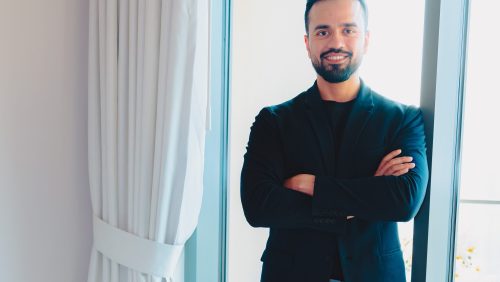
“What are we telling to those that come after us? That we were so passive and we’ve allowed for somebody else to build everything for us, and at any given moment they can say they can take it back? I don’t like that, and I think that shapes my attitude on building.” For Abdallah Abu-Sheikh, co-founder and CEO of UAE-grown ventures Barq and Rizek, the idea of allowing “somebody to build it for us,” – and by “us”, he refers to the entire Middle East region- is one that has largely shaped his approach towards entrepreneurship so far.

As the founder of an electric mobility venture in Barq, and a super app dedicated to home services in the MENA region in Rizek, Abu-Sheikh believes that it’s time for entrepreneurs and innovators in the region to adopt an approach of sovereignty. “I feel like generations and generations of people on this side of the world have lived and died, with massive dependency on the West,” says Abu-Sheikh in an exclusive interview with Entrepreneur Middle East. “For the past three or four generations, we have not seen anything being built here. We’ve just been importers and consumers, and we’ve kind of engrained consumerism into our kids and our day-to-day lives, and given into the thought that we can wait for somebody to build it for us.”

During the conversation, Abu-Sheikh also candidly shared how his late father has been instrumental in shaping the entrepreneur that he is today. “The main thing that he taught me had nothing to do with the value of money or capital, or what people usually think are the ABC’s of entrepreneurship,” he said. “His fundamental thought was that if your capital is within your intellect, and within your capacity to create, then you can always create! But if your dependency is on a source of income or financial backing or family name, then that can always go away.”

Related Content

Growth Strategies

Navigating the New Normal: BlackRock’s 2026 Global Outlook

In an interview with Entrepreneur Middle East, Ben Powell, Chief Middle East and APAC Investment Strategist, BlackRock Investment Institute, breaks down the firm’s newly released Full-Year Global Outlook 2026 and what shifting economic forces mean for investors. As global markets stand at the cusp of significant structural change, the BlackRock Investment Institute’s Full-Year Global Outlook […]
Growth Strategies

Why Culture is Pharma’s Strongest Competitive Advantage

From where I sit, performance is rarely a question of capability. Most organizations are full of talented, well-intentioned people. The real question is whether those people feel safe enough to contribute fully; to question decisions, raise concerns, and admit uncertainty without fear. The pharmaceutical industry has never been short on pressure. It is highly regulated, […]
Business News

WEF 2026: UAE Doubling Down on Openness to Build a Resilient Economy, Says Badr Jafar

Held under the title The Great Rebalancing: Artificial Intelligence, Jobs, and the Future of Inclusive Growth, the session at the UAE Pavillion at the WEF Annual Meeting in Davos brought together H.E. Badr Jafar, the UAE’s Special Envoy for Business and Philanthropy, and Kristalina Georgieva, Managing Director of the International Monetary Fund (IMF), for a […]