Great Teams Produce Great Results: The Importance Of Team Coaching

Shutterstock
Opinions expressed by Entrepreneur contributors are their own.
You're reading Entrepreneur Middle East, an international franchise of Entrepreneur Media.
After extensive research in the UK into the impact of team working on mortality rates in surgery teams, it was clear that good team working saved lives!
In your organization, the results from effective team working may not have such dramatic consequences, but you will certainly be seeing sustainable growth in quality, innovation and profitability.
So, the challenges you and your team may need to deal with to improve results could be listed as follows: that it’s new and needs to pull together to respond to specific targets, or it’s performing below its capability given the quality of the team members, or it’s unclear about strategy and objectives that contribute to the business growth? Or perhaps, the real reasons for under-performance have yet to be identified and/or surface!
So, what are the factors that make a great team? I would suggest that there are six:
- Team members with complimentary skills and styles: research by Belbin showed that just having the brightest individuals produced poor teamwork
- Shared purpose: a real commitment to a common belief
- Focus on results: the team is clear what it has to achieve
- Mutual accountability: shared responsibility to deliver on the objectives
- Effective leadership: understanding when sharing leadership can be more efficient than single leadership
- Trust: the foundation upon which all of the above must be built upon
Aligning all six of these factors is not straightforward, and this is something that is constantly evolving with the changes within the business environment, internally and externally.
Related: Motivating Employees Is Not About Money
Clearly, the business and the team leader have to select the right team members, and understand what the business needs are.
This means that team coaching starts by assuming that the requisite knowledge, skill and competence is already in place and it needs to be mobilized and harnessed in an effective direction. However, team coaching can also support the team in replacing members who are not suitable for the role they are in.
The interventions above work in isolation and will be effective up to a point. However, to get accelerated growth across the full five foundations of a great team, then an integrated team coaching approach is required over a period of time- which usually takes about three to six months. This will deliver:
- Team functioning that, through trust, maximizes the diversity and difference in personality, style and skills.
- A real commitment to a common belief and shared purpose that will inspire the team to greater heights.
- Clarity on what it has to achieve; the results it needs to produce for the business and key stakeholders.
- Shared responsibility to deliver on the agreed objectives and the willingness to challenge each other to be accountable to the collective goals.
- Effective distributed leadership, so that each team member is willing to stand up, and lead in their area of expertise. The designated team leader also knows when to step back and forward.
Related: The How-To: Building (And Managing) A Team For Your Startup
After extensive research in the UK into the impact of team working on mortality rates in surgery teams, it was clear that good team working saved lives!
In your organization, the results from effective team working may not have such dramatic consequences, but you will certainly be seeing sustainable growth in quality, innovation and profitability.
So, the challenges you and your team may need to deal with to improve results could be listed as follows: that it’s new and needs to pull together to respond to specific targets, or it’s performing below its capability given the quality of the team members, or it’s unclear about strategy and objectives that contribute to the business growth? Or perhaps, the real reasons for under-performance have yet to be identified and/or surface!

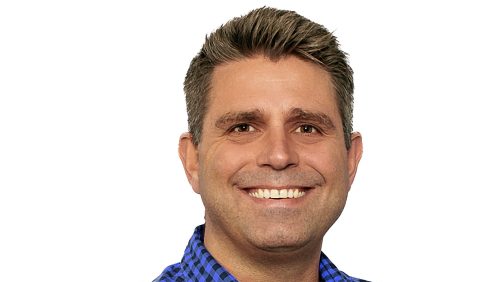
Martin Braddock • Associate Director, PDSi
Martin Braddock is an Associate Director of Performance Development Services (PDSi) based in Dubai. He... Read more