Shifting Gears: Uncovering Operational Models To Meet Bespoke Business Needs
Encouraging businesses to design and create their own approach to achieve operational efficiency and meet respective business objectives results from the change.

Shutterstock
Opinions expressed by Entrepreneur contributors are their own.
You're reading Entrepreneur Middle East, an international franchise of Entrepreneur Media.
Operational models are not a one-size-fits-all concept. What works for a sustainable clothing boutique might not align with a restaurant or a law firm. Instilling a model compatible with your business set-up allows owners to scale, document key information, and grow in a parallel manner. However, one constant aspect is the use of and advancement of technology. Encouraging businesses to design and create their own approach to achieve operational efficiency and meet respective business objectives results from the change.
As an enabler, technology has increasingly become a major contributor to these changes, forcing some models to be adjusted and others proven inoperative. What’s more, businesses are consistently adapting their models to gain the competitive edge needed to survive, regardless of industry. For instance, in the MENA region’s F&B sector, implementing a functional, user-friendly, and standardized inventory management and procurement system was long overdue by a decade. For the B2B side, having the correct operational model to meet current business demands would be game-changing if implemented and used correctly.
Scouting and onboarding new suppliers of high-quality, price-conscious, and fresh produce can be a tedious task left upon the shoulders of either owners who often have other commitments, or the location managers. This is when a technology-driven and proven operating model adds value, but also enhances business functionality. Having made a career in the F&B sector starting new concepts, I saw firsthand these challenges that many business owners encounter. This is what led me to partner with Archya Sengupta and Cristobal De Nadai -who bring expertise in technology/management applications and F&B distribution supply chain solutions respectively- to create and offer a solution.
Collectively, we conceptualized Watermelon Market, a food tech e-procurement platform and marketplace that acts as a value-added third-party operational model for small-mid-sized outlets. Although I can only speak from my personal experience based off the operational model we’ve developed from sector expertise, I’ve found that the pursuit of deciding on a function operational model is shared across industries globally. Here are three things that I believe one needs to take into consideration to find an operating model that suits your business needs while also aligning with changing times:
1. Readiness to take on a digital transformation In today’s hyper-connected, global digital world, this is a non-issue, predominantly. However, some businesses still utilize conventional operational methods, or do not have the ability to implement cloud-based operations. Further, other business elements such as internal point of sales (PoS), inventory, and record-keeping must be ready to work alongside such a model, or this will be a wasted effort. In Watermelon’s case, as a cloud-based platform, it can be used to run daily F&B procurement operations when connected, but more importantly, gives clients untethered access to each other to facilitate transactions. This access has proven to the Watermelon team that changing the outdated operating model brings great benefits to our users.

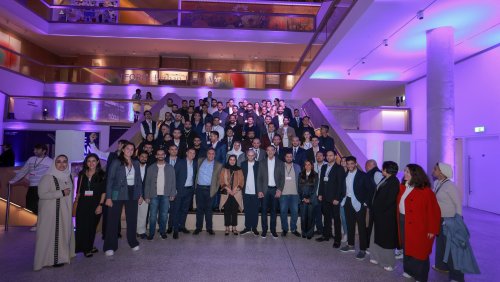
The Watermelon Market team
2. Business aspirations align with capabilities The next step is ensuring the capabilities of an organization are in line with the key performance indicators (KPIs) or objectives/key results (OKR). Once target growth is identified, searching for an operating model that syncs together departments or functions supports a company to move toward its goals. In this ever-competitive world, your operating model should be as dynamic as your environment, and that is the recipe for success.
3. Organizational culture matches business objectives A firm’s culture plays a key role in executing strategy, and it is an even more important factor in building the operating model. While stringent work cultures promote efficiency, a rigid model can be suffocating. On the other hand, a laid-back approach promotes creativity and innovation, but it could also lack direction. Businesses need to ensure culture aligns with objectives, derived from the capabilities previously addressed, connecting business aspects. The culture will influence reporting lines, responsibility matrixes, limitations, and flexibility given to the employees. At Watermelon, we offer both a KPI and OKR system, and we have also developed a hybrid model. This supports an F&B entity achieve its business goals whilst also allowing them to innovate, align internally, and find new solutions to the current operating model.
Related: Four Factors That Allowed The UAE To Emerge As The New Frontier For Global Entrepreneurship
Operational models are not a one-size-fits-all concept. What works for a sustainable clothing boutique might not align with a restaurant or a law firm. Instilling a model compatible with your business set-up allows owners to scale, document key information, and grow in a parallel manner. However, one constant aspect is the use of and advancement of technology. Encouraging businesses to design and create their own approach to achieve operational efficiency and meet respective business objectives results from the change.
As an enabler, technology has increasingly become a major contributor to these changes, forcing some models to be adjusted and others proven inoperative. What’s more, businesses are consistently adapting their models to gain the competitive edge needed to survive, regardless of industry. For instance, in the MENA region’s F&B sector, implementing a functional, user-friendly, and standardized inventory management and procurement system was long overdue by a decade. For the B2B side, having the correct operational model to meet current business demands would be game-changing if implemented and used correctly.
Scouting and onboarding new suppliers of high-quality, price-conscious, and fresh produce can be a tedious task left upon the shoulders of either owners who often have other commitments, or the location managers. This is when a technology-driven and proven operating model adds value, but also enhances business functionality. Having made a career in the F&B sector starting new concepts, I saw firsthand these challenges that many business owners encounter. This is what led me to partner with Archya Sengupta and Cristobal De Nadai -who bring expertise in technology/management applications and F&B distribution supply chain solutions respectively- to create and offer a solution.

Omar AlShamsi • Co-founder and CEO, Watermelon Market
Omar AlShamsi is the co-founder and CEO of Watermelon Market. Founded in April 2021, Watermelon... Read more