How Tunisian-born Clusterlab is Making Voice AI Smarter for the Region
Voice AI is rapidly reshaping contact centers, but building systems that work across Arabic dialects remains a challenge. Tunisian-born and UAE-headquartered startup Clusterlab, through its product Callab.ai, is tackling that gap, and its entry to Y Combinator, a seed-stage startup accelerator, marks a key milestone in scaling its vision.
Disclosure: Our goal is to feature products and services that we think you'll find interesting and useful. If you purchase them, Entrepreneur may get a small share of the revenue from the sale from our commerce partners.
You're reading Entrepreneur Middle East, an international franchise of Entrepreneur Media.
Artificial Intelligence (AI) is quickly changing the way contact centers operate, with more businesses turning to voice AI agents to cut costs, manage high call volumes, and reduce customer wait times.
And the shift isn’t slowing down. As per a 2024 report by Gartner, a US-based market research firm, at least 70% of customer service journeys will begin and be resolved through conversational GenAI or third-party assistants built into mobile devices by 2028, instead of interacting with a human agent.
Yet there seems to be a gap in the MENA region. With many AI systems mainly designed and trained for Western users, Arabic -especially its regional dialects- can confuse these systems, leading to errors, miscommunication, or failed interactions.
This underrepresentation led Tunisian-born and UAE-headquartered startup Clusterlab to develop its product Callab.ai, a voice AI solutions that cater to the region’s consumers. Founded by Tunisian entrepreneurs Haithem Kchaou (CEO) and Chehir Dhaouadi (CTO) in 2020, the Dubai-based team is building voice AI that understands Arabic in all its forms.

“The global AI industry was building in English, for Western users, on Western data, and the Middle East was expected to adapt,” Kchaou explains. “We wanted to build the opposite, AI designed from day one for the languages, dialects, and infrastructure of our region.”
One of their projects, Elm, an AI-powered library developed for Tunisia’s Ministry of Higher Education, became an early test case of how global AI tools can fall short outside Western markets. According to Kchaou, they don’t always translate well in a local context and the issues keep coming back to three main gaps: language, data, and infrastructure.
That experience is also what pushed them toward voice AI. “Text AI already had dozens of serious players, but voice AI that genuinely worked in Arabic and its dialects, and that could integrate with the legacy telephony stacks enterprises in our region actually run on, was almost nowhere to be found,” Kchaou adds.
With Callab.ai, users can speak naturally regardless of accent, as the system is designed to understand them, supporting multiple languages including English, Spanish, French, German, Mandarin, particularly Arabic, and its regional dialects.
“Callab.ai is an AI voice agent that answers the phone, understands the caller in their own language and dialect, and either resolves the request end-to-end or hands it cleanly to a human agent with full context preserved,” Kchaou explains.

Across industries like real estate, healthcare, hospitality, retail, and debt collection, Callab.ai essentially works as a 24/7 AI voice agent that picks up and handles high volumes of calls, takes care of routine requests like scheduling, reminders, updates, and basic inquiries, and keeps communication running even when teams are busy or offline.
“No hold music, no IVR menu maze, and a conversation that feels natural rather than scripted,” he emphasizes.
However, while contact centers are one of the clearest areas where voice AI can deliver quick, measurable ROI, they also remain among the most complex environments to implement, Kchaou admits.
“A contact center would be running on Cisco Unified Communications Manager (CUCM) or a legacy Private Branch Exchange (PBX), serving customers in Arabic and its regional dialects, bound by strict data residency requirements, and a Western voice AI vendor would arrive with a polished demo that did not hold up once deployed against the customer’s production systems,” Kchaou says.
“Callab.ai was built from the integration layer upward. We started with the hardest part, native compatibility with the telephony stacks enterprises already operate, and then built the AI capabilities on top of that foundation,” he explains. “That is the inverse of how most of the market has approached the problem.”
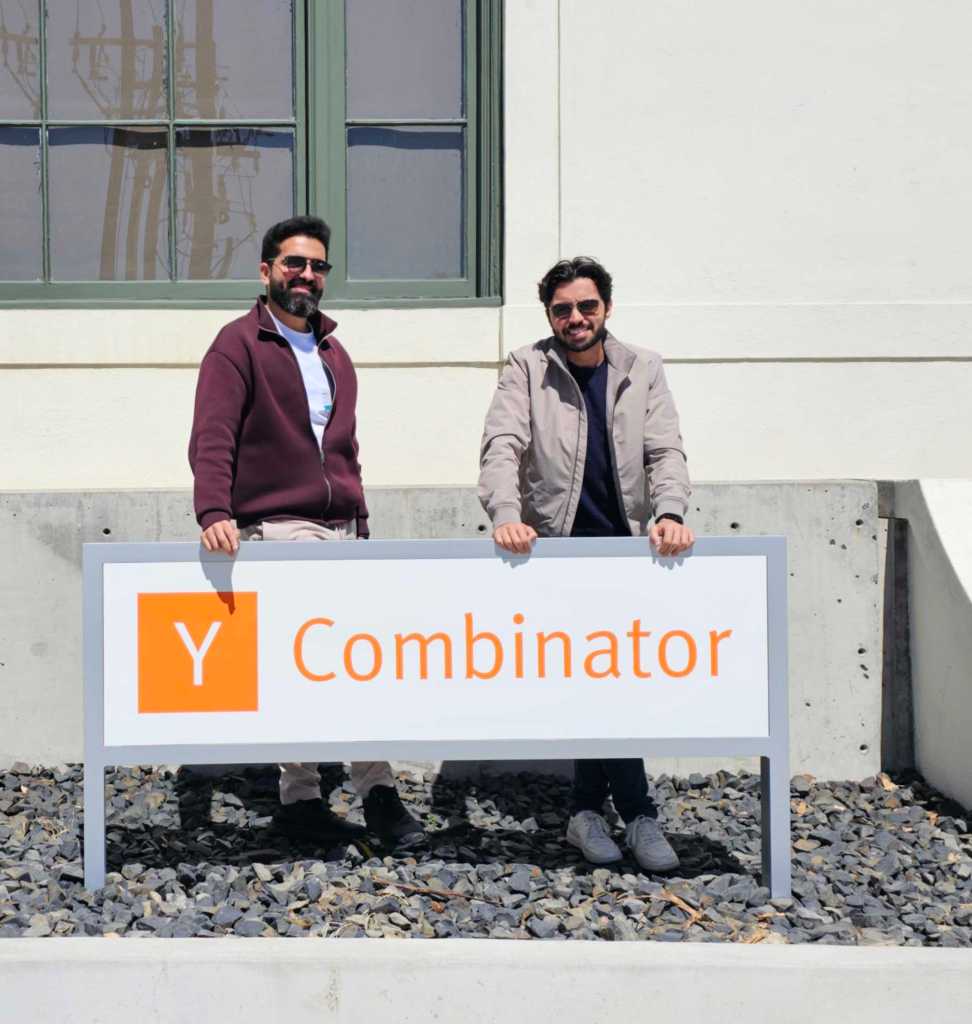
This approach earned them a major credibility boost after being admitted to Y Combinator’s (YC) P26 batch, one of the world’s most competitive seed-stage startup accelerators, known for backing companies such as Airbnb, Stripe, and Dropbox.
“Being accepted into YC was, first and foremost, an additional confirmation that our region produces world-class solutions and world-class talent. We are proud to be among the small group of UAE-headquartered startups to join YC, and also the first company with Tunisian roots in YC’s history,” he shares. “The deeper reason we wanted to join was the opportunity to be challenged at the highest level, in an environment that has historically produced the products that shape the world.”
The three-month YC program is designed to accelerate growth, typically pushing startups toward two outcomes: a stronger product with more traction and better access to fundraising opportunities, an exposure that is especially strategic in scaling Callab.ai.
“Building a deep-tech voice infrastructure business requires a particular kind of capital base, one with a long time horizon and a high tolerance for the technical bets our category demand,” Kchaou acknowledges, noting that such opportunity is typically concentrated in Silicon Valley in the US, a global hub for tech innovation that attracts major venture capital.
“Our approach has been to keep our engineering and delivery roots firmly in the region, because that is a structural advantage we have no intention of giving up, while bringing the company’s center of gravity for fundraising and global go-to-market closer to where that ecosystem is most mature,” he adds.
Kchaou believes voice AI adoption in the Middle East will accelerate rapidly over the next few years, driven by consumer expectations that are already shifting toward instant service. In his view, routine tasks like changing a delivery address will no longer require long wait times, as AI voice agents take over a large share of everyday customer interactions.
“What makes our region distinctive is that this transition cannot simply be a copy-paste of what is happening in the United States,” Kchaou clarifies. “It has to respect Arabic and its many dialects, local data residency requirements, and the legacy telephony infrastructure that is not going anywhere in the foreseeable future.”
Within this context, he positions Callab.ai as built to help enterprises adapt to these realities through voice automation.
Artificial Intelligence (AI) is quickly changing the way contact centers operate, with more businesses turning to voice AI agents to cut costs, manage high call volumes, and reduce customer wait times.
And the shift isn’t slowing down. As per a 2024 report by Gartner, a US-based market research firm, at least 70% of customer service journeys will begin and be resolved through conversational GenAI or third-party assistants built into mobile devices by 2028, instead of interacting with a human agent.
Yet there seems to be a gap in the MENA region. With many AI systems mainly designed and trained for Western users, Arabic -especially its regional dialects- can confuse these systems, leading to errors, miscommunication, or failed interactions.

Kristine Erika Agustin • Junior Editorial Assistant, Entrepreneur Middle East
Kristine Agustin is a Junior Editorial Assistant at Entrepreneur Middle East, covering entrepreneurship and startup... Read more