Eduard Khemchan’s Structural Approach to Money, Markets and the Future
From delivering newspapers at 13 to building businesses and allocating capital across technology, financial markets, AI and emerging infrastructure, Eduard Khemchan has spent a lifetime learning one fundamental lesson: momentum may attract attention, but structure determines what survives.
Opinions expressed by Entrepreneur contributors are their own.
You're reading Entrepreneur Middle East, an international franchise of Entrepreneur Media.
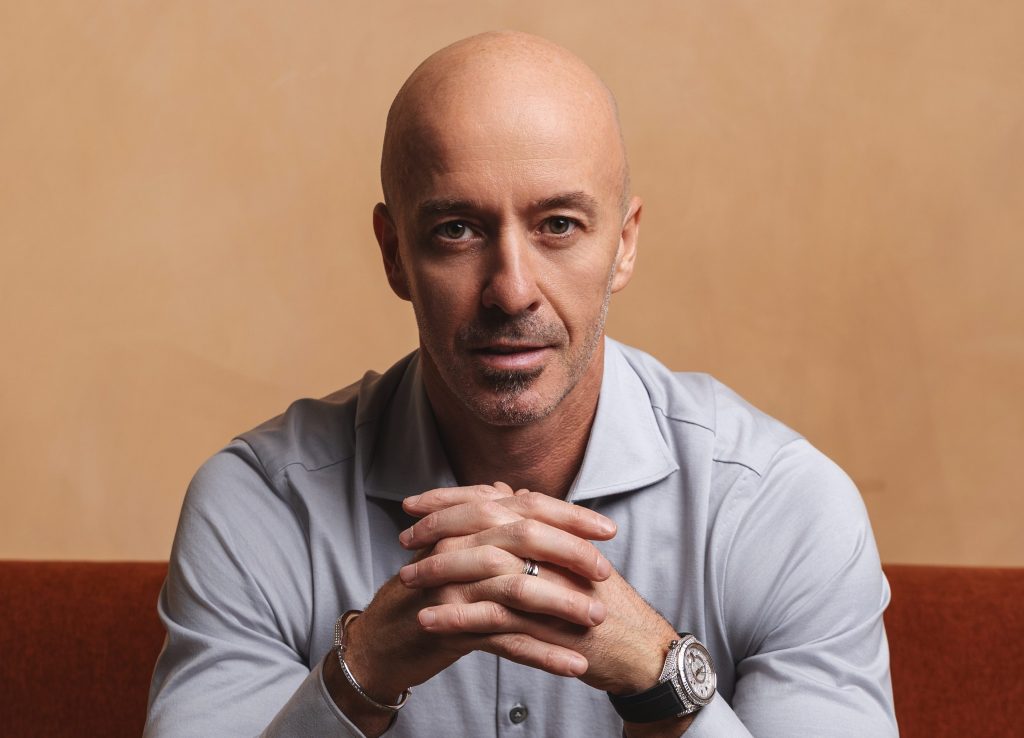
At 13 years old, Eduard Khemchan was delivering newspapers.
There were no conversations about artificial intelligence, capital allocation or the future of global financial infrastructure. There were routes to complete, responsibilities to meet and a very straightforward economic equation: if he did not show up, he did not get paid.
His family had immigrated from Georgia to the United States, and Khemchan found himself adapting to a new country while learning something about money that would stay with him long after the newspaper route disappeared from his life.
Money, he discovered early, represented time, effort and responsibility.
It did not simply appear.
That seemingly modest beginning offers perhaps the clearest way to understand the philosophy that would later guide him through entrepreneurship, construction, financial markets and investment.
“My ambition was never only about having more,” Khemchan says. “I became interested in independence.”
What followed was less a conventional career path than an evolution in how he understood value: first earning money through his own labor, then building businesses, then participating in financial markets and eventually asking a much bigger question—what can capital itself build?
It is a progression he describes simply: worker, operator, market participant, allocator.
And through every stage, one idea has remained constant.
Build the foundation first.
The Construction Site That Became a Business School
By 21, Khemchan had started a construction company. He does not describe the decision with the mythology that often accompanies stories of young entrepreneurs. There was no singular moment in which he suddenly felt prepared to become a founder. “I am not sure I ever had a moment when I decided I was suddenly ‘ready,’” he says.
“Entrepreneurship often begins before you feel completely prepared.”
By then, he had already spent years working, and starting a company felt like a natural progression from being responsible for his own labor to becoming responsible for an entire operation.
Construction would become one of the most important business classrooms of his life.
Unlike theory, construction is unforgiving. Materials arrive or they do not. Cash flow works or it does not. Deadlines are met or missed. A project cannot be talked into completion.
And perhaps most importantly, everything has to happen in the right order.
“You cannot install the roof before you create the foundation,” Khemchan says. “Business works in much the same way.” It is a lesson that still influences the way he evaluates companies today.
Behind the pitch deck, the valuation and the excitement surrounding a company, Khemchan wants to understand what is holding the entire thing up.
What generates revenue? Where are the dependencies? How strong is management? Where is the risk? What happens when financing becomes more expensive? And can the structure continue supporting the company when growth inevitably becomes more difficult?
Construction taught him, he says, “not to confuse something that looks impressive with something that is structurally sound.”
That distinction has become central to his investment philosophy.
From Making Money to Making Capital Work
The next evolution came through financial markets.
As finance became increasingly digitized, Khemchan began participating in online markets in the late 1990s. What interested him was not simply the opportunity to trade. He was watching the infrastructure of finance change in real time.
Information was becoming more accessible. Execution was becoming faster. Markets historically dominated by institutions were opening to individuals. And that changed his relationship with money again.
For a worker, the equation is largely linear: time and effort are exchanged for income. Entrepreneurship introduces leverage through employees, systems, processes and equipment.
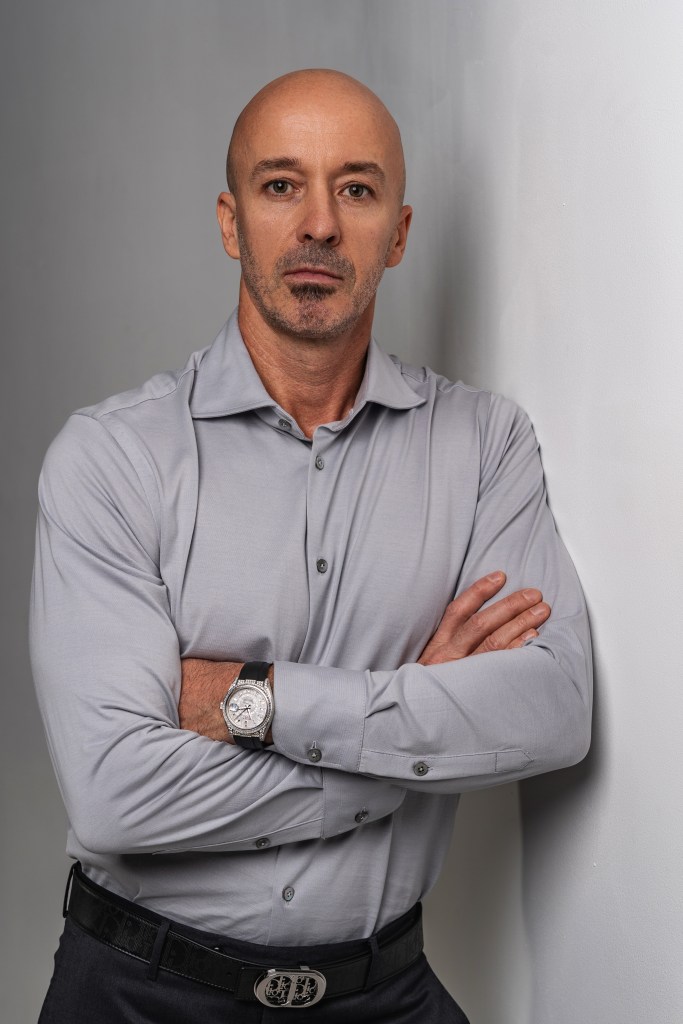
Capital introduces another dimension entirely. “At some point, the most important question was no longer simply, ‘How much can I earn?’” Khemchan says. “It became, ‘Where should capital be positioned, and what can that capital build or enable over time?’”
That shift is significant. Making money can encourage a focus on the next transaction. Allocating capital requires thinking about opportunity cost, liquidity, downside, timing and duration.
Every dollar placed in one opportunity is a dollar that cannot simultaneously be placed somewhere else.
And every long-term investment is, in effect, an argument about what the future might look like.
“Today,” he says, “I am much more interested in what capital can build than simply what a transaction can earn.”
Structure Over Momentum
If one word repeatedly surfaces when speaking with Khemchan, it is structure.
“Structure is what remains when enthusiasm disappears,” he says. It is a particularly relevant philosophy at a time when entire sectors can be propelled by enormous amounts of capital, attention and narrative.
In favorable markets, weaknesses can remain hidden. Revenue climbs. Financing remains accessible. Valuations increase. Momentum itself can begin to look like validation.
Khemchan wants to know what happens after that environment changes. His approach is almost forensic.
How does the company actually make money? How dependent is it on outside financing? What happens if growth slows? What happens if regulation changes? Where is risk concentrated? Does management have the discipline required to navigate difficult conditions?
And when evaluating technology, there is another question: Does it solve an economic problem, or does it merely attract attention?
That distinction becomes particularly important with artificial intelligence. Khemchan is unequivocally optimistic about AI—but optimism about the technology, he argues, should not translate into indiscriminate optimism about every company using the term.
The question is not whether a company can call itself an AI business.
The question is what AI actually changes. Does it lower costs? Increase productivity? Improve accuracy? Allow a smaller workforce to accomplish substantially more? Improve risk analysis? Make logistics more efficient? Reduce healthcare administration? Help highly skilled people become dramatically more productive?
That is where he believes durable value will emerge.
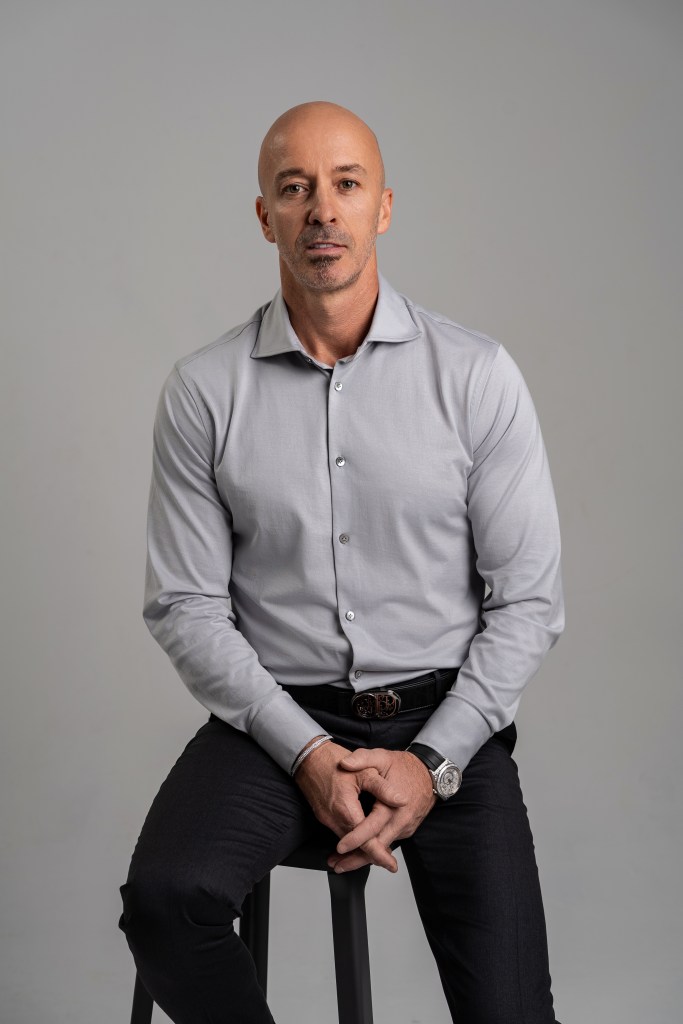
“I believe the largest value from AI will ultimately come from integration rather than novelty,” he says.
For Khemchan, the most consequential outcome may occur when AI stops being treated as a standalone category and becomes an invisible layer running through thousands of businesses. Finance. Healthcare. Cybersecurity. Enterprise software. Logistics. Research.
The real transformation begins when intelligence becomes infrastructure. “The hype is where valuation becomes disconnected from utility,” he says.
Having an AI interface or connecting a product to an existing model does not automatically create a defensible company. Over time, he expects capital to distinguish between businesses benefiting from the AI narrative and businesses in which AI produces measurable economic improvement.
His conclusion is characteristically measured: “I am extremely optimistic about AI. But optimism about a technology does not require optimism about every company using its name.
RELATED: The Alliance That Built Leap
Looking Beneath the Market
Khemchan’s interest in infrastructure extends beyond AI.
One of the most formative structural changes he witnessed was the digitization of financial markets. What mattered, in his view, was not a particular stock price or market movement. It was the fact that the underlying system was changing.
Access changed. Information moved differently. Execution became faster. New participants entered.
And once infrastructure changed, behavior followed. “Price eventually tells a story,” he says. “Infrastructure often begins writing that story earlier.”
It is the same framework through which he views blockchain.
For blockchain to become genuinely consequential, Khemchan believes something almost paradoxical needs to happen: people need to stop talking about blockchain.
“The technology should eventually disappear behind the utility,” he says. Consumers do not think about protocols when sending an email or the technological infrastructure processing a card payment. They care that the product works.
Blockchain, he argues, will reach a similar point of maturity when improve – ments in user experience, regulation, scalability and economic utility allow the technology to operate beneath financial activity without requiring users to understand what is happening behind the interface.
Tokenization, programmable settlement, crossborder transfers and verifiable ownership are among the areas he sees as potentially meaningful. But the real milestone will be institutional integration.
When blockchain becomes part of how assets are issued, transferred, verified and settled—and the end user barely notices—it will have crossed the line from market narrative to economic infrastructure.
Conviction Without Certainty
Despite his interest in transformational technologies, Khemchan’s investment philosophy is built around risk.
“Conviction and certainty are not the same thing,” he says.
Waiting for complete certainty, he argues, can mean waiting until an opportunity has already been fully priced.
Instead, conviction grows as independent factors begin aligning: real demand, strong economics, capable management, sensible capital structure, a comprehensible regulatory environment and ideally a structural trend capable of surviving beyond a single market cycle.
Position size should reflect the quality of that alignment.
Interestingly, volatility itself is not necessarily what causes him to retreat from an investment.
A changing thesis does. If management loses discipline, leverage becomes excessive, customer behavior fundamentally shifts, regulation alters the economics of the business, technology loses its differentiation or new evidence proves the original assumptions wrong, Khemchan believes the investment must be reconsidered.
The dangerous alternative is emotional attachment. “The objective is not to defend your original decision forever,” he says. “The objective is to protect capital while allowing strong ideas enough time to develop.”
The same thinking shapes his view of diversification. Owning 20 investments does not necessarily mean owning 20 different risks. Those assets may ultimately depend upon the same liquidity conditions, economic cycle or market psychology—and during periods of stress, those hidden correlations can suddenly become obvious.
“If ten investments all fail under the same scenario, owning ten of them has not necessarily diversified your risk,” he says.
But excessive diversification creates another problem: an investor can spread capital so broadly that the portfolio no longer meaningfully benefits from its best ideas.
The objective, therefore, is not quantity. It is balance.
The Longevity Economy
Some of the structural shifts Khemchan follows are technological. Others are demographic.
One in particular stands out: people are living longer.
Longevity is usually discussed as a medical issue. Khemchan sees a much larger economic question.
What happens to pensions and retirement systems? Insurance? Healthcare spending? Housing? Employment? Productivity?
And perhaps most importantly: how do people remain economically productive for longer?
The distinction between lifespan and healthspan is particularly important to him. Simply adding years to life without adding healthy and productive years creates enormous pressure on healthcare systems and economies. Technologies capable of extending the period during which people remain healthy and economically active could have a dramatically different effect.
That is why he sees considerable potential at the intersection of AI, diagnostics, biotechnology, data and preventative healthcare.
Unlike investment trends that can emerge and disappear within a few years, demographics move slowly and then exert pressure for decades. They are, in Khemchan’s language, structural.
Why the Middle East Matters
It is perhaps unsurprising, then, that Khemchan is paying close attention to the Middle East.
His interest in the UAE and Saudi Arabia is not based simply on the capital available in the region.
It is the way capital is increasingly being combined with infrastructure, policy, technology and speed.
“What interests me about the Middle East is the speed at which ambition is being converted into infrastructure,” he says.
Many countries announce ambitious visions. Khemchan believes the UAE and Saudi Arabia are increasingly distinguishing themselves by putting institutional capacity and capital behind those ambitions.
AI illustrates the point. Creating a genuine AI economy requires far more than investing in software companies. It requires energy, data centers, semiconductors, connectivity, talent, regulation and significant amounts of patient capital.
“The region increasingly understands that entire stack,” he says.
He points to Abu Dhabi’s activity around AI infrastructure, Dubai’s integration of AI into government and enterprise, and Saudi Arabia’s development of AI capabilities alongside the broader economic transformation envisioned under Vision 2030.
But there is a larger story developing.
For decades, the Middle East was viewed internationally as an important source of capital.
Khemchan believes it is increasingly becoming a destination for it. Technology, intellectual property, advanced infrastructure and entrepreneurship are becoming central components of the region’s economic proposition.
“What I think some international observers still misunderstand is that the region is not simply trying to attract businesses from elsewhere,” he says. “It is trying to create infrastructure that makes the Middle East one of the places where the next generation of global businesses can actually be built.”
Speed is another advantage.
When leadership, capital and national economic strategy are aligned, Khemchan argues, ideas can move from concept to execution much faster than in environments where regulation, infrastructure and investment operate independently.
For an investor obsessed with structure, that alignment is difficult to ignore.
Opportunity Without Illusion
Khemchan remains optimistic about global markets, particularly where technology changes the economics of established industries. AI infrastructure and enterprise applications sit high on that list, as does the convergence of AI and healthcare.
Financial infrastructure—from payments and settlement to private credit, digital ownership and technology-enabled financial services—is another area he continues to watch.
But opportunity creates its own risks.
Transformational sectors inevitably attract excessive amounts of capital.
And no matter how exciting the technology becomes, Khemchan rejects the idea that technological progress somehow repeals financial discipline.
“A company can operate in the most important industry in the world and still be a poor investment at the wrong valuation or with the wrong capital structure,” he says. Liquidity remains another concern. So does leverage. Debt reduces optionality, particularly when businesses assume refinancing will remain permanently available on favorable terms.
Geopolitical fragmentation adds another layer of complexity as technology, capital, data and supply chains become increasingly connected to national security. The result is an investment environment filled simultaneously with extraordinary possibility and substantial risk.
His response to that contradiction is simple: Optimism should never replace risk management.

Let the Work Come First
For someone operating across markets, entrepreneurship and emerging technologies, Khemchan has historically maintained a relatively measured public profile.
That has been deliberate.
“For much of my career, I was more interested in building than being visible,” he says.
He never believed publicity could substitute for substance. In fact, he preferred the work to develop before the story around it did.
But he also recognizes that the environment has changed. Reputation and communication increasingly influence access to partnerships, talent, opportunities and capital. And as investors and entrepreneurs navigate increas – ingly complicated technological and economic transi – tions, there is value in explaining not only what you believe, but why.
Khemchan therefore expects to become more visible—but selectively.
He has little interest in commenting on every market movement simply to remain in the conversation. Instead, he wants to speak about the areas in which experience has given him something substantive to contribute: entrepreneurship, markets, AI, technology infrastructure, risk and capital allocation.
And perhaps, importantly, failure.
Social media can make entrepreneurship look like an uninterrupted sequence of victories. Khemchan sees a much messier reality—one involving uncertainty, bad decisions, difficult cycles and constant recalibration.
“I want the public profile to follow the work,” he says, “not replace it.”
What Comes Next
The distance between a 13-year-old delivering newspapers and an investor thinking about AI infrastructure, financial systems and longevity appears enormous. Khemchan sees more continuity than contradiction. At 13, the objective was independence: creating stability through his own effort.
Today, the scale of the question has changed.
What becomes possible when capital, technology, people and ideas are properly aligned?
Khemchan is increasingly interested in building an ecosystem of companies rather than accumulating a collection of disconnected investments.
AI, fintech, digital infrastructure and human longevity might appear to occupy separate worlds, but he believes those worlds are converging.
Artificial intelligence changes how companies make decisions.
Financial infrastructure determines how capital moves. Technology changes access and scale.
Longevity changes how people live, work and participate in economies.
The intersections between those forces are where Khemchan wants to build.
And when he thinks about success a decade from now, the measurement is not simply the size of the portfolio. It is durability.
He wants to see companies and systems that became meaningful institutions, solved genuine problems, created economic value and survived beyond the market cycle in which they were conceived.
He wants to know whether opportunities were created, leaders developed and entrepreneurs enabled to build companies that might otherwise never have existed. And he wants to retain perhaps the most valuable asset of all: the freedom to allocate his own time toward the problems and opportunities he finds meaningful.
There is a neat symmetry to it.
Khemchan began his working life carrying something physical from house to house every morning. Today, his ambition is to help build systems capable of creating value across industries and borders.
The scale has changed dramatically.
The underlying principle has not: Build something useful. Build it with discipline. And build it to last.
RELATED: Richard Fitzgerald: Building MENA’s Next Media Powerhouse
At 13 years old, Eduard Khemchan was delivering newspapers.
There were no conversations about artificial intelligence, capital allocation or the future of global financial infrastructure. There were routes to complete, responsibilities to meet and a very straightforward economic equation: if he did not show up, he did not get paid.
His family had immigrated from Georgia to the United States, and Khemchan found himself adapting to a new country while learning something about money that would stay with him long after the newspaper route disappeared from his life.

Wissam Younane • Founder and CEO, BNC Publishing
Wissam Younane is a prominent media executive and entrepreneur based in Dubai, United Arab Emirates.... Read more