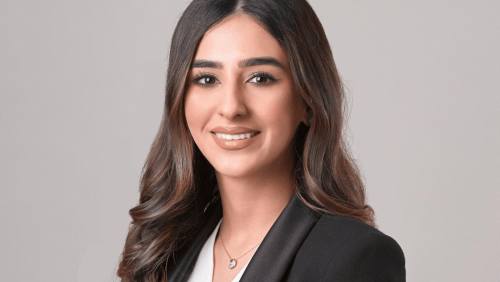
The Trust Question: Dr. Shadi Dawi on Governing AI in the Age of Generated Everything
Saying that “AI generated it” cannot become an acceptable excuse. Organizations choose the technology, decide how it is deployed and ultimately approve what reaches the public.
Opinions expressed by Entrepreneur contributors are their own.
You're reading Entrepreneur Middle East, an international franchise of Entrepreneur Media.

Artificial intelligence is no longer sitting on the sidelines of business. It is writing, researching, analyzing, communicating and increasingly influencing decisions across organizations. For Dr. Shadi Dawi, a Dubai-based AI and communications strategist, that rapid adoption presents an opportunity—but also a question businesses can no longer afford to ignore: who is responsible when AI gets it wrong?
“AI adoption has moved much faster than AI governance,” Dr. Dawi says.
Generative AI can now produce in minutes what once required hours or even days. Press releases, executive statements, reports, social media posts and even crisis communications can be drafted almost instantly. But while the speed of production has changed dramatically, Dr. Dawi argues that the systems designed to verify and approve that information have not always kept pace.
“The danger is that organizations can confuse efficiency with reliability,” Dr. Dawi says. “AI can produce extremely convincing language while still getting facts wrong, misunderstanding context or introducing bias.”
And when that happens, Dr. Dawi believes accountability remains firmly human.
Saying that “AI generated it” cannot become an acceptable excuse. Organizations choose the technology, decide how it is deployed and ultimately approve what reaches the public. AI may assist human judgment, but it cannot replace human responsibility.
That issue takes on particular significance in the UAE, a country that has positioned itself globally at the forefront of artificial intelligence and technological innovation.
Corporate communications in the UAE operate within an extraordinarily diverse environment, addressing multiple nationalities, languages and cultures. An AI-generated statement may therefore be factually accurate while still missing cultural nuances or failing to understand the context in which it will be received.
“Responsible AI cannot only be about accuracy,” Dr. Dawi says. “It must also understand context, culture and consequence.”
It is a subject Dr. Dawi has spent considerably more time studying than most.
Behind his work in communications lies two years of intensive doctoral research into precisely this challenge—a journey that has now culminated in Dr. Shadi Dawi being awarded a Doctorate of Business Administration with Premium Distinction from ESC Clermont School of Business in France.
His dissertation, “AI Truth: A Framework for Governing AI Generated Content in UAE Corporate Communications,” examines how organizations can capture the extraordinary productivity benefits of generative AI without sacrificing credibility, accountability or public trust.
Rather than approaching the issue purely from an academic perspective, Dr. Dawi wanted the research grounded in what was actually happening inside organizations. His study combined a survey of 160 UAE communications professionals with interviews involving 15 senior executives.
The result was a practitioner-focused framework built around four pillars: Data Accuracy and Verification, Cultural Resonance and Bias Mitigation, Moral Governance and Disclosure, and Signal over Flooding.
RELATED: UAE Opens Registration for Seventh Cohort of Artificial Intelligence Program
The first principle is straightforward but increasingly important: AI-generated information must be verified rather than automatically trusted.
The second recognizes that communication exists within a cultural environment. Large language models trained on enormous global datasets cannot automatically be expected to understand every nuance of the UAE or wider Middle East.
The third addresses accountability and transparency, ensuring that organizations understand when AI is being used and that human responsibility remains attached to the final output.
But perhaps the most interesting is Dr. Dawi’s fourth principle: Signal over Flooding.
AI has effectively removed the scarcity of content. Companies can now generate almost unlimited articles, posts, reports, videos and commentary. What has not increased is the audience’s attention.
“If everyone responds to AI by simply producing more, we create an enormous amount of noise,” Dr. Dawi argues. “The organizations that stand out will not necessarily be the ones producing the most content. They will be the ones producing the most relevant, credible and meaningful content.”
Dr. Dawi’s doctoral work received significant recognition during its defense. The three-member jury praised both the research and presentation, with the defense recommended as a reference for future doctoral candidates. Dr. Dawi was also encouraged to publish his findings in indexed scientific journals, potentially taking the work beyond its original academic setting.
For Dr. Dawi, however, earning the doctorate is not intended to mark the conclusion of the project.
The ambition is to continue developing “AI Truth” into something organizations can practically apply—potentially working alongside communications leaders, companies, academics and policymakers to test and evolve the framework as AI itself develops.
Because the technology certainly isn’t slowing down.
Over the coming years, audiences may increasingly struggle to know whether the corporate statement they are reading was personally written by a CEO, drafted by a communications team or generated almost entirely by an AI model.
In that environment, Dr. Dawi believes the competitive advantage will increasingly shift toward something technology cannot manufacture quite so easily: trust.
Companies that refuse to embrace AI risk falling behind. But organizations that embrace it without appropriate governance could face an even greater risk—the erosion of credibility built over years.
The winners, therefore, are unlikely to be either anti-AI or blindly pro-AI. They will be organizations capable of adopting the technology aggressively while governing it responsibly.
As Dr. Dawi puts it, the fundamental principle is remarkably simple:
“The content may be generated by a machine, but trust will always belong to the organization.”
RELATED: Perceptis AI Brings a Consulting-Informed Approach to Executive Presentations
Artificial intelligence is no longer sitting on the sidelines of business. It is writing, researching, analyzing, communicating and increasingly influencing decisions across organizations. For Dr. Shadi Dawi, a Dubai-based AI and communications strategist, that rapid adoption presents an opportunity—but also a question businesses can no longer afford to ignore: who is responsible when AI gets it wrong?
“AI adoption has moved much faster than AI governance,” Dr. Dawi says.
Generative AI can now produce in minutes what once required hours or even days. Press releases, executive statements, reports, social media posts and even crisis communications can be drafted almost instantly. But while the speed of production has changed dramatically, Dr. Dawi argues that the systems designed to verify and approve that information have not always kept pace.

Wissam Younane • Founder and CEO, BNC Publishing
Wissam Younane is a prominent media executive and entrepreneur based in Dubai, United Arab Emirates.... Read more