DIFC Courts Introduce NFT-Based Credentials to Speed Up Cross-Border Document Verification
Court orders and hearing records can now be authenticated worldwide within seconds, without storing document contents on the blockchain.
You're reading Entrepreneur Middle East, an international franchise of Entrepreneur Media.

The Dubai International Financial Centre (DIFC) Courts have begun issuing court orders and hearing records with NFT-based credentials that allow recipients worldwide to verify their authenticity and origin within seconds, without revealing document details.
The system allows banks, government authorities, courts and counterparties to quickly confirm that a document was issued by DIFC Courts, reducing authentication delays when it is used across borders.
Each digital file’s cryptographic fingerprint is linked to a unique, non-transferable NFT-based credential recorded on the Avalanche C-Chain public blockchain. Recipients can check the document against the credential, with any alteration to the file causing verification to fail.
The document itself is not stored on the blockchain, and no document content or confidential case information is recorded on chain.
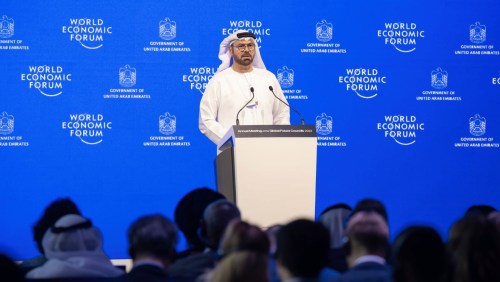
“Confidence in the authenticity of a court document should not depend on geography. By enabling a recipient to independently verify the source and integrity of a document within seconds, we are extending trusted digital infrastructure beyond the physical boundaries of the Court,” His Excellency Justice Omar Al Mheiri, Director of DIFC Courts, said.
“For international businesses and court users, this provides an additional layer of certainty when judicial documents are presented across institutions and jurisdictions,” H.E. Al Mheiri added.
The credentials is particularly relevant for businesses and individuals with no connection to the UAE who choose DIFC Courts to resolve disputes through its opt-in jurisdiction.
Deca4 Advisory, the courts’ blockchain technology partner, designed and implemented the system, integrating it with the courts’ existing document infrastructure. The initiative builds on DIFC Courts’ use of distributed ledger technology, including recording its notary service transactions on Hedera.
RELATED: DIFC to Become World’s First AI-Native Financial Center
The Dubai International Financial Centre (DIFC) Courts have begun issuing court orders and hearing records with NFT-based credentials that allow recipients worldwide to verify their authenticity and origin within seconds, without revealing document details.
The system allows banks, government authorities, courts and counterparties to quickly confirm that a document was issued by DIFC Courts, reducing authentication delays when it is used across borders.
Each digital file’s cryptographic fingerprint is linked to a unique, non-transferable NFT-based credential recorded on the Avalanche C-Chain public blockchain. Recipients can check the document against the credential, with any alteration to the file causing verification to fail.

Entrepreneur Middle East Staff
Entrepreneur Staff