The Business of Dreams: Simon Squibb on Entrepreneurship, Building Trust, and Taking Risks
“Every day, I take a risk, and if I don’t, my chances of succeeding drop. I think you fail if you don’t take risks.”
You're reading Entrepreneur Middle East, an international franchise of Entrepreneur Media.
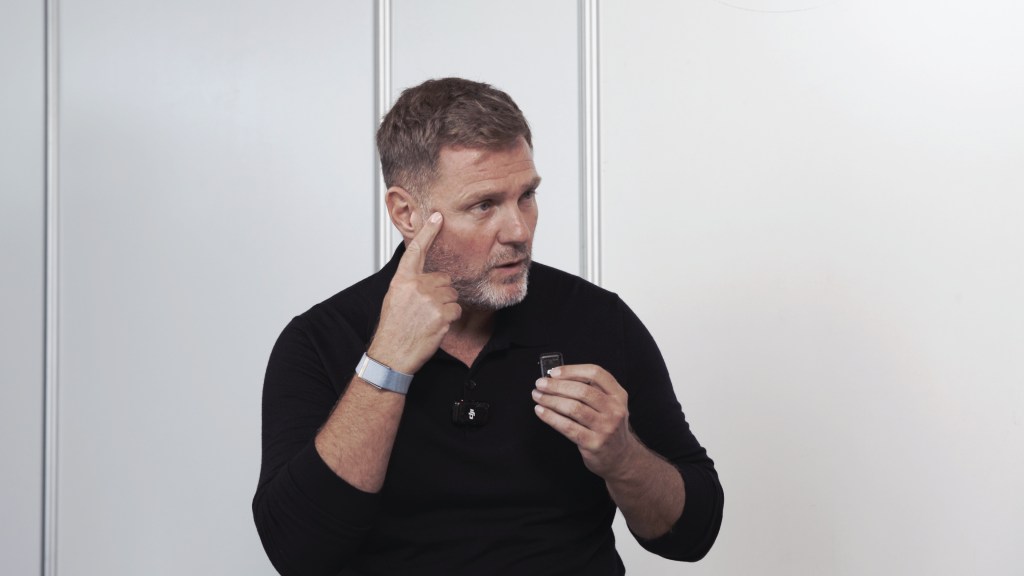
“What’s Your Dream?” is a question that has not only become synonymous with Simon Squibb, it is, at times, almost a prefix to his actual name (just a couple of weeks before this interview, someone outside my job circle spoke of Squibb as “the man on Instagram who asks people on the streets what their dreams are”). “I discovered something in the last seven years that I didn’t know about myself: I get more satisfaction from giving someone a present than receiving a present. I get more satisfaction helping someone else than just helping myself,” Squibb tells me, when I ask him how repeatedly asking that singular question has changed his own life.
“When I became a father, I chemically changed as well. My son is now nine years old. So in this process, I’ve realized he won’t do what I tell him to do; he’ll only do what I do. So the only way to really inspire young people, including my own son, is to actually do good in the world. Make a difference. Help people. That’s what I’ve discovered.”
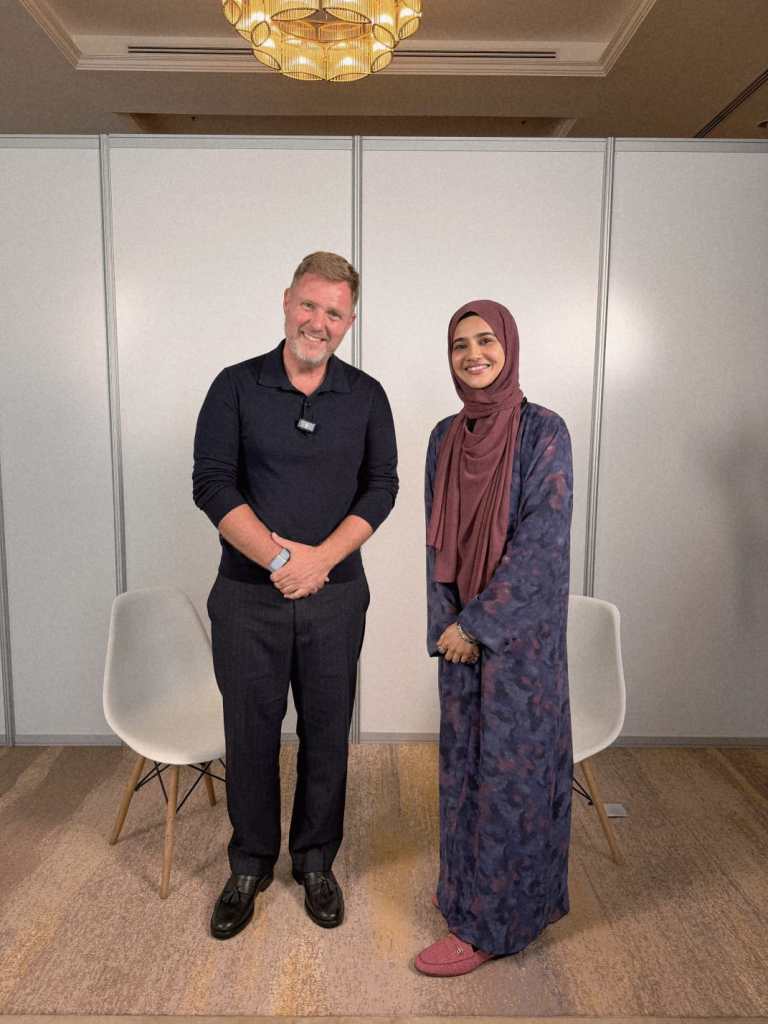
But within the first few moments of meeting Squibb, the multi-millionaire entrepreneur and investor does not ask me his trademark question. Instead he asks me this: “Why don’t you just ask AI?”“Chances are my audience will. You don’t need me. If it’s just my knowledge, my audience will be thinking, ‘Well, just ask AI,’” he further explains. As I proceed to explain why AI will only be able to offer me snapshots of what Squibb has said in the past, and not his present and updated insights, Squibb adds: “Humans will always have a place in the future… We want to know who the human is to make sure we’re not backing a fake human. AI doesn’t have a backstory; we have backstories. That’s what makes us interesting. At the same time, a lot of people are scared [of AI], and I think they’re unnecessarily scared. You need to tool up. You need to get ready. You need to leverage these tools. You need to learn how they work. But we are going to always be servicing humans as humans.”
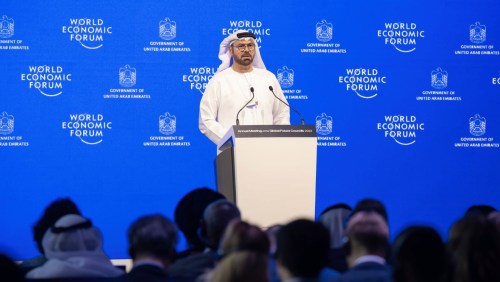
Earlier in the day —on Day 1 of the Sharjah Investment Forum 2026, which is where this interview takes place— Squibb addressed a massive audience and explained the three tenets he believes make up the purpose of life: Commit, Community, Change. “I’m not self-made. It’s impossible,” he told the packed hall. “You need a community to make anything work. Imagine if all of us in this room, all of us, decided to help one person today. Imagine the difference we could make to that person’s life. Between your network, your contacts, we could change one person’s life.”
But despite the beaming optimism that Squibb radiates, his mindset doesn’t stem from idealism or what the Internet terms as “toxic positivity.” “The key to making a dream a reality is that it has to be personal,” he says. “I often tell people your purpose is hidden in your pain. If you can leverage pain to do some good, you won’t stop. If there’s a problem you’re solving in the world that has bothered you, you won’t stop. Now, if you don’t have pain, I wish it upon you a little bit because it gives you motivation and purpose. And if you don’t have pain, go out with someone that does. You’ll see what it looks like. And it’s really powerful because good luck and bad luck are both still luck. People need to leverage luck, be it bad or good. And I notice people that really, really do well, they don’t just want it, they need it.”
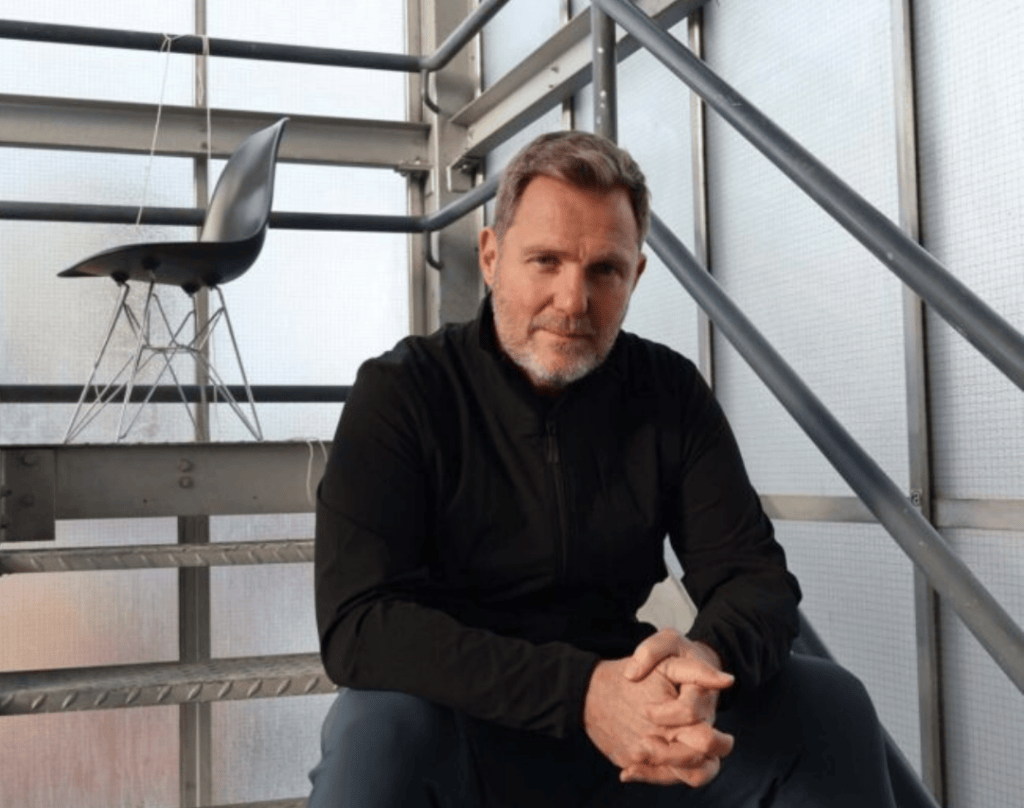
Squibb, of course, is no stranger to dealing with life’s blows. Having lost his father at the age of 15, he had to build what he calls the “entrepreneur muscle” when he decided to start a gardening company to support himself and his family. In the nearly four decades since that pivotal decision, Squibb has gone on to build over 28 different companies and has invested in more than 80 startups. Then, in 2015, he sold one of his Hong Kong-based companies to global professional services giant PwC — a move that would eventually bring him into “more money than he’ll ever need,” as per his official website, and birth the life mission that he continues to work toward till today: to help 10 million people kickstart their businesses and follow their dreams for free. And so, in 2023, he launched HelpBnk, a London-headquartered online platform that helps people start and grow businesses by offering free mentorship, resources, community support, and access to accelerators and funding. The concurrent #GiveWithoutTake movement, which takes place primarily through street interviews where Squibb asks random passersby “What’s your dream?” has helped him amass over 27 million social media followers.
And according to Squibb, social media is now key for entrepreneurs and founders to build their personal brands – but only if it’s done with the right intent. “I think people need to take the concept of personal branding and boil it down to something much simpler. What do your colleagues say about you? Do they respect you? Are you managing from the top down or the bottom up? I think bottom-up management is more powerful. You’re in it with them, and respect is earned, not taken,” he says.
“So I think personal branding starts with your ecosystem. It doesn’t necessarily start with the public… I think people aren’t building their personal brands in the right way. You need to build trust with your colleagues, your customers, and within your industry. I spent 20 years building that trust before I ever went to the public and asked them to trust me, too. And then, never be anybody but yourself. Don’t create a character. Be you. It doesn’t matter who you are; let people see the real you. If you do that, you can sustain your personal brand. If you don’t, you’ll eventually drop off.”
But even before personal branding comes into the picture, an ever-elusive question for entrepreneurs is when to launch. When asked what advice he has to offer on the matter, Squibb says, “I think it depends on the industry you’re in. I do like the idea of building it and shipping it as quickly as possible. But equally, there are some industries where, let’s say pharmaceuticals, you have people’s lives in your hands. So you have to be very careful. I think there’s no general rule.”
As is typical of Squibb’s tips-sharing approach, he offers two of his most recent ventures as examples. “I have launched 28 companies in my life, and each of them had a different timeline for when it was appropriate to launch,” he shares.“For example, I’ve just launched a new coffee brand called Dream Brew. It took me a year and a half to get the product right. I needed that time to create a product I truly believed in. I could have launched it six months earlier, but it didn’t taste the way I wanted it to. I could have shipped it, but I think it was better to wait. On the other hand, when I launched the software product for HelpBnk nearly four years ago, it was awful. People couldn’t even press the buttons properly. But slowly, we improved it. We found out what people really needed by asking the market what they wanted. We built a basic version. It was rubbish, but people gave us feedback, and we kept improving it. So, ultimately, every business is different.”
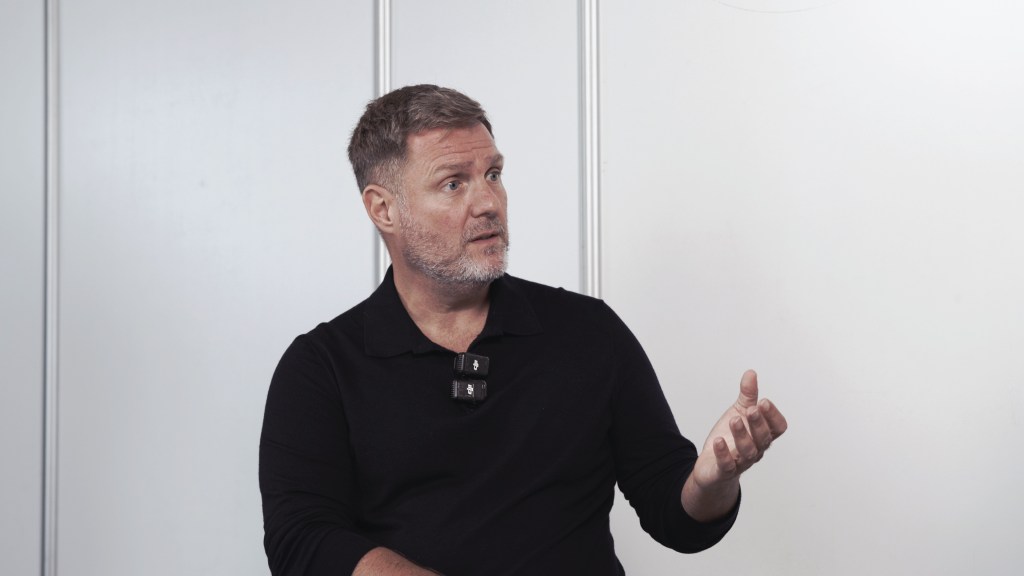
Squibb’s advice feels almost tailor-made for a nation like the UAE, which has become a premier launchpad for companies across different stages of growth and in a myriad of industries. Indeed, in 2025 alone, it became home to approximately 250,000 new companies (as per information shared by the Ministry of Economy and Tourism), thus bringing the total number of registered businesses in the country to roughly 1.4 million by the end of the year.
But while the UAE’s entrepreneurial ambitions, spirit and growth have certainly become the blueprint for many, Squibb says there is one thing founders in the country can do better to unlock their full business potential: “Take more risks! I think if you take risks, you’ll get more luck. More luck leads to success. And if you don’t take risks, you reduce your chances of success. Every day, I take a risk, and if I don’t, my chances of succeeding drop. I think you fail if you don’t take risks.”“That’s what I love about business,” he adds. “You can say, at worst, I lose all my money and have to start again. There’s so much money in the world. There’s plenty of it. You just need to be willing to live humbly for a while to come back up. But you’ll never lose the lessons you learn from taking a risk. That knowledge is yours forever. Even if you lose all your money, you still own those learnings. And that’s what people aren’t realizing about risk. It’s a learning experience, and that’s how you succeed. People see risk as a potential financial downside. I see not taking risks as a knowledge downside. If you don’t take risks, you won’t gain the knowledge, and you won’t be successful.”
To cement Squibb’s advice, and to conclude this story, I want to share a quote from his talk earlier in the day, where he elaborated on the aforementioned story of how he became an entrepreneur in the first place: “I was walking past a beautiful big house, and they had a messy garden. And my brain spoke to me, this ‘entrepreneur muscle,’ for the first time, said: “Simon, knock on that door. Take a risk. Be brave. Ask them if they will pay you to tidy up their garden.” I swallowed my pride. I swallowed my fear. And I knocked on that door. And someone kind -I didn’t know they were kind at the time- but someone kind came to the door, looked me up and down and said, “How can I help you?” I said: “I notice your garden’s messy. I’m starting a gardening company. Would you let me take care of your garden?” And they said, okay, how much? And I said, 200 pounds a month.
“I felt alive. I had taken an idea in my head and made it real! It was my first experience with that. No one ever told me this was possible. The chairs that we’re all sitting on, once in someone’s head, they made it real. This stage, once inside someone’s head, they made it real. This microphone, once in someone’s head, and they made it real. We humans are incredible.”
“What’s Your Dream?” is a question that has not only become synonymous with Simon Squibb, it is, at times, almost a prefix to his actual name (just a couple of weeks before this interview, someone outside my job circle spoke of Squibb as “the man on Instagram who asks people on the streets what their dreams are”). “I discovered something in the last seven years that I didn’t know about myself: I get more satisfaction from giving someone a present than receiving a present. I get more satisfaction helping someone else than just helping myself,” Squibb tells me, when I ask him how repeatedly asking that singular question has changed his own life.
“When I became a father, I chemically changed as well. My son is now nine years old. So in this process, I’ve realized he won’t do what I tell him to do; he’ll only do what I do. So the only way to really inspire young people, including my own son, is to actually do good in the world. Make a difference. Help people. That’s what I’ve discovered.”
But within the first few moments of meeting Squibb, the multi-millionaire entrepreneur and investor does not ask me his trademark question. Instead he asks me this: “Why don’t you just ask AI?”“Chances are my audience will. You don’t need me. If it’s just my knowledge, my audience will be thinking, ‘Well, just ask AI,’” he further explains. As I proceed to explain why AI will only be able to offer me snapshots of what Squibb has said in the past, and not his present and updated insights, Squibb adds: “Humans will always have a place in the future… We want to know who the human is to make sure we’re not backing a fake human. AI doesn’t have a backstory; we have backstories. That’s what makes us interesting. At the same time, a lot of people are scared [of AI], and I think they’re unnecessarily scared. You need to tool up. You need to get ready. You need to leverage these tools. You need to learn how they work. But we are going to always be servicing humans as humans.”

Aalia Mehreen Ahmed • Senior Features Editor, Entrepreneur Middle East
Entrepreneur Staff
Senior Features Editor at Entrepreneur Middle East and host of Anchored Echoes, with nearly seven... Read more