Barroso at RISE Summit 2026: “We Are Now Living Through an Inflection Point”
“The best decision investors can make in 2026 is to invest in those sectors, but not to pay any price for growth,” he said. “Keep some liquidity because of the increased volatility.”
You're reading Entrepreneur Middle East, an international franchise of Entrepreneur Media.
The global investment landscape is not going through another cycle. It is undergoing a structural shift, according to José Manuel Barroso, Chairman of Goldman Sachs International Advisors and former President of the European Commission.
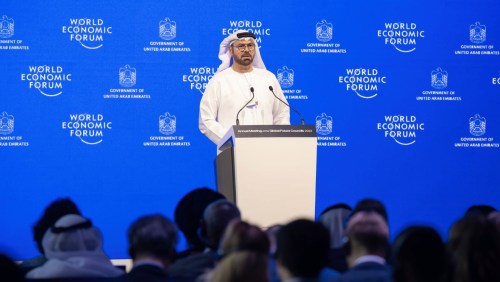
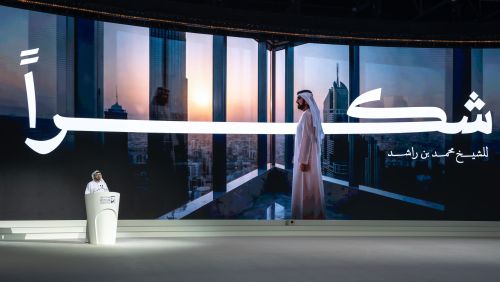
Speaking in an on-stage interview at the opening of RISE Summit 2026 at Dubai World Trade Centre, Barroso addressed “The Great Capital Shift.” His session examined how the United States, Europe, Asia and the Gulf are competing for long-term investment, and whether today’s changes in capital flows mark a lasting change. This year’s summit is themed “Recharging Momentum in Global Economies.”
“I really believe we are now living through an inflection point. It’s a change of paradigm,” Barroso said. “I don’t think we can make linear projections based on what has happened in the past. This is not cyclical. It is a much more complex change in the global outlook for investment.”
He pointed to two forces driving that change. “It’s not only geopolitics, it’s the scientific and technological revolution, and I underline the word revolution. What’s going on is truly transformative, and we have to adapt to a world that is not going to be like before. The way we allocate capital is going to change fundamentally.”
That shift is already changing what investors prioritize. “Many years ago, geopolitical risk was not top of mind for investors,” he said. “Now, with that risk and the lingering effects of the pandemic, investors, not only governments but also the private sector, give a much higher priority to resilience. I would say resilience is now more important than short-term efficiency.”
Barroso expects the race for global leadership between Washington and Beijing to remain a central force. “Global competition is going to continue. The competition for preeminence between the United States and China will be a defining feature of the future.”
He also warned against assuming that emerging technologies will serve only peaceful purposes. “AI and some of these technologies are dual-use. They are great for health and education, and they will transform many of our capabilities. But some people say they are mainly technologies of war and defense. Let’s not be naive. Whatever people say about containing them, they will also be developed for defense and war.”
For the Gulf, Barroso sees the new environment as a significant opening. “Investment will be much more diversified. I believe the Gulf has a great opportunity in this new situation.”
Barroso described a broad reallocation of capital toward what he calls “the infrastructure of power.”
“There is now a mobilization of capital toward energy, technology and strategic infrastructure, including defense,” he said. “Defense spending is already going up all over the world, not only here. For obvious reasons, we have a war in Europe, but it is happening in other parts of the world too. From an investment perspective, I believe this will continue for the foreseeable future.”
On AI, he was bullish on the sector but cautious about individual companies. “Not every AI company will succeed. At some point, I believe there will be some form of correction. Still, the sector is truly transformative.”
He was more certain about the physical infrastructure behind it. “Everything linked to infrastructure, the energy transition and AI is going to boom. I have no doubt about it. AI physically needs data centers, and we are already seeing a rush to invest in them all over the world, including in Europe and in my own country, Portugal, with a lot of American investment.”
Barroso also pointed to real estate opportunities linked to demographic change. “Real estate depends on the asset class and on the geography. Beyond specialized infrastructure, there is hospitality. With aging populations, everything related to wellness and longevity will offer huge opportunities.” He added, “Why are Spain and Portugal growing faster now than Germany and France? Partly because of the boom in tourism and hospitality. This region has also been doing great things in that sector.”
Barroso closed with a word of caution for investors chasing growth. “The best decision investors can make in 2026 is to invest in those sectors, but not to pay any price for growth,” he said. “Keep some liquidity because of the increased volatility. That’s what I would do if I were a big investor, which I’m not.”
The global investment landscape is not going through another cycle. It is undergoing a structural shift, according to José Manuel Barroso, Chairman of Goldman Sachs International Advisors and former President of the European Commission.
Speaking in an on-stage interview at the opening of RISE Summit 2026 at Dubai World Trade Centre, Barroso addressed “The Great Capital Shift.” His session examined how the United States, Europe, Asia and the Gulf are competing for long-term investment, and whether today’s changes in capital flows mark a lasting change. This year’s summit is themed “Recharging Momentum in Global Economies.”
“I really believe we are now living through an inflection point. It’s a change of paradigm,” Barroso said. “I don’t think we can make linear projections based on what has happened in the past. This is not cyclical. It is a much more complex change in the global outlook for investment.”
He pointed to two forces driving that change. “It’s not only geopolitics, it’s the scientific and technological revolution, and I underline the word revolution. What’s going on is truly transformative, and we have to adapt to a world that is not going to be like before. The way we allocate capital is going to change fundamentally.”
That shift is already changing what investors prioritize. “Many years ago, geopolitical risk was not top of mind for investors,” he said. “Now, with that risk and the lingering effects of the pandemic, investors, not only governments but also the private sector, give a much higher priority to resilience. I would say resilience is now more important than short-term efficiency.”
Barroso expects the race for global leadership between Washington and Beijing to remain a central force. “Global competition is going to continue. The competition for preeminence between the United States and China will be a defining feature of the future.”

Tamara Pupic • Editor in Chief, Entrepreneur Middle East
Entrepreneur Staff
Tamara Pupic is the Editor in Chief of Entrepreneur Middle East.