AIM Congress 2026: Why Africa’s Infrastructure Boom Must Start Now
Marcus Weyll explains why patient, long-term capital could help close Africa’s infrastructure financing gap while creating opportunities for investors.
Opinions expressed by Entrepreneur contributors are their own.
You're reading Entrepreneur Middle East, an international franchise of Entrepreneur Media.

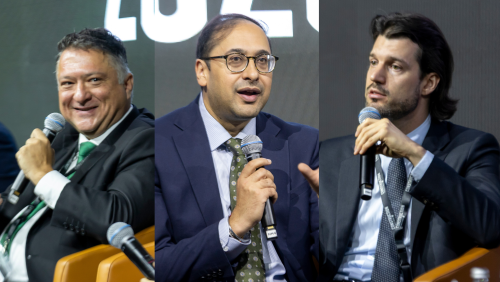
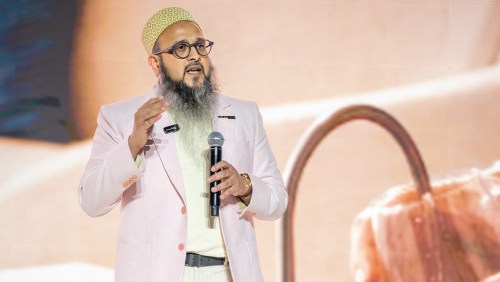
I was honored to address AIM Congress 2026 this week in Dubai, and it has left me more convinced than ever that the greatest investment opportunity of the next decade sits right in front of us – if we have the courage to see it.
The contradiction at the heart of my industry is simple but devastating: there is an enormous amount of capital in the world looking for long-term returns, and an equally enormous amount of unmet need in emerging markets. Yet the two have barely found each other.
Across Africa, more than 400 million people live without access to clean water and around 600 million lack reliable electricity. The infrastructure projects that could change these lives exist – they are bankable, they are designed, they are ready to build. What they lack is the right capital, shaped in the right way, from investors willing to stay the course.
The scale of the gap is staggering. Fewer than one in ten infrastructure projects in emerging markets reaches financial close. Of those that are funded, more than seventy percent run over budget. This is not because the projects are bad. It is because capital and assets speak different languages.
Africa requires between 130 and 170 billion US dollars of infrastructure investment every year. The continent falls tens of billions short annually. Meanwhile, developed markets hold around 1.7 trillion US dollars in private credit assets, while emerging markets hold roughly 130 billion – most concentrated in Asia, leaving Africa chronically undercapitalized.
Why does this gap persist? Two reasons.
The first is a mismatch of time. Infrastructure is built over years and repaid over decades. Much of the money that reaches these markets is short-term and impatient. Even willing capital often arrives in the wrong shape for the job.
The second is a mismatch of judgment. Risk in emerging markets is priced on perception rather than performance; capital holds back on the assumption that danger is greater than evidence shows.
But the fundamentals are moving decisively in Africa’s favor.
By 2050, one in four people on Earth will live in Africa. More than half the world’s young people will be African. The continent’s population will nearly double to 2.5 billion, and it is urbanizing faster than any place on Earth. By 2050, two in three Africans will live in cities; those cities need power, water, hospitals – all financed, built, and operated.
At the same time, Africa is integrating its markets. The African Continental Free Trade Area links 1.4 billion people and a combined economy of roughly 3.4 trillion US dollars. Just over 15 percent of Africa’s trade is with other African countries today. In Asia, it is closer to 60 percent. The room to grow is enormous.
And here is what matters most for investors: these markets carry far less debt than developed economies. In some of the world’s largest developed economies, private debt runs above 150 percent of GDP. In Nigeria, Zambia, and Ghana it sits closer to 15 percent. There is real room for private credit.
Turning this opportunity into resilient infrastructure that delivers long-term value takes three things.
The first is genuine partnership. Public, development, and private capital do their best work when combined deliberately. Concessional money can share risk and draw private investment in at scale.
The second is patience. An asset that repays over decades needs capital that stays for the life of that asset. Close the gap between short money and long assets, and good projects are priced and built to last.
The third is proximity to delivery. Capital that sits far from the ground cannot control the risks that sink projects. An investor who is also the operator – who manages construction, regulation, and day-to-day running directly – is how projects reach resilient, long-term operations.
This is the model we have built at Gemcorp. Since 2014, we have invested over 9 billion US dollars across 25 emerging markets at high double-digit returns. In Angola, we are default-free over a decade of exceptional operations. We have created around 20,000 jobs and extended essential services reliably to millions of people.
And there is a deep connection to the Middle East too. This region’s strong cultural and economic ties with Africa – combined with Dubai’s strategic position at the crossroads of Latin America, Asia, Africa, Central Asia, and Eastern Europe – provide a powerful base to mobilize capital, technology, and talent, for high impact delivery.
The investors who are well positioned in these markets over the coming decade may be those who match their capital to what they are actually financing. The ones who bring long-term money to long-term assets. The ones willing to be contrarian, patient, and present when others exit.
RELATED: AIM 2026 Explores the New Geography of Global Investment
I was honored to address AIM Congress 2026 this week in Dubai, and it has left me more convinced than ever that the greatest investment opportunity of the next decade sits right in front of us – if we have the courage to see it.
The contradiction at the heart of my industry is simple but devastating: there is an enormous amount of capital in the world looking for long-term returns, and an equally enormous amount of unmet need in emerging markets. Yet the two have barely found each other.
Across Africa, more than 400 million people live without access to clean water and around 600 million lack reliable electricity. The infrastructure projects that could change these lives exist – they are bankable, they are designed, they are ready to build. What they lack is the right capital, shaped in the right way, from investors willing to stay the course.

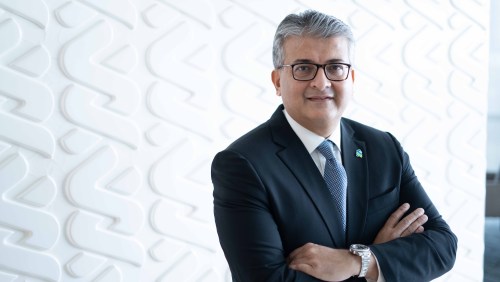
Marcus Weyll • CEO, Middle East and Africa Gemcorp Group; CEO, Imbono
Marcus Weyll is CEO for the Middle East and Africa at Gemcorp Group and CEO... Read more