Designing Fair Architecture for Global Sport: Dmitry Saksonov, Founder, Blockchain Sports
“It’s not flashy, but it’s foundational. We win because we didn’t start with a token or a fan product. We started with the athlete, in real environments, and built upward.”
You're reading Entrepreneur Middle East, an international franchise of Entrepreneur Media.
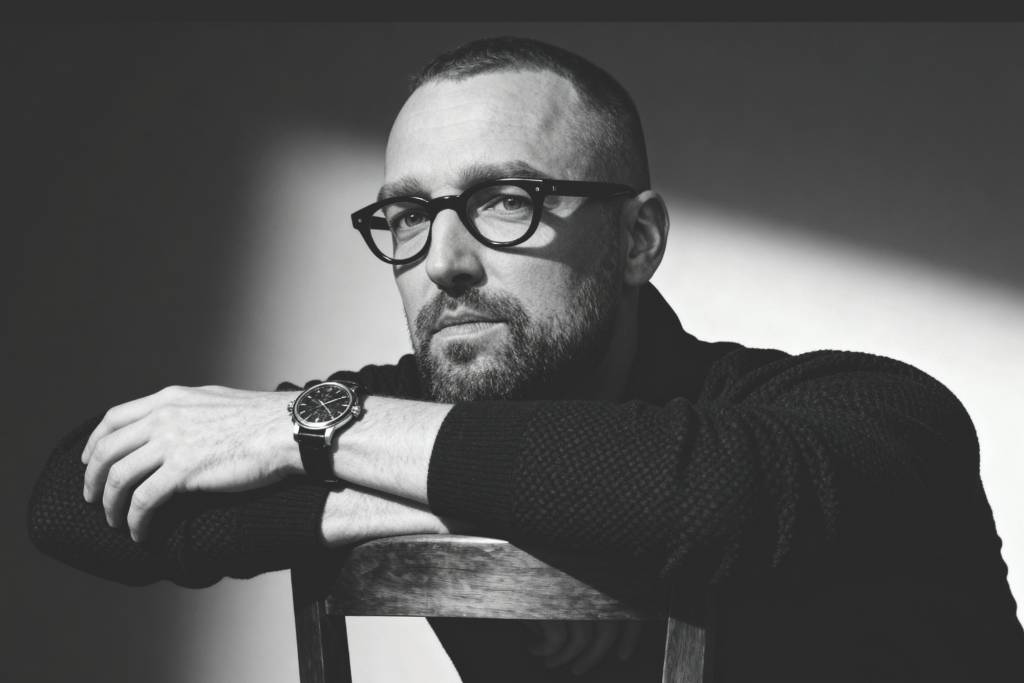
Dubai-based Belarusian expat Dmitry Saksonov traces the origins of his US$250 million blockchain-based sports ecosys tem to a defining moment far from the boardroom. A visit to football academies in Rio de Janeiro in 2022 proved pivotal as it exposed how poverty in the city’s favelas strips young athletes of opportunity.
“I spent time in communities where football isn’t a dream, it’s a language. The talent level was extraordinary. The infrastructure was not,” Saksonov explains. “Players were producing value every day without visibility, protection, or long-term upside.Traditional systems centralize power and extract value upward. If you don’t control access, you don’t control your future. That’s the flaw. “Decentralization, in this context, isn’t ideological. It’s practical,” he adds. “It allows ownership, trans parency, and continuity to sit closer to the individual. Sport doesn’t need disruption for its own sake. It needs fair architecture.”
He subsequently developed Blockchain Sports — described as “a global infrastructure that enables athletes, clubs, and fans to operate within a transpar ent, data-driven sports economy where value follows contribution”— to serve the entire value chain, not just the top 1%. “Most systems in global sport were built decades ago for a far smaller, more localized industry,” Saksonov says. “Today, you have millions of athletes globally producing value every day, but ownership of that value sits with intermediaries. Data disappears when a player moves. Decisions are subjective. Opportunity depends on geography and access, not merit.”
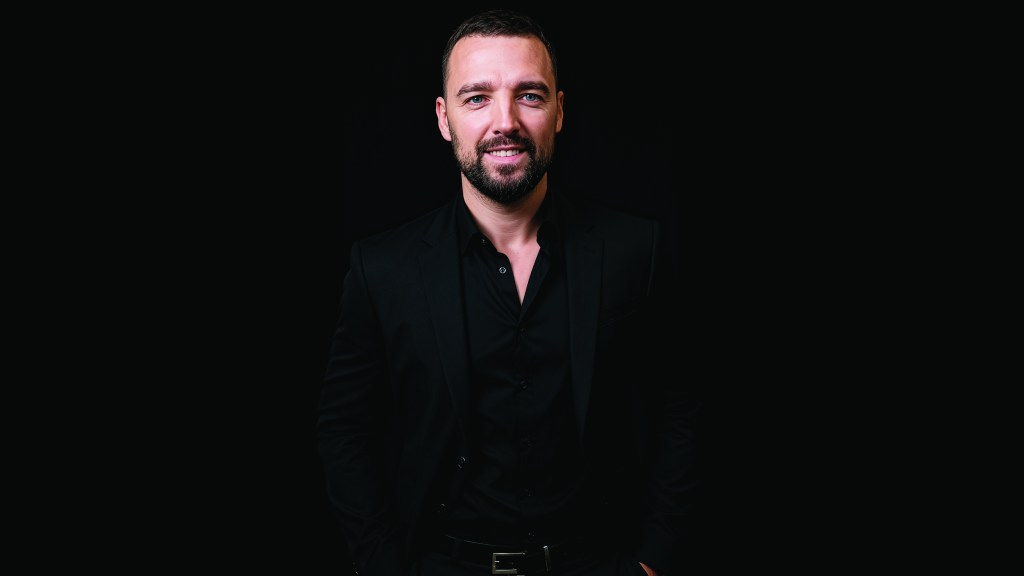
The blockchain-in-sports sector has expanded rapidly in recent years, with decentralized systems enhancing ticketing, memorabilia authentication, fan engagement, and new revenue models. Within this landscape, Saksonov’s approach focuses on using blockchain to rebalance power dynamics in sport. “We’re building a system where an athlete’s development, performance data, and progression exist independently of any single club, agent, or league. That continuity is the breakthrough,” he says. “It’s not flashy, but it’s foundational. We win because we didn’t start with a token or a fan product. We started with the athlete, in real environments, and built upward.”
Saksonov argues that the structural challenges facing the sports industry cannot be resolved through isolated solutions, positioning Blockchain Sports as a comprehensive ecosystem rather than a single product.
Its model integrates on-the-ground development— through physical academies, training facilities, and early-stage talent programs—with a digital intelli gence layer that captures performance metrics, progression data, and longitudinal athlete profiles that persist across clubs and borders. Underpinning this system is a blockchain infrastructure designed to ensure that data, rights, and transactions are secure, verifiable, and portable, while maintaining athlete ownership of their records and increasing transparency for clubs and stakeholders.

“The value is in the connection between layers,” Saksonov explains. “Remove one, and the system collapses. Together, it compounds.”
The Blockchain Sports venture generates revenue through a combination of proprietary blockchain platforms and digital tools licensed to sports organizations for analytics, performance tracking, and fan engagement.
Plus, there are also tokenized participation models that allow supporters to interact with athletes and ecosystems through digital value-exchange mechanisms. This technology-led foundation is reinforced by strategic partnerships and external investment, which fuel platform expansion and infrastructure growth, as well as by real-world operations, including sports academies and technology-enabled training facilities that integrate seamlessly with the wider ecosystem.
“Our revenues come from institutional partnerships, technology licensing, enterprise data services, and participation across the ecosystem,” Saksonov says. “Tokens exist, but they are not the business. They are an access and alignment mechanism. We built the company to survive cycles. That means real revenue, real users, and real contracts, not speculation.”
To date, Blockchain Sports has reached a significant stage of growth, attracting international attention and tangible market traction. The project has been covered by global media, including reporting that references a valuation bench mark of around US$250 million. In the UAE, the platform delivered a major live activation at Dubai’s Coca-Cola Arena, drawing 16,000 attendees.
Beyond the UAE, Blockchain Sports continues to expand through international markets, building strong local communities across MENA, the United States, and Latin America. Based on publicly available informa tion, it appears that athletes’ trust in blockchain ventures is cautiously gaining ground as the technology begins to demonstrate clear, practical value—but adoption remains uneven and often tied to proven use cases. Saksonov says, “This industry [Web3] has seen too many promises that didn’t materialize. Too many plat forms that prioritized growth metrics over people. We earned trust by staying present, fixing mistakes, and doing the unglamorous work consistently.”
Against this backdrop, the question remains: what is the next major income stream for athletes? “Long term data ownership,” Saksonov replies. “Verified performance history, development metrics, and progression records will become a form of economic identity. Athletes who control that data will negotiate better contracts, smarter endorsements, and sustainable post-career opportunities. Attention fades. Credibility com pounds.”
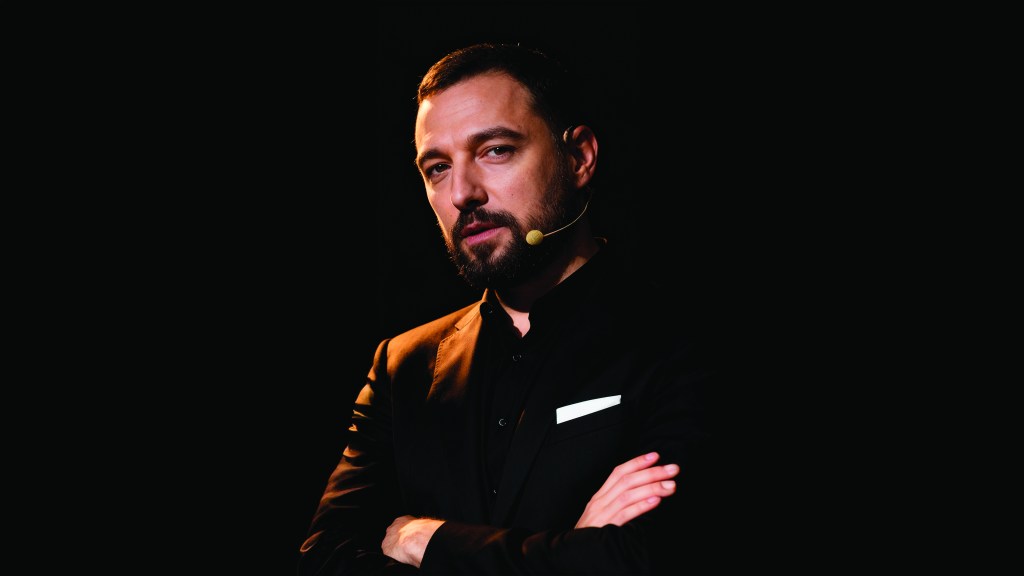
While blockchain holds transformative potential for sports, gaps in legal clarity, governance, and consumer protection still limit broader adoption. Saksonov’s approach to scaling responsibly is rooted in a simple principle: responsibility must be built into the system from day one, not added later.
“We work market by market, partner with regulated entities, and design governance into the infrastructure itself,” he says. “If something can’t be explained clearly to a regulator, it doesn’t belong in production. Scale without responsibility isn’t progress.”
With this emphasis on regulatory clarity, it is little surprise that Saksonov chose to establish the business in the UAE, which has already emerged as a global bench mark for Web3, blockchain, and crypto regulation. “Before the UAE, I worked across technology projects and digital infrastructure. In that world, you learn fast: hype means nothing if you don’t have systems, security, processes, and people you can truly trust. I built teams, launched products, and developed strong operations — not just ideas, but execution under real deadlines, real risk, and real responsibility,” Saksonov says. “I moved to the UAE because it’s a place where strong people can quickly come together into strong alliances. It’s one of the few hubs where global ambition, serious infrastructure, and long-term thinking can align — if you know how to unite the right people and keep your word.”
Looking ahead, Saksonov says the company’s focus remains firmly on disciplined, execution-led growth rather than hype. “Our plan is very practical: scale through people, partnerships, and infrastructure—not through loud promises,” he says. In the near term, Blockchain Sports is strengthening its onboarding and entry rails, particularly for US-based users, while expanding partnerships across MENA and the United States, spanning exchanges, payment providers, and sports organizations. The company is also advancing its product roadmap and B2B deployments, alongside high-visibility activations designed to build trust and brand credibility.
Saksonov adds, “Over the mid term, we’re building a global ecosystem layer where athletes get real opportunity, clubs get data and talent pipelines, and fans gain meaningful participation and value. We’re also expanding into licensing and larger scale integrations.”
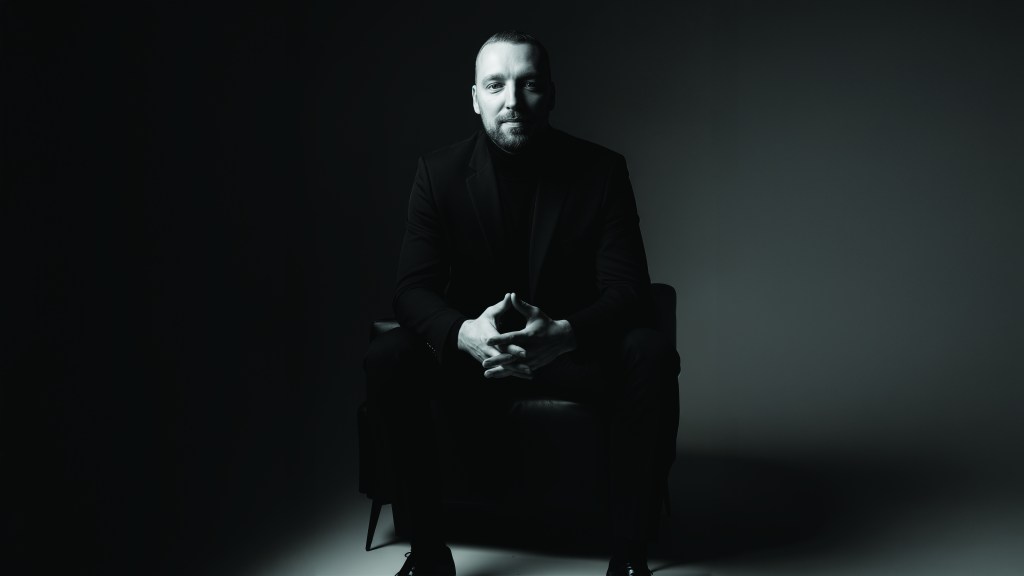
Ultimately, Saksonov’s goal is to build one of the world’s leading sports-tech ecosystems—not for valuation headlines, but for measurable impact. “A system that brings people together, gives athletes a path, gives fans participation, and makes sports more transparent and more technology-driven,” he explains. “And if I’m being completely honest, I don’t want to leave behind ‘just a company.’ I want to leave behind a team, a culture, and a movement that can keep growing even without me. That’s what real scale looks like.”
‘TREP TALK: Dmitry Saksonov Shares Guidance for Web3 Entrepreneurs Entering Dubai
BUILD FOR EXPORT MARKETS FROM DAY ONE PEOPLE FIRST — EVERYTHING ELSE SECOND. “Find the right partners and build a strong team. In Dubai, relationships, trust, and reputation are everything. One strong partner can accelerate you by a year. One toxic partner can destroy the entire project.”
COMPLIANCE AND TRANSPARENCY ARE NOT BUREAUCRACY — THEY’RE LEVERAGE. “If you want to build long-term here, build clean from day one. Structure, governance, and legal clarity are what make a business stable, investable, and scalable.”
REMOVE FRICTION FOR REAL USERS. “Your user should not suffer. Fiat → crypto rails, KYC delays, holds, banks — these are the points where people drop off. If you remove the pain, you win. The game is to make entry simple, fast, and fair.”
Dubai-based Belarusian expat Dmitry Saksonov traces the origins of his US$250 million blockchain-based sports ecosys tem to a defining moment far from the boardroom. A visit to football academies in Rio de Janeiro in 2022 proved pivotal as it exposed how poverty in the city’s favelas strips young athletes of opportunity.
“I spent time in communities where football isn’t a dream, it’s a language. The talent level was extraordinary. The infrastructure was not,” Saksonov explains. “Players were producing value every day without visibility, protection, or long-term upside.Traditional systems centralize power and extract value upward. If you don’t control access, you don’t control your future. That’s the flaw. “Decentralization, in this context, isn’t ideological. It’s practical,” he adds. “It allows ownership, trans parency, and continuity to sit closer to the individual. Sport doesn’t need disruption for its own sake. It needs fair architecture.”
He subsequently developed Blockchain Sports — described as “a global infrastructure that enables athletes, clubs, and fans to operate within a transpar ent, data-driven sports economy where value follows contribution”— to serve the entire value chain, not just the top 1%. “Most systems in global sport were built decades ago for a far smaller, more localized industry,” Saksonov says. “Today, you have millions of athletes globally producing value every day, but ownership of that value sits with intermediaries. Data disappears when a player moves. Decisions are subjective. Opportunity depends on geography and access, not merit.”

Tamara Pupic • Editor in Chief, Entrepreneur Middle East
Entrepreneur Staff
Tamara Pupic is the Editor in Chief of Entrepreneur Middle East.