“Every Nation Has Problems”: Shafi Shoukath On Building WOI.eco Into A Five-Country Entrepreneurship Engine
The founder and chairman of WOI.eco is convinced that the people living closest to a country’s problems are the founders who should be solving them — and he is building the infrastructure to prove it.
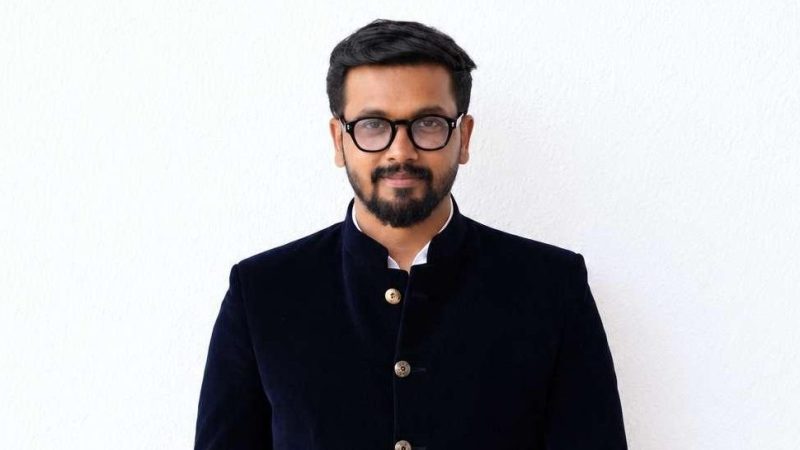
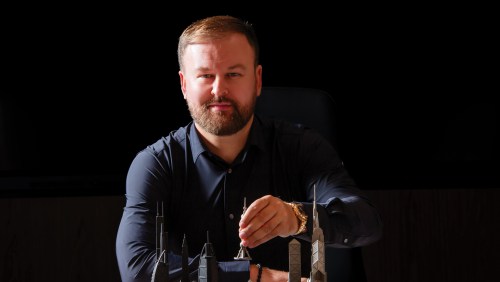
Shafi Shoukath, CEO of WOI.eco
You're reading Entrepreneur Middle East, an international franchise of Entrepreneur Media.
For Shafi Shoukath, the conversation about what makes a country prosperous has been pointed in the wrong direction for a long time.
Ask an economist and the answer arrives as an inventory — resources, infrastructure, capital markets, industrial base. Shoukath, the founder and chairman of WOI.eco, starts with what a country has not managed to fix, and with the people who have been living inside that failure long enough to know exactly where it breaks.
“Every nation has problems,” he says. “But every nation also has people who understand those problems better than anyone else.”
It is a deceptively simple line, and everything WOI.eco is building follows from it. The organisation is now operating across the UAE, India, Kenya, Malaysia and Sri Lanka.
The Founders Nobody Is Looking For
Shoukath’s argument is that the deepest domain knowledge in any economy sits with people who are never invited to pitch. The farmer who has spent two decades absorbing every inefficiency in an agricultural supply chain. The small-business owner navigating a financial system that was never designed for her. The patient who can trace the exact seams where a health system fails.
Conventional development treats them as beneficiaries. Shoukath treats them as an untapped founder pipeline — and insists the case is commercial, not charitable. A healthcare gap is the seed of a health-tech company. An agricultural inefficiency is an agritech platform. Exclusion from credit is a fintech thesis.
Talent Is Not Enough on Its Own

Such a person does not merely recognise a problem, in his description; they ask how it can be solved. They do not wait for opportunity; they learn to manufacture it.
Where most national innovation agendas stall, he says, is between recognising an opportunity and actually building a company against it. A young engineer may understand a problem intimately but lack access to capital. A researcher may hold valuable technology without a clear commercial pathway. A first-time founder may have conviction while lacking mentors, distribution, and early customers.
That conversion gap is what WOI.eco is built to close. Research aims to map a country’s problems and help translate them into defined opportunities. Venture studios co-build companies alongside founders instead of waiting for pitch decks. Centres of excellence are intended to provide technical depth. Corporates arrive as industry partners and as first customers. Universities contribute research and talent. Investors come in at the point a business can absorb capital.
The output Shoukath describes is not a portfolio of programmes but a loop: problems become opportunities, opportunities become entrepreneurs, entrepreneurs become companies, companies create capital and industries — and then employees of the first generation become the founders of the second.
Five Countries, Five Different Answers
The methodology explicitly rejects the copy-paste playbook. India should not try to become another Silicon Valley, in Shoukath’s view. Kenya should not model itself on India. Malaysia should not aim to replicate Singapore. The UAE should not become a version of anywhere else.
The UAE, he says, functions as the convergence point — global capital, mobile talent and state-level economic transformation in one place. India brings scale. Kenya anchors one of Africa’s most inventive innovation environments. Malaysia pairs industrial capability with Southeast Asian access. Sri Lanka holds human capital and position not yet converted into growth.
The connective layer is where he expects the compounding to occur, with capital routed through the UAE to a founder in Nairobi, agritech proven in Kenya deployed in Southeast Asia, and family offices gaining a structured route into several emerging markets at once.
Human Being 2.0
Behind the institutions sits a more personal claim. As AI redefines work and knowledge becomes available on demand, Shoukath argues, knowing more is a depreciating advantage. What appreciates is the ability to imagine, question, create, collaborate, adapt and act — what WOI.eco calls Human Being 2.0.
The Part He Does Not Soften
Shoukath is direct about the risk. Ecosystems mature over years, not funding cycles. Institutions require earned trust. Founders need patient support that most capital structures are not designed to provide. Governments and private actors have to cooperate over horizons longer than political calendars.
And the model, he says, should be judged on outcomes — companies built, capital returned, industries created — not on vision statements.
Which brings him back to the question underneath all of it: what happens when millions of people stop being counted as populations waiting for their country’s problems to be solved, and start being counted as the ones who could solve them?
For Shafi Shoukath, the conversation about what makes a country prosperous has been pointed in the wrong direction for a long time.
Ask an economist and the answer arrives as an inventory — resources, infrastructure, capital markets, industrial base. Shoukath, the founder and chairman of WOI.eco, starts with what a country has not managed to fix, and with the people who have been living inside that failure long enough to know exactly where it breaks.
“Every nation has problems,” he says. “But every nation also has people who understand those problems better than anyone else.”

Entrepreneur Middle East Staff
Entrepreneur Staff