LIVE FROM AI Everything Abu Dhabi 2026: UAE President Adviser H.E. Faisal Al Bannai on Why the UAE Has an Edge in AI
BNC
You're reading Entrepreneur Middle East, an international franchise of Entrepreneur Media.
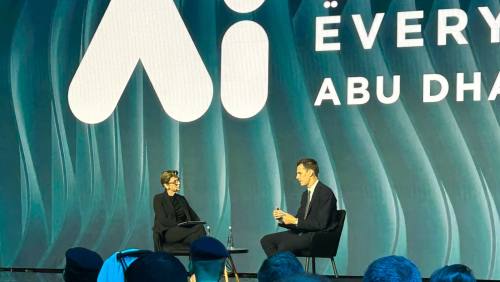
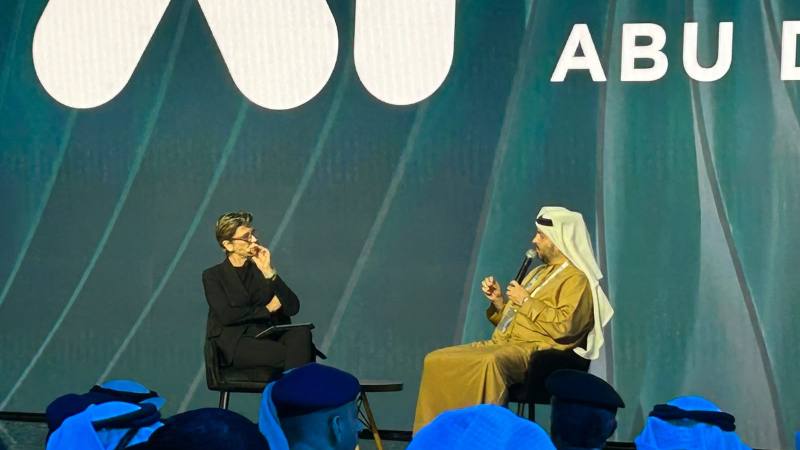
Kicking off AI Everything Abu Dhabi 2026, Becky Anderson, journalist, anchor and Managing Editor of CNN’s Abu Dhabi bureau, recalled a point previously made by H.E. Faisal Al Bannai, Adviser to the UAE President and Secretary General of the Advanced Technology Research Council: true sovereignty means mastering and evolving the underlying technology, rather than simply owning a product. Opening the fireside chat, “AI as a State Capability – A New Architecture of Sovereign AI”, Anderson asked Al Bannai what it actually means for a country to own its AI future rather than borrow or rent it from somebody else.
“Being sovereign is not necessarily only about owning the IP, or owning the economics of the IP. I think a critical part of being sovereign means you control the destiny of how that technology you’re able to modify,” Al Bannai said. “One, you’re able to understand what’s in it. Two, you’re able to modify it yourself. You’re able to evolve it yourself.
“Even if you choose to use partners to help you, if you don’t have control over evolving it, testing it, modifying it, and really driving the destiny of that technology, it’s not sovereign. These are very critical aspects when it comes to sovereignty across the board.”
When asked whether the UAE should slow the development of advanced AI systems or continue pushing ahead while strengthening safeguards, Al Bannai said, “At the end of the day, everyone’s pushing ahead at full speed. What needs to happen is very conscious thinking around security measures and the tests we want frontier models, whether closed source or open source, to go through.
“You can build the model you want to build, but it can’t be the person building it who is also stamping it and saying, trust me. I think, more and more, we need independent reviews and standards. Will they be perfect? No. Should you wait until you build the perfect model? You will not build the perfect model.
“We need clear, independent reviews that say, here’s where we think the risks are and here’s what we should be testing against. And that should evolve daily, monthly. This is something that is extremely iterative.
“In the UAE, we’re adopting the best-in-class closed models, and we are building our own open-source models, because frankly, nobody has an answer.
“So, the UAE’s approach is, let’s adopt what’s best out there. Meanwhile, let’s build our sovereign capabilities. Meanwhile, let’s think in a practical way about putting some circuit breakers and measures in place, knowing that they will not be perfect, but knowing that you’ll be agile enough to fix them as we go.”
Closing the conversation, Anderson asked where the UAE, and Abu Dhabi specifically, has a genuine competitive advantage in AI, particularly as the US and China continue to lead the race to develop frontier models. “The UAE’s main advantage is the agility to make decisions, move fast, and be very practical in what it does,” Al Bannai said.
“The key advantage of the UAE is having a regulator bold enough to understand the risks and move with agility, clients bold enough to experiment with new use cases, and, at the same time, a practical mindset.
“Frontier large models are great, but 70% to 80% of what we all need, and what enterprises need, is not an extremely large model. They need very specific, small and medium models tailored to the use case. So we focus now on using very small, specialized models that really address multiple use cases, including transport and multiple other areas.
“I think the competitive edge we have is that we will be much more focused on deploying practical use cases that can really propel the city going forward, rather than just talking about the large model that you can chit-chat with.”
Kicking off AI Everything Abu Dhabi 2026, Becky Anderson, journalist, anchor and Managing Editor of CNN’s Abu Dhabi bureau, recalled a point previously made by H.E. Faisal Al Bannai, Adviser to the UAE President and Secretary General of the Advanced Technology Research Council: true sovereignty means mastering and evolving the underlying technology, rather than simply owning a product. Opening the fireside chat, “AI as a State Capability – A New Architecture of Sovereign AI”, Anderson asked Al Bannai what it actually means for a country to own its AI future rather than borrow or rent it from somebody else.
“Being sovereign is not necessarily only about owning the IP, or owning the economics of the IP. I think a critical part of being sovereign means you control the destiny of how that technology you’re able to modify,” Al Bannai said. “One, you’re able to understand what’s in it. Two, you’re able to modify it yourself. You’re able to evolve it yourself.
“Even if you choose to use partners to help you, if you don’t have control over evolving it, testing it, modifying it, and really driving the destiny of that technology, it’s not sovereign. These are very critical aspects when it comes to sovereignty across the board.”

Entrepreneur Middle East Staff
Entrepreneur Staff