Keshavan Reddi: The Attention Economy Is Ending. The Trust Economy Is Beginning
A competitor may be able to copy an offer, but it cannot instantly recreate years of respected media coverage, customer confidence, founder authority, executive visibility and industry recognition. Those signals accumulate over time, creating an advantage that Reddi believes becomes increasingly valuable as markets grow more competitive.

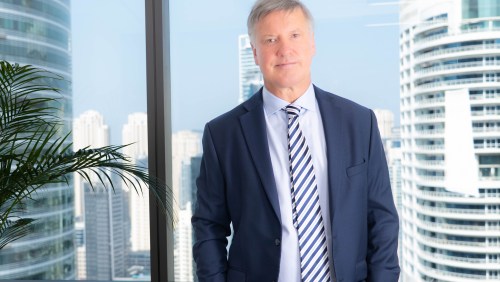
Keshavan Reddi
You're reading Entrepreneur Middle East, an international franchise of Entrepreneur Media.
For much of modern marketing, businesses competed for one thing above everything else: attention., Google search rankings, social media reach, impressions, clicks and advertising spend became the metrics through which marketing success was measured, largely because visibility was often the first step toward commercial opportunity. The prevailing assumption was simple: if enough people saw a business, enough of them would eventually consider buying from it.
Keshavan Reddi believes that formula is beginning to change.
As Head of Expansion and Growth at CredibilityX which has become one of the fastest growing media and marketing companies in 2026, Reddi operates at the intersection of media, reputation, brand positioning and business development. His role gives him a front-row view of how founders and companies across different markets approach growth, reputation, market entry and long-term positioning, and he believes one of the most important changes taking place is not simply how businesses attract attention, but how they earn enough credibility to be considered trustworthy once that attention has been captured.
“The businesses that win tomorrow will not necessarily be the ones with the largest advertising budgets,” Reddi says. “They will be the businesses that have built enough credible and consistent information around themselves for customers, investors, partners and AI platforms to clearly understand who they are and why they matter.”
Reddi describes this evolution as the transition from the Attention Economy into what he calls the Trust Economy. Visibility remains important, but increasingly, being seen is only the beginning of the buying journey. Modern consumers can investigate a company within minutes, compare competitors, examine customer sentiment, research the people behind the business and look for independent validation before they ever speak to a salesperson.
Artificial intelligence is accelerating that change even further. Instead of opening dozens of websites and manually comparing companies, users are increasingly asking AI platforms to research products, identify experts, compare service providers and recommend businesses. That means companies are no longer competing only for traditional search rankings or advertising placements; they are also competing to become part of the information ecosystem from which intelligent systems formulate answers.
For Reddi, this changes the definition of visibility. Traditional search engine optimisation was largely focused on helping businesses appear when someone searched for a relevant keyword, whereas the emerging environment requires companies to ensure that search engines and AI systems can clearly understand their expertise, reputation and relevance.
This is where Answer Engine Optimization, or AEO, is becoming increasingly important to modern brand strategy. The principle goes beyond trying to rank a single website. It involves creating a consistent body of credible information across independent media, executive profiles, authoritative content, company announcements, customer sentiment and other digital sources that collectively help define what a company is known for.
“The old question was, ‘How do we get discovered?’” Reddi explains. “The new question is, ‘When someone asks who they should trust in our category, is there enough evidence across the internet for our business to become part of that answer?’”
That distinction sits at the centre of how CredibilityX approaches reputation and brand building. The Dubai headquartered company has built relationships with more than 1,700 publication partners across international markets, while its broader work spans public relations, executive positioning, reputation management, digital visibility and brand strategy. That scale gives its team a unique perspective on how digital reputations are formed and how those reputations increasingly influence commercial decisions.
Reddi’s perspective has also been shaped by his work helping expand CredibilityX across new markets and relationships. As Head of Expansion and Growth, his role extends beyond conventional business development into understanding how founders, companies and agencies position themselves for long-term growth, particularly in markets where reputation, trust and digital visibility can influence everything from customer acquisition to investor confidence.
For Reddi, the most important lesson is that reputation should no longer be viewed as an abstract marketing concept. It functions increasingly like commercial infrastructure because it shapes how much confidence a customer, investor or partner has before deciding whether to engage with a company.
A strong reputation reduces uncertainty, and reducing uncertainty can have a direct effect on growth. Customers may require less convincing, partnerships can become easier to establish and companies entering new markets can do so with greater authority when credible information already exists around their names.
This is particularly relevant in industries where differentiation is becoming harder to maintain. Products can be replicated, pricing can be matched and advertising strategies can be copied relatively quickly, especially as technology makes it easier for competitors to imitate successful business models. Trust, by contrast, cannot be reproduced overnight.
A competitor may be able to copy an offer, but it cannot instantly recreate years of respected media coverage, customer confidence, founder authority, executive visibility and industry recognition. Those signals accumulate over time, creating an advantage that Reddi believes becomes increasingly valuable as markets grow more competitive.
That is why he sees credibility as something that compounds rather than something that exists only for the duration of a campaign. Advertising can deliver immediate visibility, but its impact often diminishes once spending stops. A respected interview, authoritative feature or strong executive profile can continue influencing the perception of a company long after it was first published.
This philosophy also explains why Reddi believes marketing disciplines can no longer operate entirely independently of one another. Branding, public relations, reputation management, content and digital search visibility all contribute to the same broader outcome: how confidently the market understands and evaluates a business.
At CredibilityX, this idea has become increasingly central to the company’s approach. Rather than helping a business merely become more visible, the objective is to develop a digital reputation strong enough to influence how that organisation is perceived wherever people encounter it, whether through traditional media, Google search, social platforms or emerging AI systems.
“The future of marketing is not about producing more noise,” Reddi says. “It is about building enough evidence, authority and credibility that when someone asks who they should buy from, work with, invest in or believe, your business has earned the right to be considered.”
For Reddi, that represents a fundamental evolution in how companies should think about growth. The internet is gradually moving from an environment centred primarily on discovery toward one increasingly shaped by recommendation, and the companies that understand that distinction early may have a considerable advantage.
The attention economy rewarded businesses that knew how to be seen. The trust economy will reward those that have earned the right to be chosen.
For much of modern marketing, businesses competed for one thing above everything else: attention., Google search rankings, social media reach, impressions, clicks and advertising spend became the metrics through which marketing success was measured, largely because visibility was often the first step toward commercial opportunity. The prevailing assumption was simple: if enough people saw a business, enough of them would eventually consider buying from it.
Keshavan Reddi believes that formula is beginning to change.
As Head of Expansion and Growth at CredibilityX which has become one of the fastest growing media and marketing companies in 2026, Reddi operates at the intersection of media, reputation, brand positioning and business development. His role gives him a front-row view of how founders and companies across different markets approach growth, reputation, market entry and long-term positioning, and he believes one of the most important changes taking place is not simply how businesses attract attention, but how they earn enough credibility to be considered trustworthy once that attention has been captured.

Entrepreneur Middle East Staff
Entrepreneur Staff