Building the Infrastructure Behind the UAE’s AI Ambitions
Written by Jasim Al Awadi, Chief ICT Officer at du, this article explores the infrastructure needed to support the UAE’s AI ambitions, from accelerated computing and digital sovereignty to cybersecurity and post-quantum security.
Oct 21, 2026

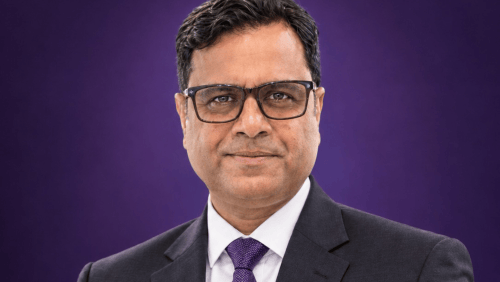
Jasim Al Awadi, Chief ICT Officer, du
While we are spending considerable time discussing what AI can achieve, have we given enough thought to the infrastructure needed to support it?
In the UAE, where ambitions to lead in AI are turning into growing demand for advanced digital capabilities, the answer matters. Agentic AI is introducing a new level of complexity as applications become more interconnected and systems gain more autonomy.
Our experience at GISEC Global 2026 reinforced my view that AI, digital sovereignty and cybersecurity can no longer be considered in isolation. Meeting the demands of increasingly intelligent and autonomous applications will require us to rethink the digital infrastructure supporting them.
The infrastructure that helped organisations embrace digital transformation was built around connectivity, cloud migration and scalability. AI is fundamentally changing that equation.
Think about what happens when an organisation introduces agentic AI. Instead of simply accessing information or running predefined applications, intelligent systems can interact with multiple platforms, process information and execute tasks. Every additional capability places demands on the computing resources and networks supporting it.
This is why I believe the conversation must shift from what AI applications can do to what is required to run them reliably at scale. An ambitious AI strategy is of little value if the underlying infrastructure becomes its greatest limitation.
For du, this represents a natural evolution of our role. Our investments in data centres, advanced connectivity and GPU-as-a-Service, and overall du Tech’s portfolio, are intended to bring computing power closer to the organisations that need it. We are extending our capabilities beyond moving information to providing the infrastructure required to process it and put it to work.
Accelerated computing capacity also raises another question. As more information moves through extremely intelligent systems, how much control do organisations retain over the environments in which those systems operate?
The more deeply AI becomes embedded in an organisation, the harder it becomes to separate technology decisions from questions of control. Access to advanced computing capabilities is essential, but so is knowing where information is processed, who manages the underlying infrastructure and which security and regulatory requirements govern its use.
I believe digital sovereignty must therefore be understood as more than purely data residency. Keeping information within national borders is important, but it does not, on its own, address every aspect of operational control.
This thinking has shaped our approach to du Tech’s National Hypercloud. Instead of treating sovereign cloud as a standalone offering, we see it as part of the UAE’s wider digital infrastructure, bringing advanced cloud capabilities into a locally operated environment designed around national requirements.
Our objective is to give organisations more freedom to pursue AI adoption without having to compromise on the control they require. Because the next stage of digital transformation should not force a choice between technological advancement and digital sovereignty.
However, retaining control over infrastructure is only meaningful if we can also protect it. And as the technologies running on that infrastructure evolve, the definition of adequate protection must evolve with them.
One of the challenges with infrastructure is that it must be built for a future we cannot predict entirely. The same is true of cybersecurity. Protecting today’s systems is essential, but we also have a responsibility to anticipate how emerging technologies could change the threats they face.
Quantum computing offers a clear example. Its potential to challenge existing cryptographic methods means that organisations responsible for critical information need to begin preparing well before these risks become immediate. This is why the partnerships we pursued at GISEC form part of a broader approach to building secure, sovereign digital infrastructure for the AI era.
Our collaboration with QuantumGate, endorsed by the UAE Cyber Security Council, reflected this approach. By bringing post-quantum security capabilities to du Tech’s National Hypercloud, we aim to help government entities prepare for emerging cryptographic threats while keeping sensitive data, keys and cryptographic control within the UAE.
Meanwhile, the growing convergence of information technology and operational technology presents a different challenge. As industrial environments become more connected, a cyber incident can have consequences far beyond compromised information, potentially affecting physical operations and essential services.
Our collaboration with Rilian addresses this complex environment by combining du Tech’s sovereign infrastructure and managed security capabilities with Rilian’s Caspian agentic AI platform and IT/OT cybersecurity expertise. We jointly intend to develop locally delivered, AI-driven security services for critical infrastructure and industrial sectors.
There is an important distinction here. AI is not simply creating new cybersecurity challenges; it can also help us address them. Agentic AI offers opportunities to strengthen security operations, support analysts and improve how organisations manage more interconnected environments.
The telecommunications industry has spent decades building the networks that made digital transformation possible. We are now entering a period in which our responsibility extends considerably further. For du, that means combining the capacity to power intelligent applications, the sovereignty to maintain control over them and the cybersecurity capabilities to protect them. Bringing these capabilities together will be essential to building the trusted, sovereign digital foundation needed to support the UAE’s next phase of AI adoption.
While we are spending considerable time discussing what AI can achieve, have we given enough thought to the infrastructure needed to support it?
In the UAE, where ambitions to lead in AI are turning into growing demand for advanced digital capabilities, the answer matters. Agentic AI is introducing a new level of complexity as applications become more interconnected and systems gain more autonomy.
Our experience at GISEC Global 2026 reinforced my view that AI, digital sovereignty and cybersecurity can no longer be considered in isolation. Meeting the demands of increasingly intelligent and autonomous applications will require us to rethink the digital infrastructure supporting them.