Commercializing Creativity: Marrying Creative Minds With Commercial Thinkers

Shutterstock.com
Opinions expressed by Entrepreneur contributors are their own.
You're reading Entrepreneur Middle East, an international franchise of Entrepreneur Media.
We are prescribed, from a very young age, a system of learning which prioritizes mathematics, languages and sciences. Creativity, within such a rigid structure, is necessarily marginalized. As children and as young adults, the conventions of the educational curriculum teach us that creativity is at best a “nice to have,” and at worst, a distraction from mainstream education. It’s no wonder then that so many young people don’t realize their creative potential, or even, in most cases, realize they have a creative talent. Not surprisingly, the commercial potential in creativity is frequently unfulfilled– students uninformed as to the outlets for innate abilities.
Some 40 years ago, I was one such victim of the traditional educational system. I was dragged and distracted through physics, algebra, and biology lessons with a sense of hopelessness and bewilderment. That I was “good at drawing and painting,” but was given little or no attention. Needless to say, I achieved no more than academic mediocrity at school– it was suggested I should become a “quantity surveyor” or an “architectural technician.” As my children end their journey through a school system with a British curriculum, it’s sad to see that the system of creative suppression has changed little. The priorities remain the same, and failure to achieve academic criteria can result in children being marginalized, or even removed from the system. I’ve made a career out of commercializing creativity. I built the largest creative and branding consultancy in the Middle East and successfully sold it to WPP, the largest media company in the world.

Gregg Sedgwick with an artwork. Image credit: Gallery One.
The Daily TelegraphGallery One

An artwork. Image credit: Gallery One.
We constantly seek new product ideas, and new artistic contributors– through licensing deals, we then remunerate these partners with royalties. It’s a source of frustration for me that so many talented creatives do not realize their potential. It’s an innate byproduct of the creative mind to self-doubt and question the validity of our work. My strong belief is that all people are inherently creative, and that we all have valid artistic talent– our system of education and the elitism around art, perpetuated by segments of “the art world” reinforce this sense of unworthiness. In Gallery One, I would speculate that we sell more artwork than any other gallery in the region. Our sister company, The Gallery Workshop, is currently producing over five thousand artworks per month. This suggests that there is a hunger for cultural/ artistically inspired products and an appetite for brilliant ideas– well executed, and nicely packaged.

An artwork. Image credit: Gallery One.
vision
Passengers will be offered stylish and contemporary gifts that exude regional arts and design– it’s a format that will resonate in all continents and most countries. Achieving such an ambition will make us a globally important outlet for creative talent, as well as a commercially significant player. With Kasamar, our funding partners, on board, we have been fortunate to find a group of brilliant individuals who share our vision for expansion. If I am the creative force behind Gallery One, we now have shareholders who can, in the longterm, realize share value. There is a strong sense at Gallery One that we are at an exciting crossroads. Creativity pervades all that we do at Gallery One. We leverage ideas and opinions from all segments of the business, and don’t limit input to those in the “creative” department.
It’s my belief that the best companies put creativity and superb design above all else –it’s no surprise that Apple is the most valuable company in the world- their obsession with design, aesthetics and product integrity would inevitably lead to success. The best brands will, in the future, invest in creative minds, and marry this with commercial thinkers. It may take a long time for educational systems to shift their focus toward the development of creative minds, but I trust that companies large and small are increasingly recognizing and rewarding creative talent. Young people with creative minds should feel quietly confident that their future can be bright- even if they’re not so good at physics and algebra.
Related: HH Sheikha Latifa Bint Mohammed Al Maktoum: Dubai Culture Wants Creative Entrepreneurs To Go Global
We are prescribed, from a very young age, a system of learning which prioritizes mathematics, languages and sciences. Creativity, within such a rigid structure, is necessarily marginalized. As children and as young adults, the conventions of the educational curriculum teach us that creativity is at best a “nice to have,” and at worst, a distraction from mainstream education. It’s no wonder then that so many young people don’t realize their creative potential, or even, in most cases, realize they have a creative talent. Not surprisingly, the commercial potential in creativity is frequently unfulfilled– students uninformed as to the outlets for innate abilities.
Some 40 years ago, I was one such victim of the traditional educational system. I was dragged and distracted through physics, algebra, and biology lessons with a sense of hopelessness and bewilderment. That I was “good at drawing and painting,” but was given little or no attention. Needless to say, I achieved no more than academic mediocrity at school– it was suggested I should become a “quantity surveyor” or an “architectural technician.” As my children end their journey through a school system with a British curriculum, it’s sad to see that the system of creative suppression has changed little. The priorities remain the same, and failure to achieve academic criteria can result in children being marginalized, or even removed from the system. I’ve made a career out of commercializing creativity. I built the largest creative and branding consultancy in the Middle East and successfully sold it to WPP, the largest media company in the world.

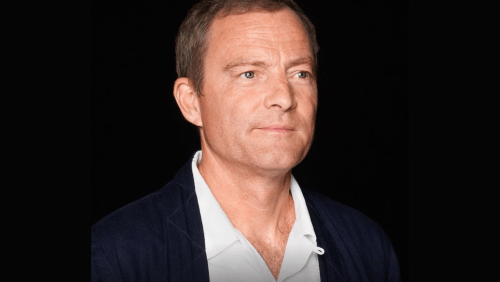
Gregg Sedgwick • Founder, Gallery One
Gregg Sedgwick is the founder and visionary behind the region's leading cultural retailer, Gallery One.... Read more