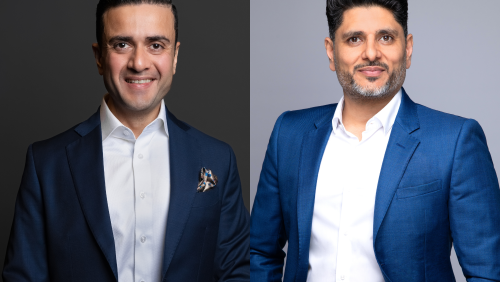
From Egypt to the UAE: How Tito El Khachab Is Taking Sandbox Festival Global, Starting with Dubai
Tito El Khachab, founder of Sandbox Festival, a self-funded electronic music festival in Egypt, is entering a new phase of growth as he expands the brand beyond El Gouna, with Sandbox Selects launching in Dubai.
Disclosure: Our goal is to feature products and services that we think you'll find interesting and useful. If you purchase them, Entrepreneur may get a small share of the revenue from the sale from our commerce partners.
You're reading Entrepreneur Middle East, an international franchise of Entrepreneur Media.
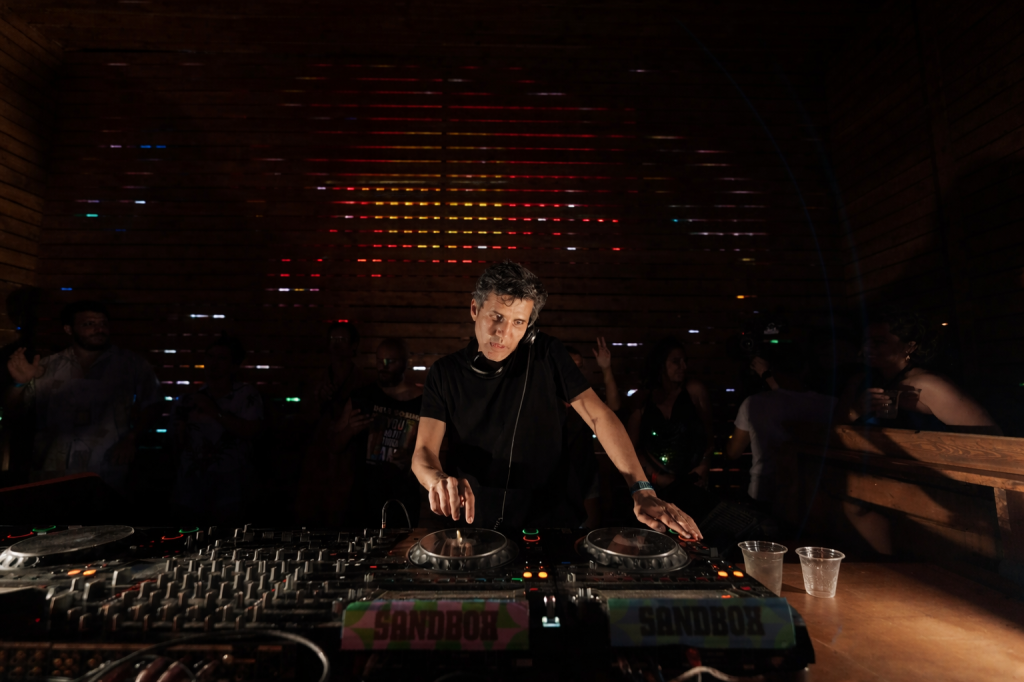
Built without any institutional investment, Sandbox Festival has grown into one of Egypt’s major music festivals over the past 12 years. But after more than a decade, its founder, Egyptian entrepreneur Tito El Khachab, is facing a turning point: one that could decide whether it continues to grow or gets left behind as the industry becomes more competitive.
Rather than settling into what already works, El Khachab is taking Sandbox beyond its home base in El Gouna, an exclusive resort town on Egypt’s Red Sea coast, with his next chapter focused on brand expansion and geographic diversification — with Dubai as the first step.
Just months ahead of its 12th edition, Sandbox launched “Sandbox Selects” – a smaller, one-day showcase of its music identity, in an intimate setting at Helipad by Frozen Cherry in Dubai in February 2026, with a larger edition planned for the fourth quarter.
“For Sandbox specifically, it’s time for the core philosophy to go global,” he declares. “Sandbox Selects showcases what we do outside of Egypt. We’re also starting to push sets online in video format.”
“Dubai was the natural starting point. It’s where a significant part of the Sandbox community already lives, people who have been coming to El Gouna for years and who understand what Sandbox is about,” El Khachab adds. “It made sense to bring the experience to them as It also gave us the right environment to test the Selects format, intimate, curated, true to the Sandbox identity, without the full complexity of a destination festival.”
El Khachab explains that the rise of music festivals in the region can be attributed to a “big boom of creativity” today, which is fueling new forms of artistic expression.
“The music industry is growing fast, events are growing fast, and that is creating a real hunger for people and concepts with a true voice, musicians, promoters, venues, suppliers, bringing something genuinely new. People with something to express,” El Khachab says.
Industry outlook points to similar trends. A 2024–2028 outlook by strategy&, a business consulting firm within the PwC network, projects that the media and entertainment market in the MENA region will reach US$18 billion by 2028, driven mainly by digital transition and advertising spending, with the UAE and Saudi Arabia expected to remain the region’s leading markets. Within this, the audio segment is forecast to grow at a compound annual growth rate (CAGR) of 5.6%, led by digital streaming as the fastest-growing category at 9.4%. Meanwhile, live music is expected to grow at 2.1% over the same period.
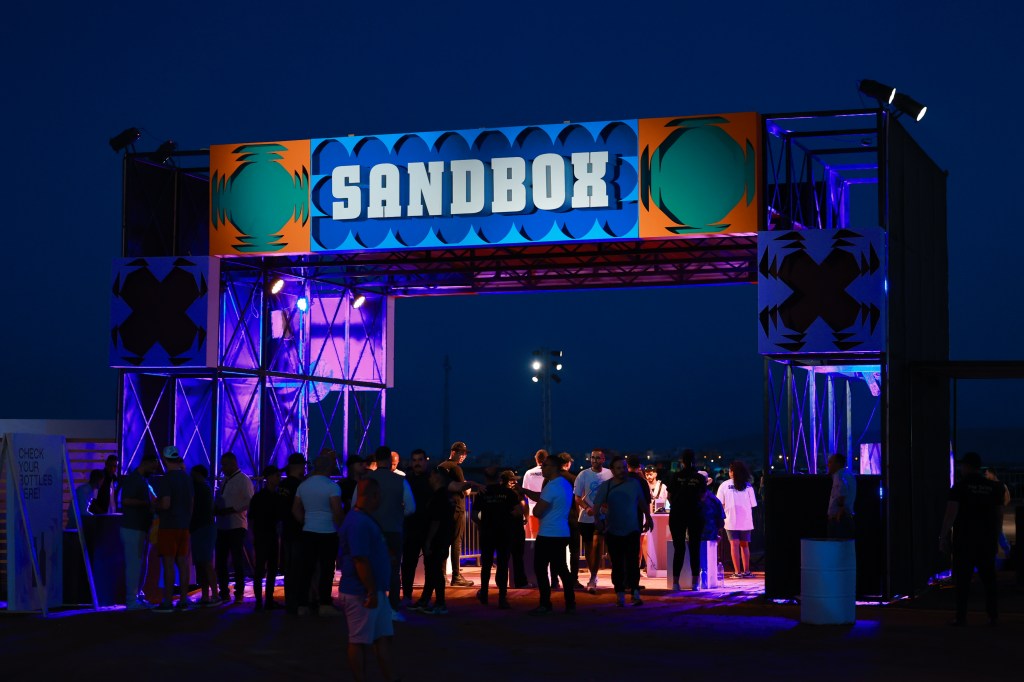
Founded in 2012, Sandbox began on a much smaller scale. El Khachab, an engineering graduate from McGill University in Canada, did not set out to build a career in events management. Rather, he simply loved music, DJing, and hosting parties, and eventually wanted to create a space for electronic music, which he said was largely absent from Egypt’s nightlife scene at the time.
As the project expanded, he found himself drawn to the technical side of production. “The engineering side of me also liked to play with equipment,” he says. “As things got bigger, it meant bigger speakers, more lights, more setup, more physics involved. Any opportunity to go bigger was really driven by that desire to experiment and play with the setup.”
“The turning point came in 2015, when the festival moved to a three-day format and introduced a cashless system. Running an electronic music event in Egypt for three days, and keeping it tight and community-driven,” El Khachab recalls.
Over time, Sandbox built its reputation less through spectacle and more through consistency, from the sound quality, lineups of artists, and a sense of belonging that regular attendees came to recognize. “The truth is, our essence of letting the music and quality of sound speak for itself enables us to build a loyal following that always came for more. I’ve always deeply resonated with ‘If you build it, they will come,’” he adds. “And what we are building is something that honors not only the community attending it, but also the community of talents that choose to continue coming to perform at the festival.”
Sandbox was built through Nacelle’s own capital, an events management company also founded by El Khachab, without any backing from sovereign wealth funds, private equity, or external investors. According to the organizers, the festival now runs at or close to the maximum capacity of El Gouna, accommodating around 7,000 attendees.
“We’ve never grown faster than the experience could sustain. Capital can build enormous events, it cannot build trust. The trust between a festival and its community is built through years of consistent choices, most of which nobody outside the team ever sees,” El Khachab says. “As long as we keep making those choices the right way, the identity protects itself. The moment we start making decisions based on what the market wants rather than what we believe in, it’s over. We’re aware of that line.”
That trust matters more than ever as global travelers are shifting toward experience-led tourism. According to the World Economic Forum, music festivals and live events are increasingly shaping travel decisions, with music tourism valued at nearly $6 billion in 2023 and projected to surpass $9 billion by 2030. The report also notes that 84% of international event tourists explore beyond the event itself, while around 30% say they intend to return.
For Sandbox Festival, international visitors make up about 25% of the audience, coming from more than 50 countries. According to the founder, this drives spending on hotels, dining, transport, and activities, and helps make it one of El Gouna’s busiest weekends of the year in terms of occupancy.
“Practically speaking, El Gouna offers something quite rare for a festival destination, a full ecosystem of hotels, apartments, villa rentals, boats, and restaurants,” El Khachab explains. “Guests don’t just attend the festival; they inhabit a place for three days. That changes everything about how people experience it.”
Yet even with a loyal following and a strong location advantage, Sandbox is not spared from wider market pressures. El Khachab acknowledges that rising costs, particularly around talent fees, have become one of the most visible shifts in recent years.
He points to artists such as Peggy Gou, a South Korean DJ, record producer, and singer-songwriter based in Germany, who played Sandbox before her international breakthrough. “That time, the talent fee was different because of the popularity and demand,” he explains. “Whereas if I was to call her today, the talent fee would significantly change as she is a globally-recognized artist.”
“What it has forced us to do is be even more disciplined, in how we build the lineup, in how we structure deals, in how we think about the overall financial architecture of the festival. We’ve never taken outside capital, which means every decision has to be financially sustainable on its own terms,” El Khachab says. “That discipline is actually what keeps us honest. It stops you from making decisions based on ego or hype and forces you back to what actually matters: is this artist right for Sandbox, and does the number make sense for what we’re building?”
Aside from this, regional uncertainty has added another layer of complexity, making annual planning less predictable. Still, El Khachab argues that instability is no longer something unique to the region.
“The community we’ve built is unlike anything else; it’s built on mutual respect, genuine appreciation for music, and an understanding that everyone in the room has a role to play. That kind of connection doesn’t disappear because of external noise. If anything, it deepens,” he says. “Our audience doesn’t decide to come because it is trending or because the timing feels convenient. They come because Sandbox is happening. Full stop. That’s what twelve years of consistent, deliberate community building looks like, and it’s the most resilient thing we have.”
For other markets, El Khachab says there are already a few possibilities on the table, but the team is keeping details under wraps for now. What he does make clear is that Sandbox isn’t rushing its next move. “The selection process is the same as it’s always been, slow, deliberate, and only where we believe we can do it right.”
Asked how Sandbox plans to grow without losing its identity, El Khachab concludes: “It’s about evolution, not reinvention. Some elements must remain consistent so people feel like they’re ‘coming home,’ while others evolve with time, production, curation, or experience design. The goal is to push boundaries each year while maintaining a familiar core.”
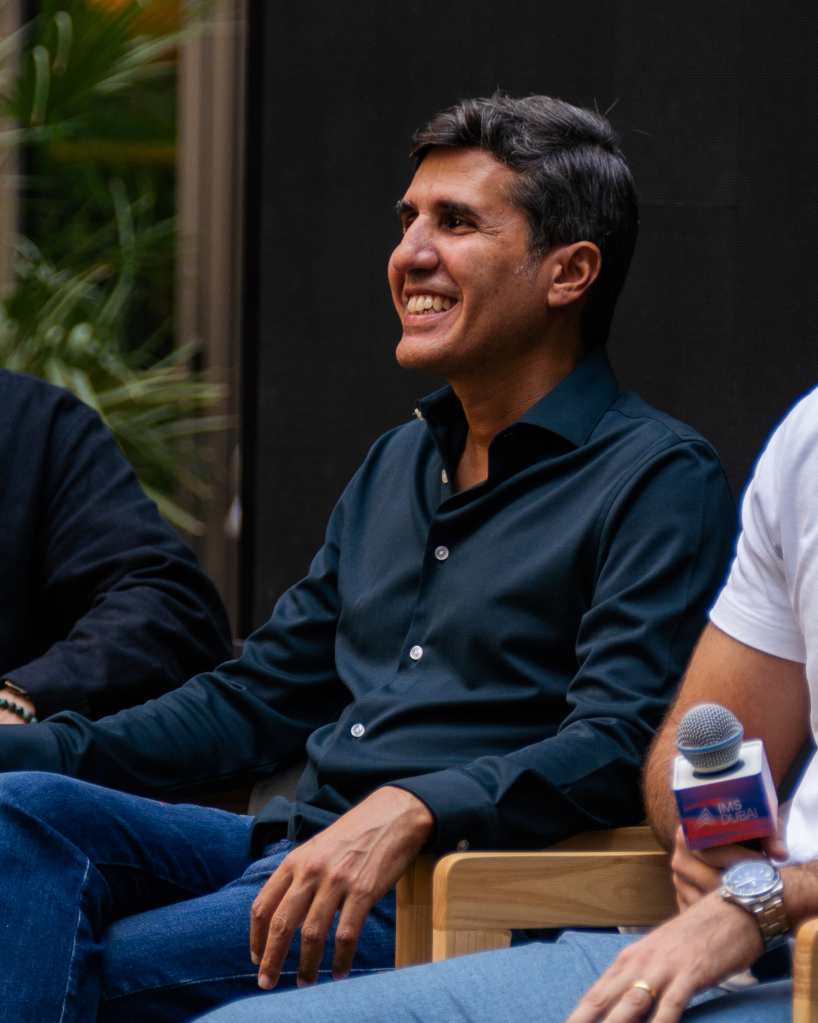
TREP TALK: Tito El Khachab, founder of Sandbox Festival, on Building an Entertainment Business from the Ground Up
Build the experience first, not the money “If you chase profit before you’ve created something people genuinely care about, you’ll stall out fast. The whole idea is: give people a reason to show up, stay, and come back. That means obsessing over the full experience from the sound, crowd, atmosphere, flow, not just booking big names or pushing tickets. If the experience hits, the business follows. If it doesn’t, no marketing trick will save you long term.”
Think in systems, not isolated parts “You don’t win by optimizing one piece like DJs, branding, or venue, you win by making everything work together. The crowd has to fit the music, the space has to fit the crowd, the sound has to match the vision. A lot of people fail because they treat events like plug-and-play ‘get a big DJ and we’re good,’ when in reality it’s a tightly engineered ecosystem. Miss one element, and the whole thing feels off.”
Don’t quit early, this market rewards persistence more than perfection “This region is still developing, which means there’s room, but only for people who stay in the game long enough to learn. Most people drop out after a few bad events, slow traction, or not getting the recognition they expected. The edge isn’t just talent or money, it’s sticking through the failures, adjusting, and building consistency. If you keep going and actually learn from mistakes, you eventually carve out space.”
Built without any institutional investment, Sandbox Festival has grown into one of Egypt’s major music festivals over the past 12 years. But after more than a decade, its founder, Egyptian entrepreneur Tito El Khachab, is facing a turning point: one that could decide whether it continues to grow or gets left behind as the industry becomes more competitive.
Rather than settling into what already works, El Khachab is taking Sandbox beyond its home base in El Gouna, an exclusive resort town on Egypt’s Red Sea coast, with his next chapter focused on brand expansion and geographic diversification — with Dubai as the first step.
Just months ahead of its 12th edition, Sandbox launched “Sandbox Selects” – a smaller, one-day showcase of its music identity, in an intimate setting at Helipad by Frozen Cherry in Dubai in February 2026, with a larger edition planned for the fourth quarter.