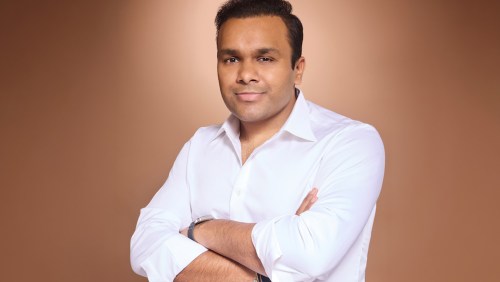
Why the UAE Remains Central to Klay Group’s Global Wealth Strategy
Kalpesh Khakhria, Group Chairman, and Shivkumar Rohira, CEO EMEA, Klay Group, outline how disciplined advice, long-term focus, and deliberate risk-taking define the firm’s approach to navigating often complex investment landscape.
You're reading Entrepreneur Middle East, an international franchise of Entrepreneur Media.
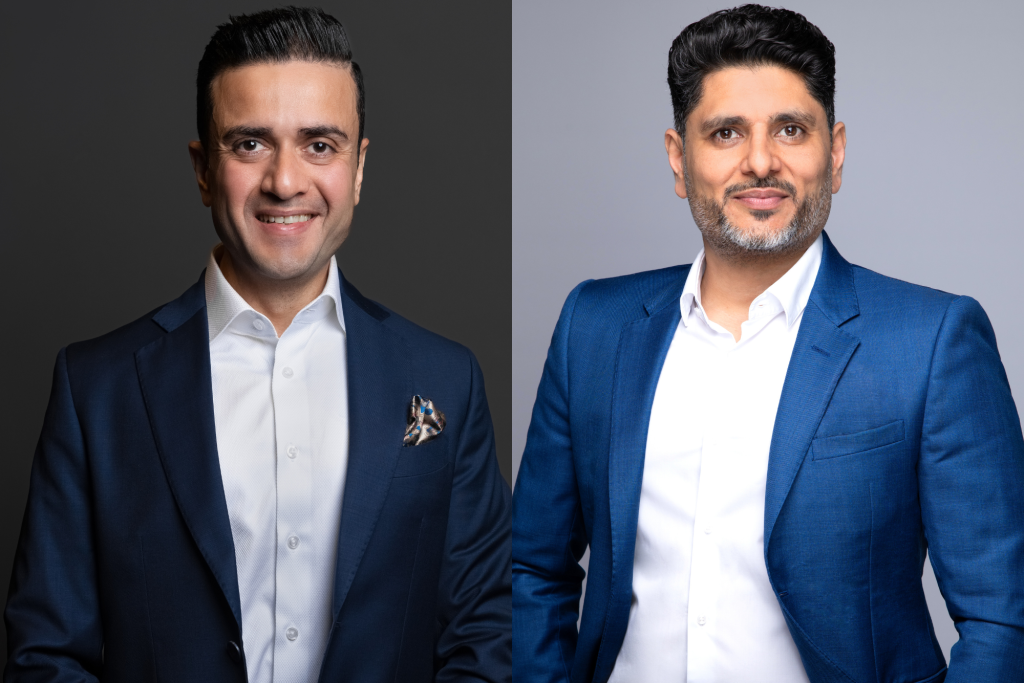
Based in Dubai International Financial Centre (DIFC), the global boutique financial services firm Klay Group delivers independent advice and tailored solutions across wealth management, multi-family office services, asset management, and corporate advisory – even more so at a time when market volatility and uncertainty are not exceptions, but the norm.
Rather than reacting to short-term disruption, Shivkumar Rohira, CEO EMEA, Klay Group, emphasizes that the firm positions portfolios to withstand it through disciplined risk management, quality focus, and process-driven decisions. “In periods like these, our real strengths show,” he says. “Rather than reacting to noise, we focus on relative value, using dislocations to selectively deploy into high-quality assets while maintaining a strong bias toward capital preservation. We consistently advise clients to stay quality-biased and anchored to a structured framework.”
This approach has strengthened the firm’s international footprint that includes existing operations in the UAE, Singapore, the UK, India, Australia, Mauritius, and the Cayman Islands, and plans to establish a presence in Switzerland. However, Rohira points out that the UAE remains a central hub within this network. “The UAE has played a pivotal role in creating an ecosystem across strata where both people and assets can migrate seamlessly,” he says. “We are seeing not just capital flows, but also a growing concentration of decision-making and talent in the region.
“Frameworks such as DIFC and Abu Dhabi Global Market (ADGM) have further strengthened this positioning, establishing the UAE as a global platform with increasing sophistication for family office structures and crossborder wealth management.”
Against this backdrop, Rohira believes that, despite heightened regional tensions, the UAE’s economic landscape will be moving beyond recovery into a fundamental transition with significant untapped potential. “Rather than merely rebounding, the UAE is cementing its position as a definitive new geography of global wealth,” Rohira explains, adding that with financial wealth in the UAE already exceeding US$3 trillion and continuing to grow strongly toward approximately US$3.5 trillion by 2027, the country’s readiness to thrive is built on a deliberate pivot toward institutionalization and robust diversification. He says, “What is increasingly evident is the development of a fully rounded ecosystem where financial activity can sustainably thrive over time, supported by the movement of capital, talent, and decision-making into the region.”
This sentiment is also reflected in the deepening of capital markets, Rohira adds. “Financial centers, such as DIFC and ADGM, are witnessing strong growth in assets under management and institutional participation,” he says. “Capital is increasingly flowing into highgrowth, non-oil sectors including clean energy, fintech, healthcare, and advanced manufacturing, alongside a maturing alternatives landscape across private equity, venture capital, and digital assets. In real estate, demand is also evolving, with a clear shift toward end-users taking a longer-term view on residency, stability, and wealth consolidation. While near-term factors may introduce volatility, the long-term outlook remains strong, Rohira says, “Ultimately, these are not environments we are cautious of, but ones we look to embrace, through a disciplined, qualitative framework that allows us to stay aligned with long-term outcomes.
From the outset, Klay Group was built to withstand disruption, but Kalpesh Khakhria, Group Chairman, Klay Group, highlight its main premise – to remain firmly in its clients’ corner at all times. “When we founded Klay in 2013, the wealth management industry was largely product-led and often misaligned with client outcomes. We built the firm with an advisory-first approach and an asset-based fee structure, ensuring we remain firmly in our clients’ corner, focused on solving complex problems rather than distributing products,” he reiterates.
Khakhria says that the firm’s core philosophy is even more relevant in today’s environment. “This approach is even more relevant today. In an environment of interest rate divergence, geopolitical uncertainty, and volatility, the need is for disciplined risk management and objective advice, not product positioning. Investors must carefully balance liquidity, valuation, and return expectations across asset classes.”
He adds that evolving client expectations are also reshaping the advisory landscape.
“At the same time, client needs have become more complex across geographies and generations. While larger institutions operate at scale, boutique firms like ours operate at depth, delivering bespoke solutions through an open architecture model and global insights.”
Khakhria outlines three principles for structuring wealth across borders, tax frameworks, and long-term preservation which are anchored in one core belief: wealth should endure.
“First, capital preservation and sustainable growth comes before return maximization, with risk management,” he explains. “In periods of geopolitical tension and market noise, short-term volatility can be unsettling, but it is not unusual. Markets have repeatedly absorbed episodes of conflict and instability, and while the near term can be disruptive, history suggests that long-term outcomes are driven far more by fundamentals than by headlines. The priority, therefore, is to stay disciplined, manage risk carefully, and avoid making reactive decisions in response to temporary shocks.”
Secondly, Khakhria underscores the importance of diversification and liquidity in mitigating concentration risk and ensuring wealth structures remain adaptable and resilient over time. And thirdly, he points out that cross-border wealth requires deliberate coordination. “Tax, regulation, succession, and ownership structures need to be aligned across jurisdictions from the outset,” Khakhria explains. “The right structure can reduce friction, improve efficiency, and preserve control over time, particularly as families, businesses, and assets become more international.”
In the end, Khakhria frames wealth structuring as a long-term exercise in durability and adaptability. “Ultimately, effective wealth structuring is about creating a durable framework—one that protects capital, adapts to uncertainty, and supports continuity across generations,” he explains. “While the near term may remain noisy, our long-term view remains constructive. For investors who are properly structured, diversified, and disciplined, volatility need not derail long-term outcomes.”
Looking ahead, Khakhria notes that technology is raising the standard in wealth management, enabling faster, more precise, and data-driven decision-making. But he warns, “The role of technology is to inform judgment, not replace it. When used correctly, technology is highly effective in processing data, identifying patterns, and improving consistency. What it cannot do is exercise discretion, weigh emotional nuance, or understand the human context behind major financial decisions. That is where experienced advisors remain indispensable.
“The right model is not automated advice in place of people, but technology-enhanced advice led by people. The future of wealth management is not human versus machine; it is technology at scale, driven by human judgment.”
Another service that Klay Group is offering is succession planning, which is becoming increasingly complex for global families. Khakhria explains that the process is no longer treated as a one-time event, but as an ongoing component of how wealth is structured and managed over time.”What we’re seeing in practice is a shift toward more structured thinking,” he says. “Families want clarity on who makes decisions, how assets are held, and how responsibilities transition over time. There is also a growing emphasis on aligning portfolios with a longer-term horizon, so capital is not just preserved, but positioned to compound across generations.”
Despite negative headlines, executives at Klay Group say they continue to see a steady inflow of global HNWI families relocating to Dubai, with Rohira offering a more nuanced explanation of why the emirate remains a priority destination. One of the biggest misconceptions, he notes, is that wealth migration is driven by the search for a tax-friendly retirement hub, when in reality it is a strategic decision centered on long-term positioning.
Another common misunderstanding is that migration is simply an administrative transfer of assets between jurisdictions. “It is not,” Rohira says. “Done properly, it is a sophisticated structuring exercise involving asset protection, tax efficiency, succession planning, governance, and cross-border coordination. The jurisdiction matters, but so does the architecture around the wealth.”
He concludes, “At Klay, we advise on wealth migration as a full strategic transition. We help clients structure capital in a way that is robust, efficient, and built for long-term preservation across borders. What sets us apart is our ability to combine high-level advisory with cross-border execution through our platform across Europe, Asia, and Australia.
“Clients are not looking for a custodian of wealth; they are looking for a trusted partner that can help them reposition wealth with clarity and confidence, while supporting multi-generational goals.”
‘TREP TALK: Klay Group Group Chairman Kalpesh Khakhria Advises Founders on Navigating Uncertainty
Define the role of capital before allocating it “After a liquidity event, it is important to segment capital clearly. A portion should remain readily accessible, typically covering near-term spending and commitments, a portion allocated to a core long-term portfolio, and a smaller portion reserved for more tactical opportunities. In practice, this means being explicit about time horizons and liquidity needs before making any allocation decisions, rather than allowing the portfolio to evolve in an ad hoc way.”
Reassess your overall exposure “Even after monetization, many founders remain indirectly exposed to the same underlying drivers, whether through sector, geography, or growth orientation. That exposure is often less visible but still meaningful. The focus should be on identifying where risks are overlapping, for example across public and private investments or across similar growth themes, and ensuring different parts of the portfolio serve distinct roles. This becomes more relevant in periods of volatility, when these overlaps tend to show up more clearly.”
Manage the pace of capital deployment “There is no need to fully deploy capital immediately. A more effective approach is to phase allocations over time, either through staged entry points or predefined allocation ranges. This reduces timing risk and allows investors to build positions more deliberately. Maintaining a level of liquidity alongside invested capital provides the flexibility to add exposure during market dislocations, rather than being forced to commit capital at a single point.”
‘TREP TALK: Klay Group CEO EMEA Shivkumar Rohira on Leading Clients Through Uncertainty
Ensure liquidity “Investors should not treat this as a switch from preservation to growth. In practice, the shift is gradual. The priority is to ensure liquidity is secure and the core portfolio is stable, and then begin adding growth exposure selectively rather than increasing risk across the board.”
Focus on phased investing “In terms of implementation, this usually means starting with liquid growth assets such as public equities, where pricing adjusts more quickly, and building positions over time. From there, investors can consider adding less liquid exposures, such as private markets or thematic allocations, once the overall portfolio is balanced. The focus should be on areas with clearer medium-term earnings visibility rather than broad market exposure.”
Guided Discipline “For advisors, the role is not to predict markets but to maintain discipline. That means helping clients separate liquidity from long-term capital, understand where risks are concentrated, and phase allocations into growth assets over time. In uncertain environments, consistency in portfolio construction and pacing of investments tends to matter more than trying to time entry points.”
Based in Dubai International Financial Centre (DIFC), the global boutique financial services firm Klay Group delivers independent advice and tailored solutions across wealth management, multi-family office services, asset management, and corporate advisory – even more so at a time when market volatility and uncertainty are not exceptions, but the norm.
Rather than reacting to short-term disruption, Shivkumar Rohira, CEO EMEA, Klay Group, emphasizes that the firm positions portfolios to withstand it through disciplined risk management, quality focus, and process-driven decisions. “In periods like these, our real strengths show,” he says. “Rather than reacting to noise, we focus on relative value, using dislocations to selectively deploy into high-quality assets while maintaining a strong bias toward capital preservation. We consistently advise clients to stay quality-biased and anchored to a structured framework.”
This approach has strengthened the firm’s international footprint that includes existing operations in the UAE, Singapore, the UK, India, Australia, Mauritius, and the Cayman Islands, and plans to establish a presence in Switzerland. However, Rohira points out that the UAE remains a central hub within this network. “The UAE has played a pivotal role in creating an ecosystem across strata where both people and assets can migrate seamlessly,” he says. “We are seeing not just capital flows, but also a growing concentration of decision-making and talent in the region.

Tamara Pupic • Editor in Chief, Entrepreneur Middle East
Entrepreneur Staff
Tamara Pupic is the Editor in Chief of Entrepreneur Middle East.