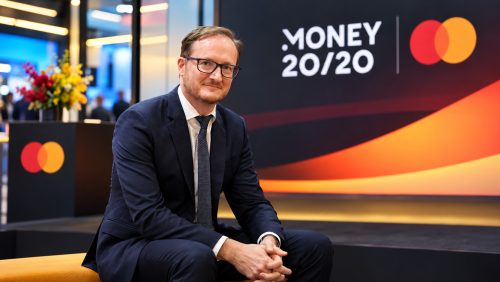
BlackRock’s Chief MENA Investment Strategist Ben Powell on the New Portfolio Playbook for an Era of Higher Volatility
For investors, BlackRock’s central message is that a more complicated world requires a broader toolkit, and considerably more active decisions about where risk is worth taking.
You're reading Entrepreneur Middle East, an international franchise of Entrepreneur Media.
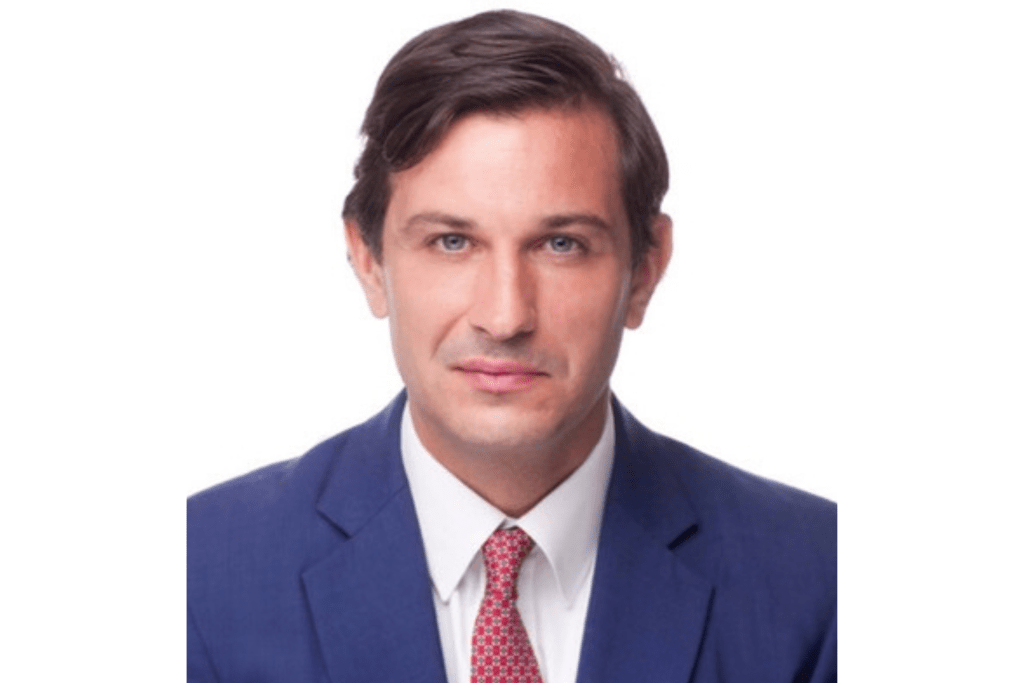
The era in which investors could rely on low volatility, cheap capital and relatively simple portfolio strategies is giving way to a more fragmented investment environment, according to Ben Powell, Chief Investment Strategist for the Middle East and APAC, BlackRock Investment Institute.
Speaking at a media roundtable in Dubai around the release of BlackRock’s new Market Evolution: The Middle East report, Powell argued that higher financing costs, geopolitical fragmentation and greater dispersion between assets are forcing investors to become considerably more selective.
“We think we’re no longer in a low-volatility environment. We have a higher cost of capital and more dispersion. As investors, our assessment is that you have no choice but to try your best to adjust accordingly. We think that requires a more active approach to investing.”
That selectivity is already becoming visible in how institutional investors allocate capital and assess managers.
“We’ve been seeing a more selective approach from investors for a few years,” Powell said. “First, investors are doing more with less: they want to do more with a smaller number of larger players. Second, as the system evolves, investors are looking more deeply into performance and conducting more granular assessments of risk. The investment process is taking longer, and the amount of data being collected from managers is becoming increasingly important.”
Powell frames much of the changing investment environment around five structural “megaforces”: demographic divergence, geopolitical fragmentation, the transition to a low-carbon economy, the future of finance and artificial intelligence.
“Three of our megaforces relate to why we think inflation will be structurally higher,” Powell said. “The first is demographics. China went from adding hundreds of millions of workers to the global labor force to now seeing its workforce shrink, and we are seeing similar trends elsewhere. Our assessment is that this is inflationary.”
Geopolitical fragmentation is creating another source of structural cost.
“We are choosing inefficiency for political and geopolitical reasons,” Powell said. “Look at the semiconductor supply chain: from an economic perspective, it is incredibly lean and efficient, but from a geopolitical perspective, it now looks risky. So we are going to choose multiple supply chains and greater resilience, which will be more expensive.”
The energy transition adds another layer of investment requirements, while AI represents what BlackRock sees as an even more fundamental transformation.
“I don’t think AI is simply an evolution,” Powell said. “I think it is a hinge moment in human history.”
From an investment perspective, those forces are directing attention towards several sectors.
“Defense is unfortunately on the list as countries and companies become more self-reliant, and we have to think about cyber defense as well as physical defense,” Powell said. “Energy is increasingly about optionality and independence. And AI, as part of the backbone of the economy, is only going to become more central.
“We want to be thoughtful about exactly where in the AI stack we invest as relative valuations move around. But AI has to be on the list. Defense, unfortunately, has to be on the list. And energy is on the list as more countries think about becoming more independent and less reliant on an increasingly complicated world.”
BlackRock’s Middle East research suggests regional investors are already responding to this environment by broadening their allocations across private markets.
When it comes to traditional public markets, and particularly equities, BlackRock still considers the US central to global portfolios.
“For better or worse, the future still gets invented and monetized disproportionately in the US. That remains true,” Powell said. “If you want exposure to some of the most exciting companies in the world, whatever your political views might be, America is to some degree unavoidable.”
However, Powell explains that the current fixed income market tells a different story.
“In the old days, you had a 40-year bond bull market where, with hindsight, you could essentially own the US 10-year Treasury and it did everything for you. It paid a reasonable income and provided diversification. Both of those benefits are now less obvious,” Powell said.
“US Treasuries are still an extremely important asset and will continue to play an important role in global portfolios. But at the margin, we are seeing investors diversify the fixed-income portion of their portfolios into areas such as private credit and emerging-market bonds.”
For investors, BlackRock’s central message is that a more complicated world requires a broader toolkit, and considerably more active decisions about where risk is worth taking.
RELATED: Middle East Still Exports More Capital Than It Attracts, But the Gap Is Narrowing, BlackRock Finds
The era in which investors could rely on low volatility, cheap capital and relatively simple portfolio strategies is giving way to a more fragmented investment environment, according to Ben Powell, Chief Investment Strategist for the Middle East and APAC, BlackRock Investment Institute.
Speaking at a media roundtable in Dubai around the release of BlackRock’s new Market Evolution: The Middle East report, Powell argued that higher financing costs, geopolitical fragmentation and greater dispersion between assets are forcing investors to become considerably more selective.
“We think we’re no longer in a low-volatility environment. We have a higher cost of capital and more dispersion. As investors, our assessment is that you have no choice but to try your best to adjust accordingly. We think that requires a more active approach to investing.”

Tamara Pupic • Editor in Chief, Entrepreneur Middle East
Entrepreneur Staff
Tamara Pupic is the Editor in Chief of Entrepreneur Middle East.