Middle East Still Exports More Capital Than It Attracts, But the Gap Is Narrowing, BlackRock Finds
For the UAE specifically, BlackRock sees the country’s ability to continue attracting people and businesses as an important source of underlying demand.
You're reading Entrepreneur Middle East, an international franchise of Entrepreneur Media.

The newly released BlackRock Market Evolution: The Middle East report reveals that Middle Eastern investors still make considerably more private equity and venture capital deals overseas than at home, but the gap is narrowing.
In 2021, they completed around 560 deals overseas compared with 220 in the Middle East, a difference of roughly 340 deals. By 2025, that gap had narrowed to around 190 deals, with approximately 360 overseas and 170 at home.
Speaking at a media roundtable in Dubai to mark the release of the report, BlackRock executives said they expect that shift to continue, with more of the region’s capital being deployed closer to home.
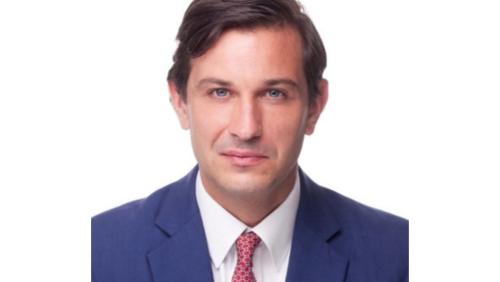
“In the GCC, we are fortunate to have relatively strong balance sheets, so there is no need to do anything urgently. But our analysis suggests that, at the margin, around US$50 billion to US$100 billion of capital that might previously have flowed out of the region could stay here. That is a significant number,” said Ben Powell, Chief Investment Strategist for the Middle East and APAC, BlackRock Investment Institute.
“This is really about where the marginal dollar will be invested. The GCC will remain a significant exporter of capital, but more of that capital is likely to stay at home. At the same time, we think the GCC will increasingly become an investment destination for global allocators of capital. That process will play out over the coming quarters and years.”
Saudi Arabia’s Public Investment Fund (PIF) has been a major driver of the trend. Its direct private equity deal activity within the Middle East overtook its activity elsewhere in the world in 2023 and has remained ahead since. PIF’s direct deal activity in the region grew from approximately 25% in 2020 to a little shy of 70% in 2025. Its direct deal activity around the world fell from almost 80% in 2020 to slightly above 30% in 2025.
But BlackRock cautions against viewing the GCC as a single investment market.
“When we talk about the GCC, we have to be careful because these economies are not all the same,” Powell said. “Different countries face different risks and opportunities, and the same is true at the sector and individual-security level. Our job as investors is therefore to become much more nuanced and specific about different geographies, different sectors within those geographies, and exactly where we allocate capital.”
At the same time, international investors are increasingly examining the region as an investment destination.
“We are seeing increasing interest from global investors in the region as an investment destination,” Powell said. “But there is still a significant education process underway internationally around the differences between markets such as Qatar, Oman, Saudi Arabia and the UAE, and then between individual sectors within those markets. That suggests there is still considerable upside in terms of how global capital could flow into this region.”
The report shows that Saudi Arabia and the UAE already dominate the region’s private-capital ecosystem. Of 590 Middle East-based funds closed since 2015, 359 were based in Saudi Arabia and 143 in the UAE, with the remaining 88 spread across Qatar, Kuwait, Bahrain, Oman and other Middle Eastern markets.
For the UAE specifically, BlackRock sees the country’s ability to continue attracting people and businesses as an important source of underlying demand.
“The UAE remains a place where people want to work, live and bring their families. I still think the UAE is very close to the top of the global list, and that feeds directly into real estate because it creates a demand impulse that many other countries can only dream of,” Powell said.
Middle Eastern sovereign wealth funds tracked by Preqin, meanwhile, allocate 43% of their exposure to private capital, compared with 35% among their global counterparts. Some 83% of Middle East limited partners are positive about or considering future private equity mandates in 2026, up from 70% in 2019.
The changing flow of capital is not limited to sovereign wealth funds. Among GCC family offices considering new mandates, private equity accounts for 27%, followed by real estate at 19%, private credit at 16% and infrastructure at 14%.
“At the same time, we are seeing investors within the region, individuals, family offices and sovereign investors, continue to deepen and broaden the way they invest. So it isn’t an either-or story. We are seeing both more sophisticated capital allocation within the region and growing interest in the region from global investors,” Powell said.
The newly released BlackRock Market Evolution: The Middle East report reveals that Middle Eastern investors still make considerably more private equity and venture capital deals overseas than at home, but the gap is narrowing.
In 2021, they completed around 560 deals overseas compared with 220 in the Middle East, a difference of roughly 340 deals. By 2025, that gap had narrowed to around 190 deals, with approximately 360 overseas and 170 at home.
Speaking at a media roundtable in Dubai to mark the release of the report, BlackRock executives said they expect that shift to continue, with more of the region’s capital being deployed closer to home.

Tamara Pupic • Editor in Chief, Entrepreneur Middle East
Entrepreneur Staff
Tamara Pupic is the Editor in Chief of Entrepreneur Middle East.