The Tech Innovation Forum 2026 Recap: The Future of Wealth – How AI is Democratizing Investing
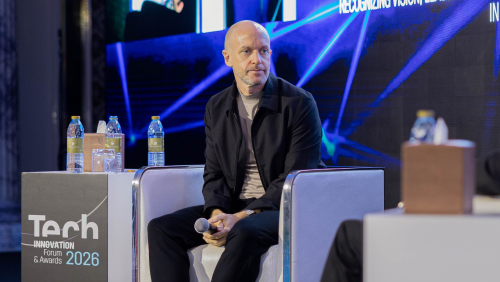
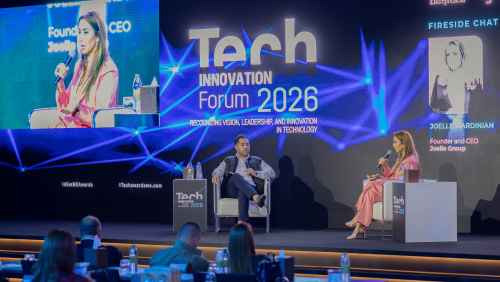
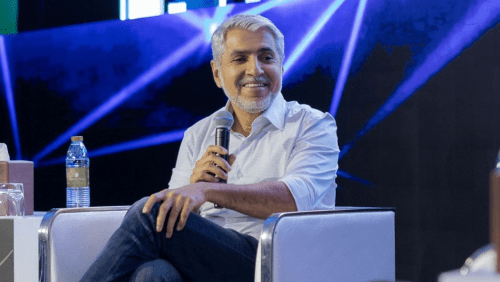
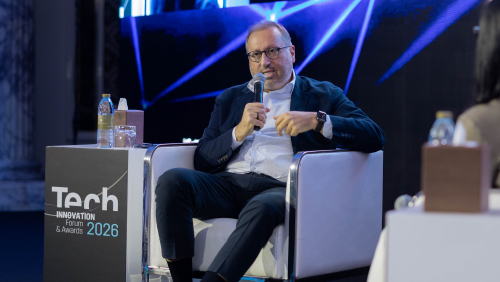
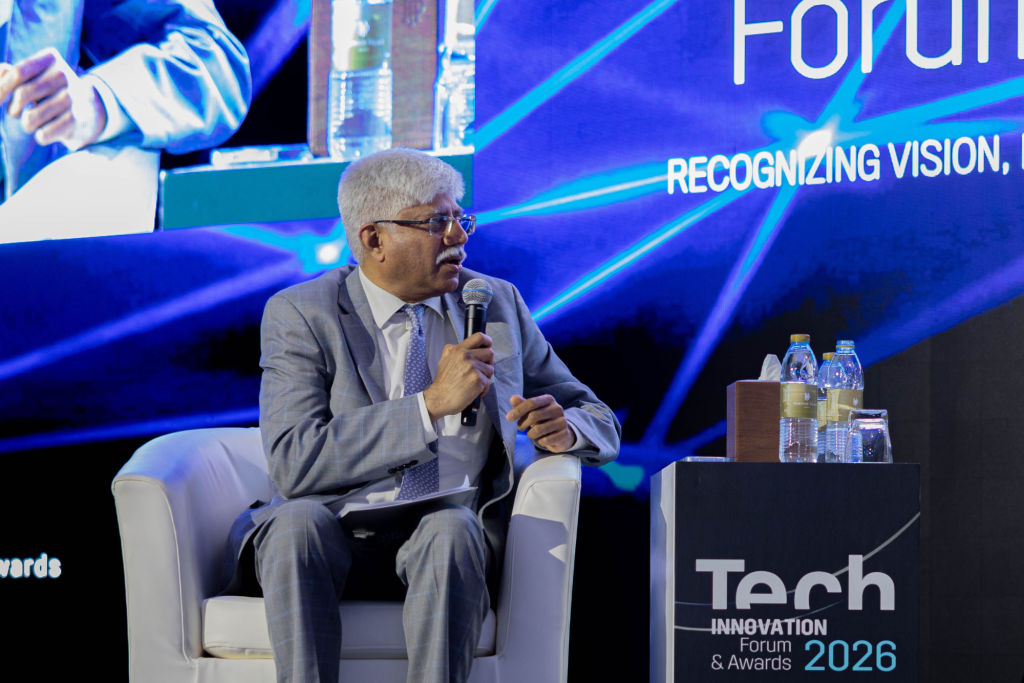
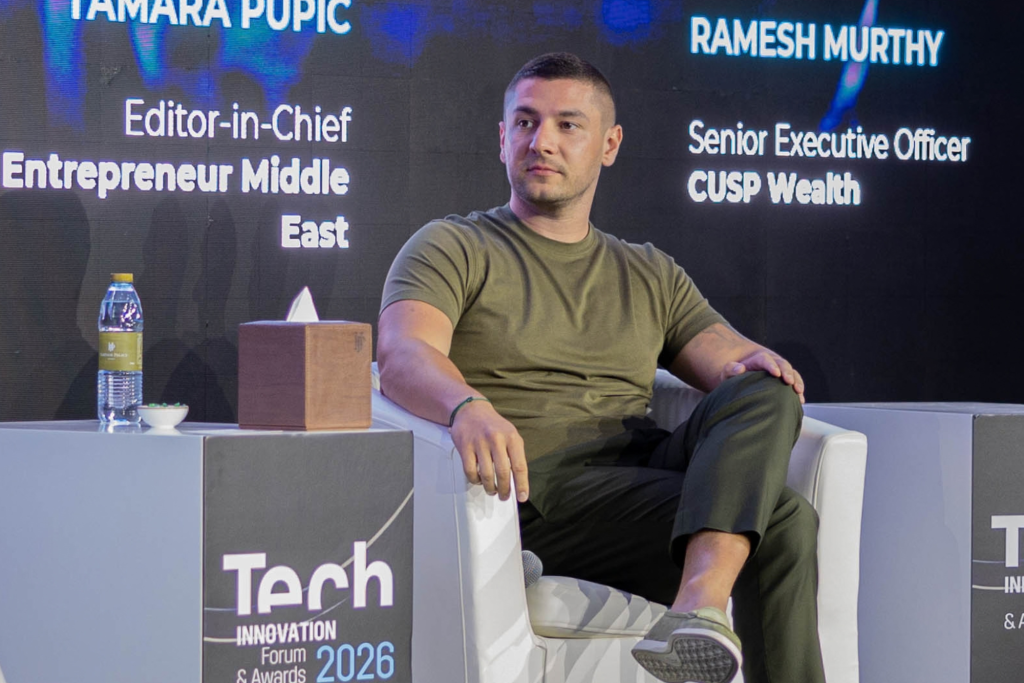
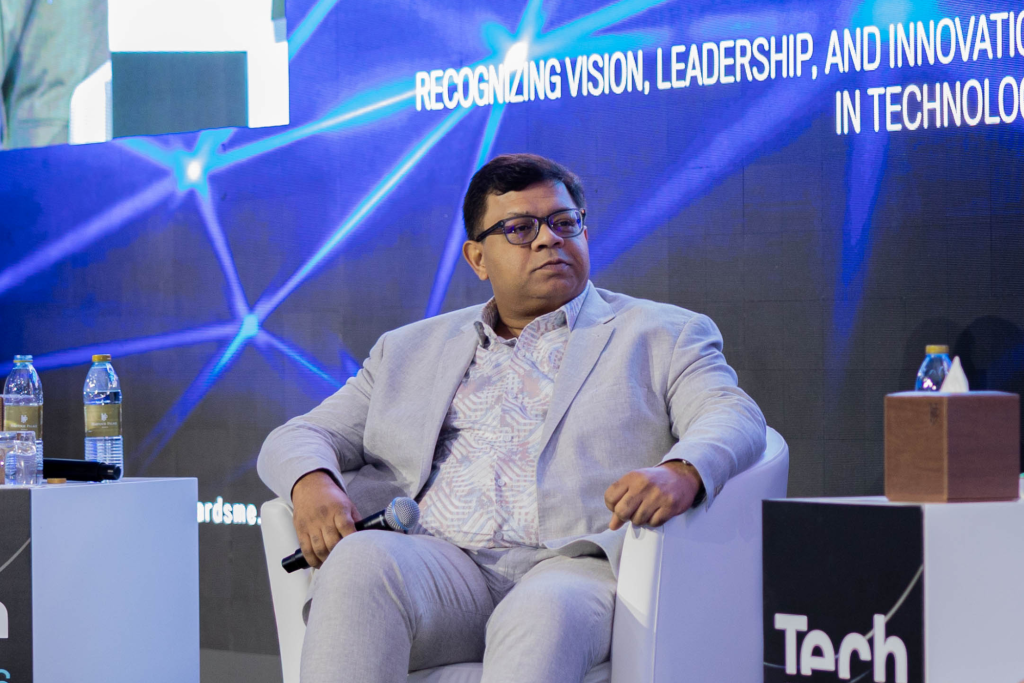
Featuring Ramesh Murthy, Senior Executive Officer at CUSP Wealth; Viktor Uzunov, co-founder and CEO of UEB3; and Naeem Hussain, founder and CEO of LockThreat, the panel explored how technology is changing who gets to invest, how they invest and whom they trust.
You're reading Entrepreneur Middle East, an international franchise of Entrepreneur Media.

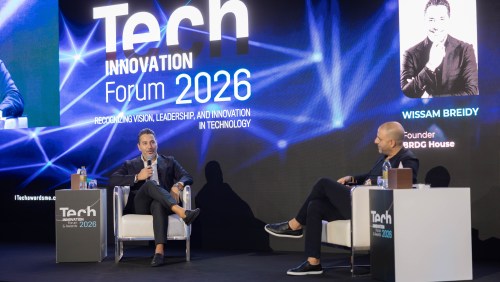
The last conversation at Entrepreneur Middle East’s Tech Innovation Forum 2026 brought together three leaders working at the intersection of finance, investment, artificial intelligence and security to explore how technology is changing who gets to invest, how they invest and whom they trust.
Moderated by Tamara Pupic, Editor-in-Chief of Entrepreneur Middle East, The Future of Wealth: How AI is Democratizing Investing featured Ramesh Murthy, Senior Executive Officer at CUSP Wealth; Viktor Uzunov, Co-Founder and CEO of UEB3; and Naeem Hussain, Founder and CEO of LockThreat.
For Murthy and Uzunov, the journey into the new world of investing began with traditional finance. Uzunov spent almost a decade on the global markets floor at Jefferies in London before recognizing what he saw as a fundamental shift in finance around 2020.
“I saw a big shift towards what, back then, wasn’t even called on-chain finance. It was just crypto,” Uzunov said. “I thought that this was the future of finance in general, not just investments.”
That conviction ultimately led him to UEB3, which he said has grown from US$70 million to US$150 million in assets. “With the emergence of AI, there is going to be this massive shift towards on-chain finance and technology being fully implemented into finance, investments, payment solutions, generally, the whole financial sector.”
Murthy’s turning point came from a different realization after more than 30 years across corporate and investment banking, institutional banking and personal finance: traditional wealth management was simply not designed for everyone.
“One thing became very clear to me: who the entire system is built for and who it is not built for,” Murthy said. “In personal finance or personal banking, the best tools, the best advice, the best research were always available for the wealthy.”
“That left many of those who needed guidance most, including first-time investors and wealth builders, without the same opportunities. Technology offered a way to change that.
“CUSP Wealth is not a cheaper version of what exists. It’s genuinely a different kind of platform for people to invest. Institutional-grade advisory is available for anybody who has a smartphone.”
If technology has dramatically expanded access to investing, however, the discussion quickly moved to what may prove an even bigger challenge: trust.
For Hussain, the definition of trust itself is changing.
“In the past, especially in investing, trust would mean: can you take care of my money?” he said. “Now, when we say trust, especially with AI and the use of high-tech, it means a lot of different things.
“Investors increasingly have to consider not only the institution managing their money, but also the AI models it uses, the security embedded within them and the governance surrounding those systems.
“Fintech has already created that access. Trust today is to make sure that these AI systems are actually governed so that something negative and consequential doesn’t occur. I think it will truly become a competitive advantage in the future.”
Uzunov sees the combination of AI and on-chain finance as particularly powerful. “On-chain finance provides the access, and AI can provide the productivity edge and the ease of understanding,” he said.
It is also changing the competitive landscape. “Back in the day, it was men in suits in corporate boardrooms that had access to data,” Uzunov said. “Right now, any small firm, my firm is boutique, and we have a competitive edge over anyone 10 years ago, even two years ago.”
AI, he added, gives smaller firms capabilities in research and data analytics that were previously concentrated within large institutions. But that does not mean handing over responsibility to technology.
“AI, as much as we use it and as great as it is, isn’t a solution to everything,” Uzunov said. “It’s a productivity tool and it’s a fast track to doing way better and way bigger things, but human accountability is that much more important.”
Murthy, meanwhile, argued that democratization must be accompanied by regulation, transparency and products designed around the actual needs of investors.
He pointed to the example of a young, first-time investor seeking to build wealth while remaining guided by her faith. “The thresholds are low. It’s no longer US$5,000 to US$50,000. It’s as low as US$50,” he said of CUSP Wealth. “There are no hidden fees. We are not trying to slip in anything. It’s very transparent.”
As AI takes over more of the research, analysis and information processing previously performed by humans, Hussain believes another human capability will become more valuable rather than less.
“Artificial intelligence is now abundant,” he said. “I think what happens when that level of abundance exists is that judgment becomes scarce.
“You can get a lot of exponential speed, but still human judgment is going to be absolutely critical, and expertise in that space becomes important.”
The liveliest disagreement of the conversation emerged around regulation. Uzunov questioned how much protection regulation ultimately provides, pointing to the collapse of major financial institutions during the 2008 global financial crisis.
“I don’t think regulation is going to change anything about the course of AI and of the financial sector,” he said. “People on the investment side are going to continue to find new, very eloquent ways of making more money, and people on the tech side are going to continue to find more ways to advance technology regardless of what regulation does or doesn’t do.”
His own approach, he added, is straightforward: “I’m just transparent with our investors. I keep it real and I always keep it sugar-free.”
Hussain challenged that position, arguing that regulation only works when institutions and the people running them genuinely follow it. “Regulations by themselves cannot be enforced. Humans have to do the job, and so it comes back to your credibility and your integrity,” he said.
Murthy agreed. “It always helps to play by the rules,” he said. “The rules are there for a purpose. There’s a rationale, there’s a logic.”
Looking ahead, all three expect the relationship between finance and technology to deepen further.

Uzunov said UEB3 is moving heavily into real-world assets and tokenization, spanning assets from watches and collectible bags to property. “For retail investors, I think it becomes way more accessible,” he said. “People are way more educated because of the information access that AI gives them.”
At LockThreat, Hussain is focusing on what he calls “GRC 3.0” a model of governance, risk and compliance that is continuous, automated, integrated and intelligent. The rise of agentic AI, he warned, makes this increasingly important.
“We’re talking about using AI to provide us with intelligence to make decisions. Now imagine the next step: you don’t only say, ‘Get me intelligence.’ You say, ‘Now go and execute,’” Hussain said. “I see an incredible future of adoption of this awesome technology, but it will come with a lot of risks that need to be managed.”
For Murthy, the principles for entrepreneurs building the next generation of financial platforms remain surprisingly human.
“When you build a product, you have to build for a real person,” he said. “Don’t build a product and reverse engineer to look for a customer. Look for the customer first and ask: what are the problems?”
And technology and financial expertise alone will not be enough. “You also need somebody with local intelligence, the intelligence about the customer needs,” Murthy concluded. “You need both people in the room. You cannot build one without the other.”
RELATED: The Recap: Entrepreneur Middle East’s Tech Innovation Awards 2026