The Tech Innovation Forum 2026 Recap: Richard Fitzgerald, Founder and CEO, Augustus Media
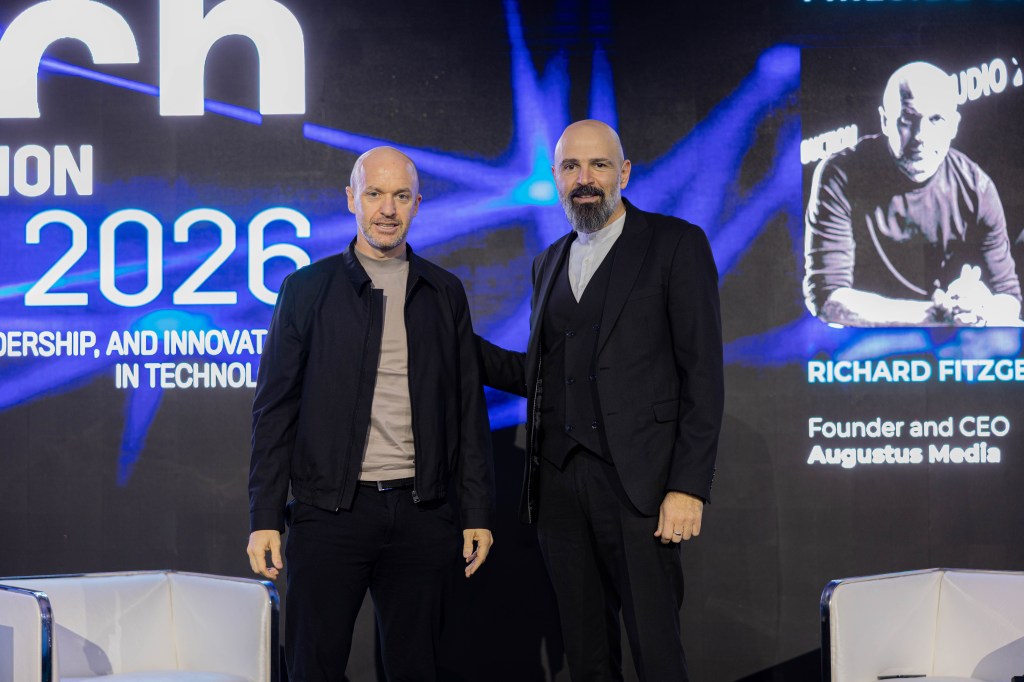
In conversation with Wissam Younane, CEO, BNC Media Group, Dubai-based Irish entrepreneur and media executive Richard Fitzgerald shared how he grew Augustus Media into a regional digital media powerhouse.
You're reading Entrepreneur Middle East, an international franchise of Entrepreneur Media.
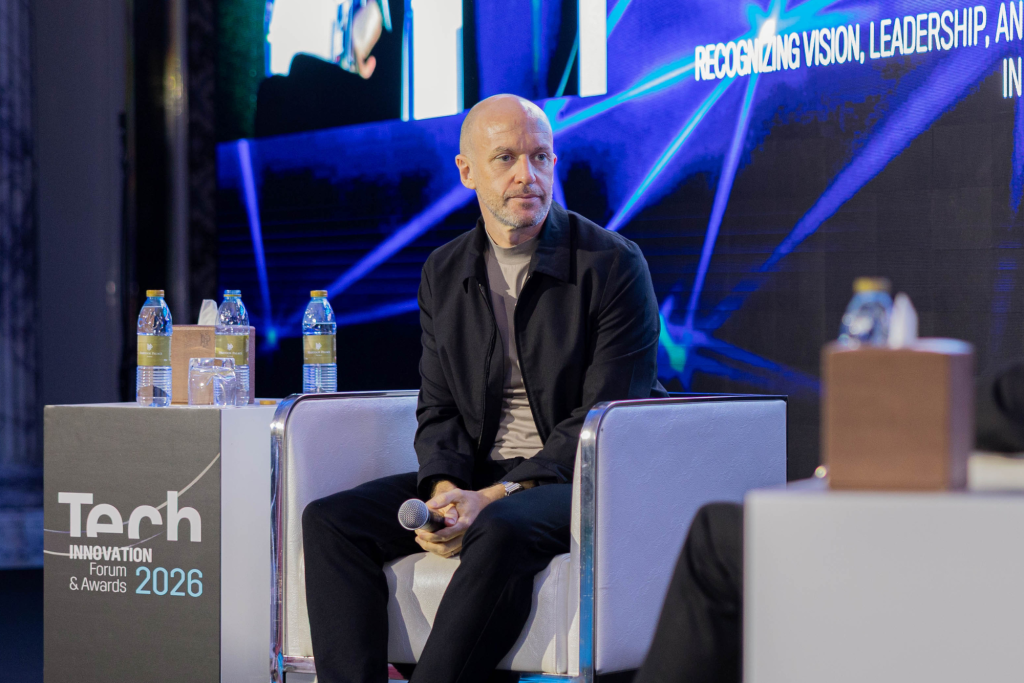
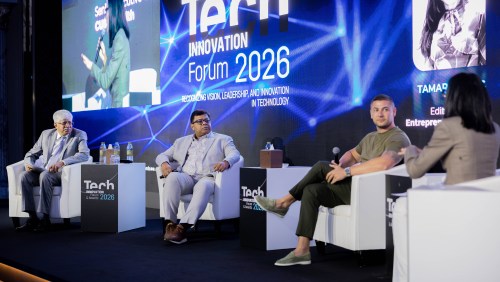
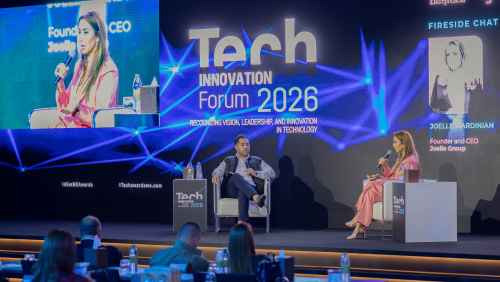
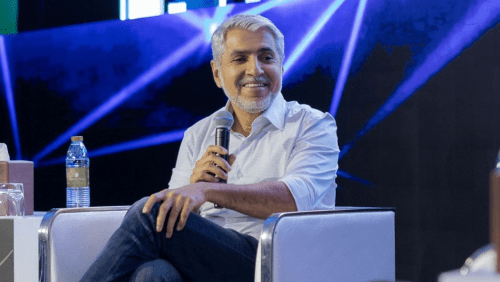
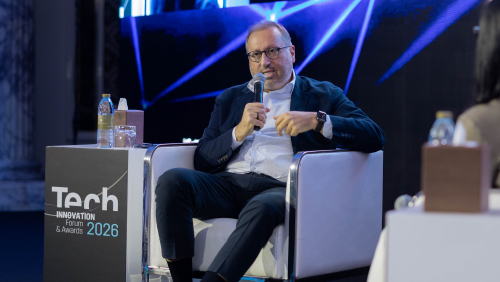
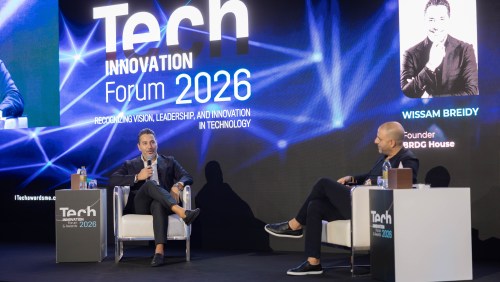
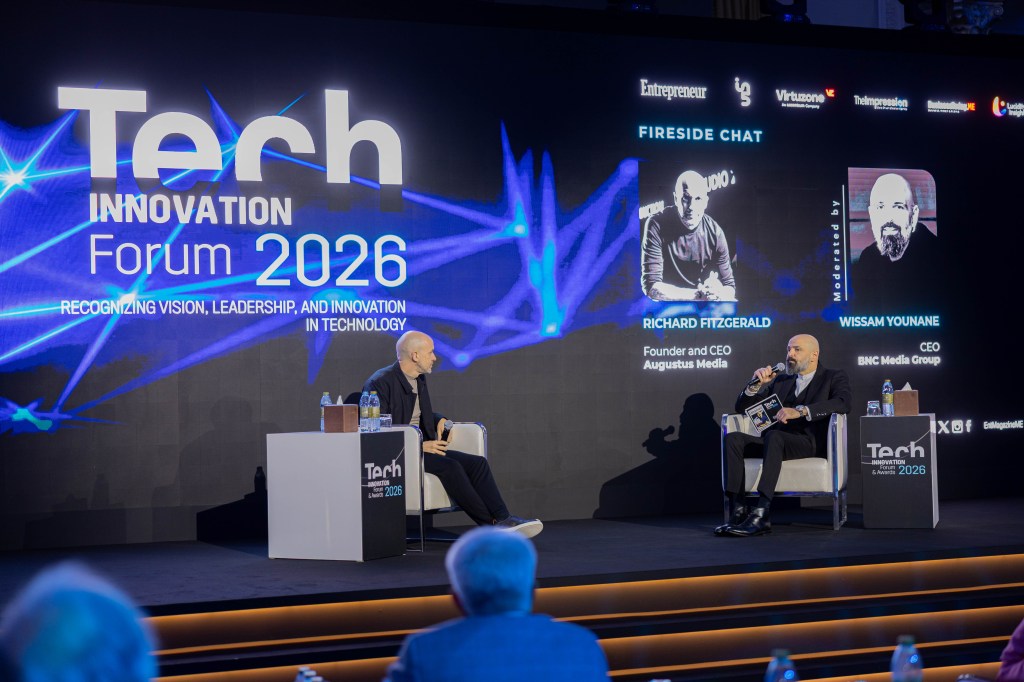
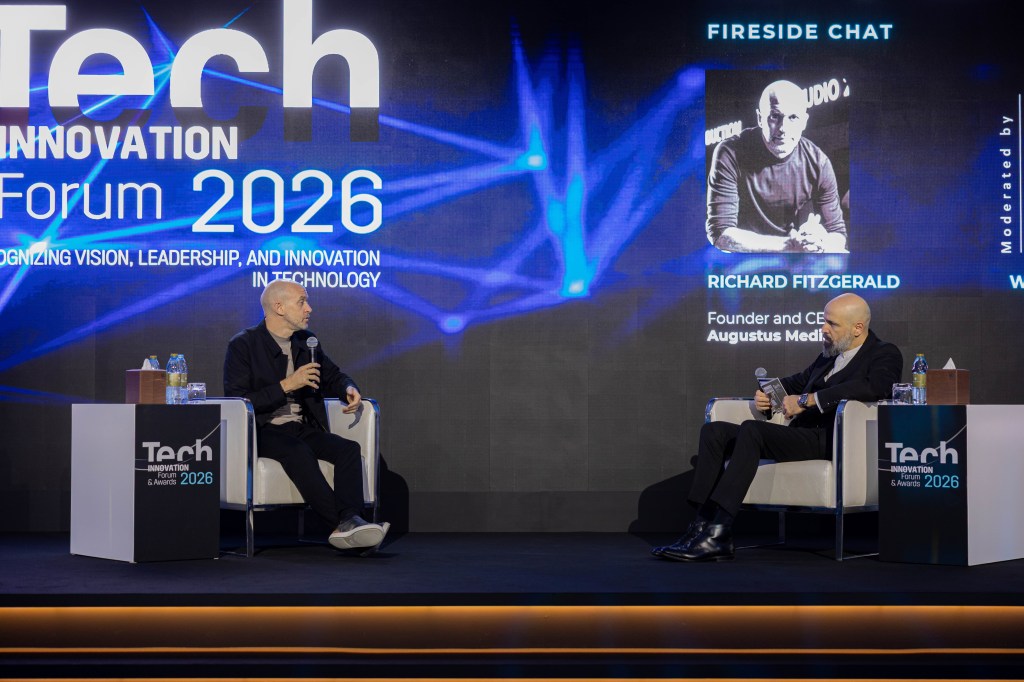
The fifth fireside chat at the Tech Innovation Forum 2026 by Entrepreneur Middle East brought together two figures from the UAE’s media industry: Richard Fitzgerald, founder and CEO, Augustus Media, and Wissam Younane, co-founder and CEO, BNC Media Group.
Their conversation traced Fitzgerald’s journey from social media and advertising to building one of the region’s largest independent digital media groups, while exploring the evolution of Lovin’, the company’s expansion across the Middle East, its growing bet on streaming and live sports, and what comes next for the media industry.
Fitzgerald has worked in media and advertising since 2006, across agencies in Ireland, England and the UAE. He built the regional social media department at Mindshare MENA before becoming managing director of a creative technology startup, and in 2015 launched Augustus Media, the modern media company behind platforms including Lovin’, Smashi and ODEUM. Under his leadership, the company has expanded across more than 30 cities and grown to more than 140 employees, with a portfolio that includes more than 30 Lovin’ cities and 12 verticals across Smashi and ODEUM.
“Media has always been fragmented, from radio to television, and I think influencers are simply another part of that evolution. We’re moving more and more into digital,” Fitzgerald said.
“The rules of traditional media, such as journalistic ethics and programming standards, still apply, but new forms of media, from streaming to different ways of consuming content, also allow for new rules.”
Fitzgerald’s own career developed alongside that shift. “I studied in Ireland, worked there and in London, including within WPP, and I was always in social media,” he said. “When I came to Dubai in 2012, I was working across the region in social media and community management. That experience gave me a blueprint for what would eventually become Augustus Media.”
When he launched the company in 2015, BuzzFeed appeared to offer a blueprint for the future of digital publishing. Fitzgerald believed elements of that model could be adapted to the Middle East. “When I started Augustus Media in 2015, BuzzFeed was seen as the future of media. That ultimately didn’t materialize in the way people expected, but I believed there was something in the model that could work locally. We managed to take that idea and make it successful through Lovin Dubai and locally relevant branded content.”
Lovin’ initially operated as a franchise, giving Fitzgerald both a recognizable brand and the technology infrastructure needed to start building an audience. “Lovin started as a franchise. At the time, anyone could start a blog, but it was difficult to be taken seriously,” he explained. The franchise gave us a brand and a backend CMS without having to build the technology ourselves. When you’re building a media company, you need to build an audience before you can sell, so that helped enormously in the early years.” But five years into the business, the economics of the arrangement no longer made sense to him. “After running it for five years, I felt the franchise model was flawed for us because Lovin wasn’t an established international brand. I learned a lot about the value of brand equity, but also about the costs of franchising, including royalties. We bought out the franchise in 2020 and took ownership of the IP.”
Around the same period, Fitzgerald began developing Smashi as Augustus Media’s own intellectual property, deliberately giving it a very different identity. “I set up Smashi around 2019 and 2020 as our own IP and deliberately positioned it as the opposite of Lovin. Lovin is about loving life, escapism and having fun. Smashi is for the driven, the dreamers and the doers. Having worked across the region, I saw people building businesses, working second jobs and constantly pushing forward. I wanted to create a media brand that represented that side of the region.”
The business was also built with relatively little external capital. “Our initial franchise fee was US$20,000. My brother and I put in US$40,000, and two other investors put in US$120,000. That US$160,000 is the only investor money that has ever gone into the business. We became profitable in 2017 and have been profitable since, with the exception of the COVID19 pandemic year when we didn’t pay dividends.” Coming out of the pandemic, however, Augustus made a significant investment in its physical production capabilities. “In 2021, coming out of the pandemic, we had taken a 12,000-square-foot studio in Dubai Production City, and the fit-out was putting pressure on free cash flow. It ultimately cost around AED4 million to AED5 million. SME financing can be difficult to access in the region, so the Beehive debt financing helped us fund that expansion.”
Despite running a digital-first media business, Fitzgerald remains a strong believer in bringing creative teams together physically. “I fully believe in digital, but I also believe in the chemistry of young, creative people working together in one space. Since we moved into those offices in January 2022, the business has continued to grow. That has obviously been helped by the UAE economy and our regional expansion, but I believe there is a correlation between bringing people together and what we have achieved.” That belief extends to how Augustus approaches talent. “As a rule, we like trusting young talent. I think some media companies in the region import talent rather than trusting the young people who are already here.”
As Augustus grows, however, Fitzgerald recognizes that scaling also requires experienced executives. “I recently heard Reid Hoffman describe companies as having ‘missionaries’ and ‘mercenaries.’ You usually start with missionaries, people who believe in the cause and want the company to succeed. But as you scale, you sometimes need to bring in experienced executives who have done it elsewhere. It’s about finding that balance. I don’t mind bringing in one or two, but I don’t want us to become a completely mercenary company.”
One area where that expertise is increasingly important is streaming. Smashi has expanded into Smashi Business and Smashi Sports, while Augustus has been building its presence across connected TVs and investing in subscription products. “Smashi has evolved into Smashi Business and Smashi Sports, and we’ve been building our streaming platform across connected TVs. I realized early on that people weren’t necessarily going to pay to watch a business show in Arabic, but they would pay to watch local sports. So we’ve invested increasingly in that.”
“We’ve signed with UEFA for 750 games this season, and we use AI cameras for many of our leagues. As we expand into connected TV, subscriptions and streaming, there are areas where we need to bring in people who have already done it.” Fitzgerald says the decision to focus on live sports rather than trying to build a Netflix-style originals operation also drew on what Augustus already knew how to do. “We chose live sports rather than trying to build a Netflix-style originals business because real-time content is much closer to what we already knew from Lovin Dubai. Our teams were used to coming in early and producing content quickly. Live sports felt much closer to home.”
RELATED: Vir Das, Sharon King-Chai, Inua Ellams and Jennah Fakhouri on Authenticity in the Algorithm Age
There is also a simple consumer logic behind the strategy. “I’m also a consumer. If I want to watch my football team and there isn’t a free stream available, I’ll put in my credit card five minutes before the game without thinking too much about the price. There’s a lot of value that can be created there, although live streaming is technically much harder than on-demand streaming.”
At the same time, Fitzgerald sees advertising budgets beginning to follow audiences onto new platforms. “Connected TV and retail media are becoming major areas of media advertising spend. Years ago, social media wasn’t even a line item on media plans; eventually it became one. Now we’re seeing connected TV, streaming, audio and retail media increasingly becoming part of those budgets.” Augustus is already positioning Lovin’ within that changing distribution landscape. “Our Lovin Dubai TV channel is now on platforms including Samsung TV Plus and LG Channels. This is no longer satellite television, it’s streaming directly through the operating system of the television. I see that as the next frontier of distribution.” He adds, “We also have the Lovin app available across these operating systems, where people can access content from around 30 cities across the region. We have around 70 podcasts in English and Arabic. That’s part of the evolution of our streaming strategy.”
Owning the Lovin’ IP also opened the door to much faster geographic expansion. “After buying out the franchise in 2020, we had the freedom to expand Lovin into more cities. We would launch in a market on social media first, and when we saw traction, we would open offices, hire people and obtain the necessary licenses.” Egypt has become one of the company’s most significant expansion markets. “We entered Egypt in 2021, initially around technology and Arabic business content, and launched Lovin Cairo in 2022. It took time to get the market right, but over the past three years Lovin Cairo has really grown. We’ve doubled down, hired around 50 people and built a much bigger operation there.”
Fitzgerald is particularly optimistic about Egypt’s North Coast. “Lovin Sahel has incredible potential. You have 300 to 400 kilometers of Mediterranean coastline, and I couldn’t be more bullish about Egypt’s North Coast. From a media perspective, I think it is a platform you can do a lot with.” More broadly, his formula for choosing new Lovin’ markets is based on audience size and behavior. “When deciding where to launch Lovin, I look at smartphone penetration, social media usage and population. You have to be aware of the economics, but I also believe the local-news model can work in markets with more challenging economics. We’re beginning to see that with Lovin Beirut, Lovin Amman and Lovin Damascus.”
Saudi Arabia is another long-term priority. “In Saudi Arabia, we now have around 25 people, about 22 of whom are Saudi nationals, across two offices. We have a Saudi managing director and a Saudi head of content. The business is still much smaller than our UAE operation, but I see the long game in Saudi.” One decision Fitzgerald is particularly glad he made was entering the market independently. “One piece of advice I’m glad I ignored was that we needed a partner in Saudi Arabia. I decided to do it ourselves. We have 100% ownership and are the only foreign company with a government-media license.”
Beyond expanding Augustus itself, Fitzgerald believes the region needs more homegrown media companies capable of reaching significant scale. “I think it’s important for our sector to have leaders and companies from the region that can build genuinely regional businesses. There are very few independent media companies in the region operating at significant scale. I look at companies such as SRMG and MBC and their revenues and ask: how do we aspire to become that? For the wider ecosystem, having ambitious regional media companies creates jobs and opportunities here.”
That ambition ultimately extends beyond the region. “Dubai has its own airline and its own property developers. Can we also build aspirational media companies here that are recognized globally? Can we create modern media businesses from this region? That’s what I’m interested in.”
Building more sustainable revenue streams will be central to that ambition. “We’re pushing ourselves very hard to develop subscription revenue. Many people believe this isn’t a subscription market, but the more sustainable revenue we can create, the more jobs and opportunities we can create in the region.”
Not every transformative moment in the Augustus story, however, came from a carefully planned strategy. Fitzgerald points to the acquisition of the assets of UAE newspaper 7DAYS as one of the company’s most consequential moves. “The best deal Augustus ever made was buying the assets of 7DAYS in 2017. They had around 600,000 Facebook followers when the newspaper shut down. I contacted the CEO, did the deal, and got Facebook to merge the pages. We took off from there.”
Now, as another wave of technological disruption reshapes the industry, Fitzgerald expects artificial intelligence to create an entirely new category of competitors. “My prediction for 2027 is that we’ll see fully AI-powered media companies beginning to generate advertising revenue.”
For Augustus Media itself, however, there are still plenty of opportunities to pursue through its existing model. Asked which market Lovin’ should double down on next, Fitzgerald had a clear answer: “I’d say Kuwait. We’re already seeing advertising interest there.”
RELATED: The Recap: Entrepreneur Middle East’s Tech Innovation Awards 2026