The Tech Innovation Forum 2026 Recap: Alain Bejjani — Investor, Author, Global Thought Leader
At Entrepreneur Middle East’s Tech Innovation Forum 2026, Alain Bejjani shared his perspective on entrepreneurship, leadership, and the growing impact of AI on economies and everyday life.
You're reading Entrepreneur Middle East, an international franchise of Entrepreneur Media.
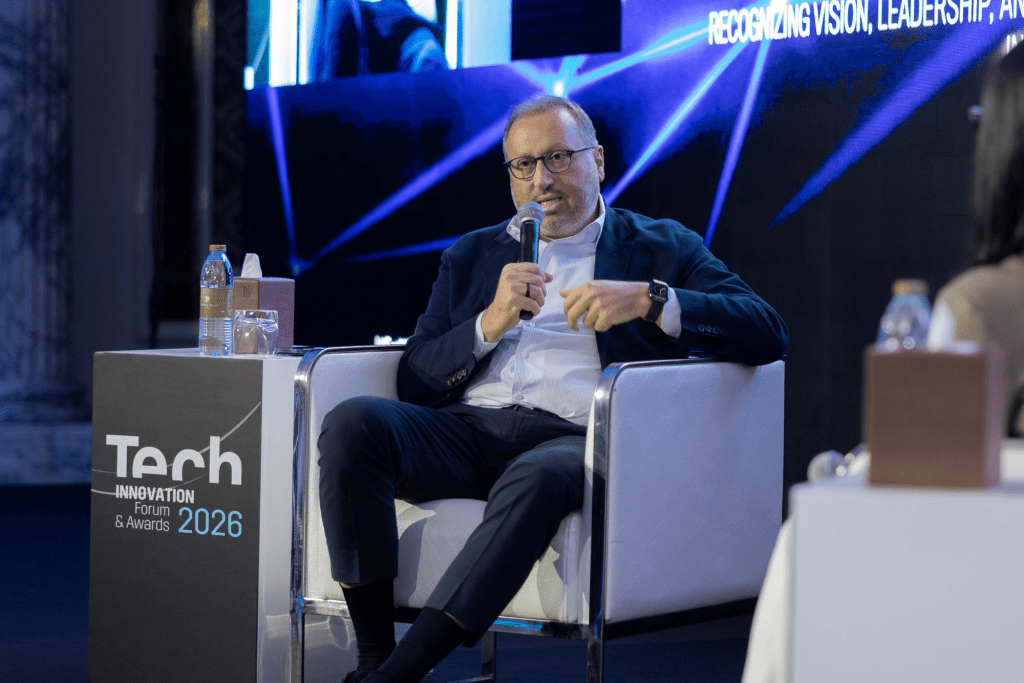
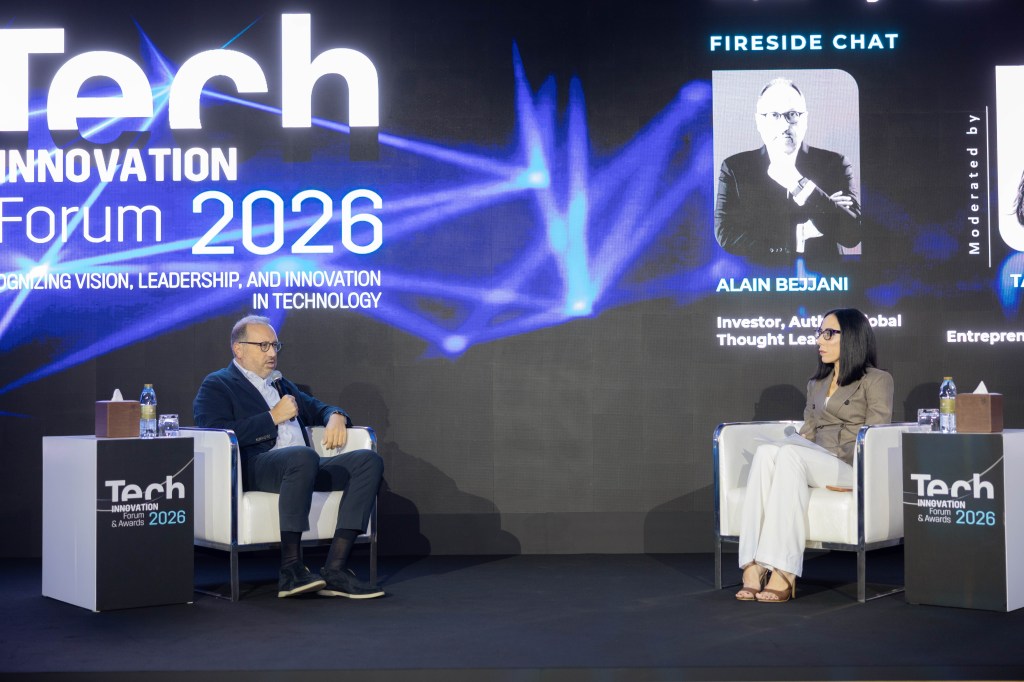
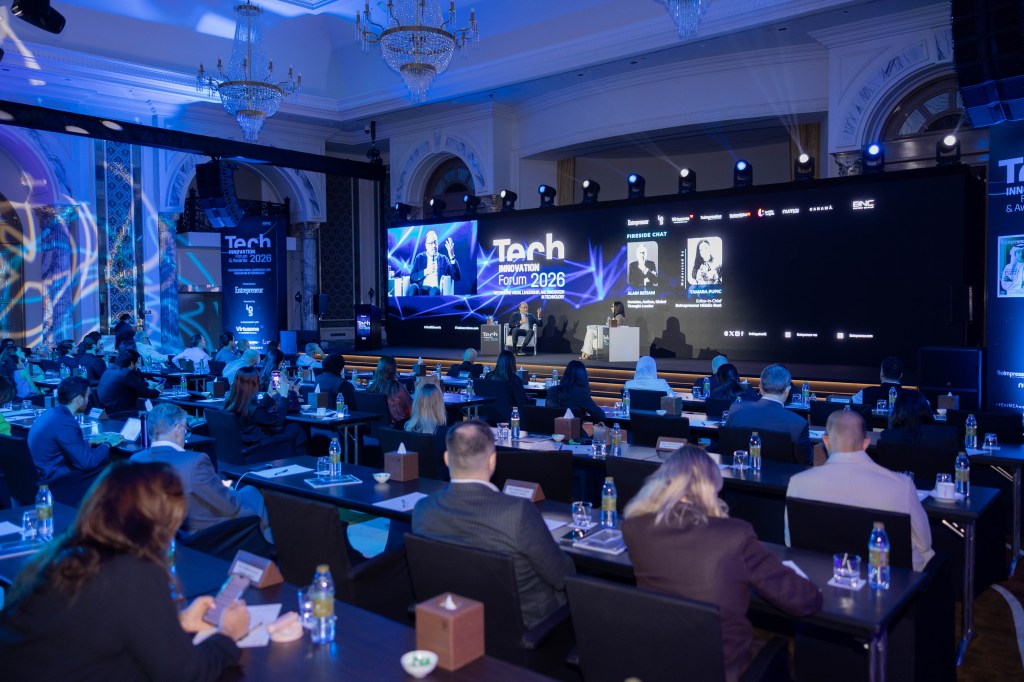
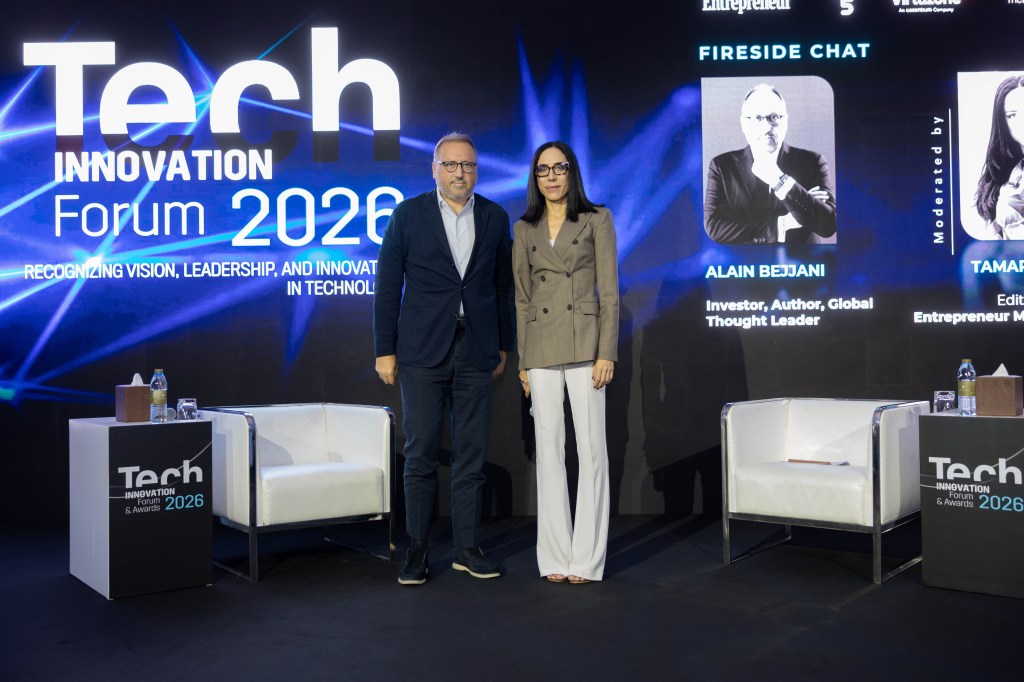
One of the most impactful conversations at Entrepreneur Middle East’s Tech Innovation Forum 2026 featured Alain Bejjani, investor, author, and global thought leader.
With more than two decades of leadership experience across the Middle East, North Africa, and South Asia, Bejjani has led major business growth, digital transformation, and sustainable finance initiatives. Earlier in his career, he served as Executive Vice Chairman of the Investment Development Authority of Lebanon (IDAL), and today serves on the Atlantic Council’s International Board.
At the Tech Innovation Forum 2026, the conversation began with his more recent role as an investor on Shark Tank Lebanon and his efforts to support the country’s emerging entrepreneurs. Bejjani explained that he joined the show to help advance entrepreneurship in Lebanon, but its impact has extended beyond the investments made on screen, as several founders who left Shark Tank Lebanon without securing a deal later received investment from people who had discovered their businesses through the show. That multiplier effect, he said, is one of the outcomes he takes particular pride in.
Drawing on his experience as both a business leader and investor, Bejjani shared what he believes separates an entrepreneur who makes a strong impression from one who is genuinely investable. “It is about their business, but more importantly, it’s about the investment opportunity they are presenting to you,” he said.
“Coming to me and telling me how great your business is, fantastic. But for me, that’s the backdrop. What you need to convince me of is: why should I invest with you rather than allocate my capital elsewhere? One thing people are starting to get better at is understanding that they are not only there to sell their business; they are also there to sell the investment opportunity itself. That is someone who is investable.
“Second, that person has to come across as someone who has the leadership needed to turn vision into reality. Because that is what leadership really is: turning vision into reality.
“Someone who does not have the ability to do that, even if they have great ideas, is not investable. It will remain a fantastic idea, but it will not materialize in the way they are planning.”
In essence, Bejjani’s approach to startup investing is three-fold. “First, does this person understand that I’m an investor coming in, not someone taking over the business? They need to understand the alignment of interests between the investor and the operator or founder.
“Second, does that person have the ability and the skill set to turn that vision into reality? Execution, of course, is very important.
“Third, is this person adaptable enough? The world is changing. By the time someone pitches their idea and hits the ground running, the world has most likely changed, especially now.
And finally, do they have an open and curious mindset? Do they have a learning mindset? Because you will need to learn a lot along the way. Entrepreneurship is a learning journey. You never know everything. We are all continuously a work in progress. I personally believe that any leader is a work in progress until they leave this world. It’s a mindset.”
Bejjani began his career in law and business advisory in 1999 before serving as Executive Vice Chairman of the Investment Development Authority of Lebanon (IDAL) from 2000 to 2005, working to attract foreign investment and support economic growth. He describes those years in Lebanon as among the most formative of his career. “I think those were my most formative years. I learned so much in four years, under the presidency of Prime Minister Rafic Hariri, who was later assassinated. I had the opportunity to work closely with him, and I learned tremendously from that experience,” Bejjani says.
“I left IDAL when I was 32. For those who don’t know, the job was about promoting Lebanon as an investment destination and promoting Lebanese exports abroad. So, on one side, it was a business and economic role. On the other, it was a role in a highly political environment.
“It was extremely formative for me. I think my biggest lesson was about human nature, understanding how far people are willing to go, both high and low. I used to tell myself that I was fortunate to have experienced this so early in my career, because otherwise it might have taken me another 40 or 50 years to understand these things.
“When I eventually came to Dubai, it was because of the 2006 war in Lebanon. I hadn’t planned to come to Dubai at all.”
His move to Majid Al Futtaim came almost by chance. The group was already one of his legal clients in Lebanon when, during a dinner in Beirut, a friend introduced him to its founder, Majid Al Futtaim. The following morning, Al Futtaim called Bejjani and asked him to join the company. Bejjani was declining until the 2026 war in Lebanon, when he ultimately joined Majid Al Futtaim, beginning what would become a 17-year career with the group.
“When I started, I had no ambition to become the Group CEO. I started in legal, then moved into business development and corporate development, before becoming CEO,” Bejjani said. The mentor who had the biggest impact on me was Majid Al Futtaim himself. I had the privilege of working with him on a daily basis from 2008 until the end of 2021, when he passed away. He made me the person I am today. I learned a lot, and I think my most important relationship in my life was with him.
Bejjani helped drive the company’s growth and expansion. Appointed CEO in 2015, he grew the company into a US$15 billion enterprise across 17 countries by modernizing it with digital and AI tools and introducing new approaches to sustainable finance, including the region’s first 1.2 billion sukuk, or green bonds.
“Majid Al Futtaim was already a very successful company before I joined. It was a story of good to great. But it was a name, not yet a brand,” Bejjani said. “One of the most important things I did before becoming CEO was rebranding the company: defining its sense of purpose, its vision of creating great moments for everyone, every day, and the values it stood for. We then translated that purpose across the entire business.
“When I became CEO, we integrated the business to a large extent. We were serving the same customer through multiple touchpoints, our malls, Carrefour, cinemas, fashion, home retail and financial services. It made sense to bring that data together, understand the customer better and move from being in the business of real estate, retail and entertainment to what I called ‘the business of the customer.’
“When you understand your customer and have the right data and technology, you can build a much deeper relationship. My ambition for Majid Al Futtaim was to become a trusted, lifelong partner to our customers.
“Technology allowed us to customize the customer experience at an individual level rather than simply around customer personas. That creates loyalty and gives customers a reason to choose you over someone else.
“But transformation has to be driven by a clear vision, and you have to be able to communicate that vision clearly. People need to understand what you are doing and why.
“More importantly, they need to see you walking your talk. People do not follow what they hear; they follow what they observe. If you say one thing and do another, they will disregard what you say and pay attention to what you do.”
Bejjani explored his approach to leadership in his book, “NEXT: Leading Through the New Realities“, in which he identifies four defining challenges that today’s leaders must address: continual change, artificial intelligence, talent, and sustainability.
“The reason I wrote the book is because I deeply believe that what really matters in life is leadership: your ability to lead yourself and to lead others. Whether you’re leading a team, a business or a country, the principles are the same. But leading ourselves is the most difficult task we face,” Bejjani said. “We tend to be most complacent with ourselves. We find excuses, whether it’s about losing weight, business, family or anything else. That’s why the most difficult person to lead is yourself, and the most difficult battles are those you fight with yourself. Leadership is at the heart of success, whether personal or collective.”
However, Bejjani argues that leading in tomorrow’s world is fundamentally different from leading before 2020 and the COVID19 pandemic. “Since COVID, we have seen new realities come together. One of them is constant volatility and change,” he said. “The post-1945 world we grew up in, and many of the structures we continue to rely on, are now being challenged by some of the most important and influential forces on the planet. That is why we are experiencing constant change. We had COVID and its enormous disruption, followed by many events that disrupted global supply chains and commodity prices, and so on.”
The most consequential change, however, will be the impact of AI. In explaining its implications, Bejjani also addressed the growing importance of talent and sustainability which are the two other themes he explored at length in his book.
“AI is the first non-biological intelligence on planet Earth. In reality, what we are doing now is sharing our habitat with a new form of intelligence that, arguably, we can still control. But we all know that we are moving at a pace where we may not be able to control it anymore,” Bejjani said.
“The reason human beings are at the apex of the food chain is because we have been the smartest and most adaptable species. Today, we have created a non-biological intelligence that already seems to be seeping out. We are seeing cases in which AI systems behave in ways that were not necessarily intended. It is not out of control, but we are testing the boundaries, and even the creators of AI have expressed concerns about where this technology could go.
“At the same time, no one really wants to stop because, as Trump puts it, whoever wins AI wins. I think the whole world as we know it is going to change. The very concept of the nation-state, the structure of society, companies, the way we run businesses, everything is going to be affected, if not completely changed.”
For Bejjani, AI also raises a more immediate question for business leaders: whether the companies and business models they are building today will remain sustainable tomorrow. “My concern about sustainability is, first, that the planet continues to be in trouble and we have to fix it. I think AI will help us to a certain extent, not enough, but it will help,” he said.
“Second is the sustainability of every business model. You are businesspeople. You build businesses and you build value. But when a business model can be taken over by AI, the valuation of that business could fall dramatically. If I have a billion-dollar company today, or a million-dollar company, I’m not sure that business will still exist in three years, five years or even six months. So the questions become: What am I building? What is my net worth? What are the underlying economic fundamentals on which we are underwriting investments? All of these questions are now up for grabs, alongside the issue of AI crowding out talent and potentially putting people out of jobs, which is another reality we are already beginning to see.””
Ultimately, Bejjani believes this transformation will shift the advantage from capital to talent, a concept he calls “talentism.” He said, “I coined the term talentism versus capitalism because, in the past, capital was what mattered most. In this transition, what matters most is talent.
“AI is competing with people for their jobs, and it is only going to get better. There is no way we will be able to compete with AI on raw intelligence alone unless we eventually reach a point where technology significantly augments human capabilities.
“In the meantime, what becomes increasingly important is human judgment. Talentism is about how, in the era of AI, we refine our judgment so that we can make the right calls and the right trade-offs.”
RELATED: The Recap: Entrepreneur Middle East’s Tech Innovation Awards 2026