Gate’s Biggest Investment Isn’t Crypto—It’s Culture
For Gate, partnering with Inter Milan is about far more than football sponsorship. It is a calculated play for cultural relevance, institutional trust, and long-term positioning in Europe and beyond.
gate
Gate strengthens its global brand presence through its partnership with Inter Milan, blending football culture, legacy, and long-term credibility as part of its European expansion strategy.
Opinions expressed by Entrepreneur contributors are their own.
You're reading Entrepreneur Middle East, an international franchise of Entrepreneur Media.
For years, crypto companies chased visibility the same way startups chase clicks – loud branding, stadium LED boards, celebrity ambassadors, short-term hype. But inside the executive suites of the industry’s largest exchanges, the strategy has quietly evolved. The conversation is no longer about attention. It is about legitimacy.
That shift is precisely what sits behind Gate’s partnership with Inter Milan, a collaboration that says less about football sponsorships and more about where the crypto industry believes its future now lies.
Because Inter is not simply another club.
Founded in 1908, carrying one of the most recognizable identities in global sport, and backed by generations of fiercely loyal supporters across Europe, the Middle East, Asia, and Latin America, Inter represents something increasingly valuable in the digital era: institutional trust. And for a crypto exchange operating in a post-speculation environment where regulation, reputation, and long-term positioning matter more than ever, that association carries strategic weight.
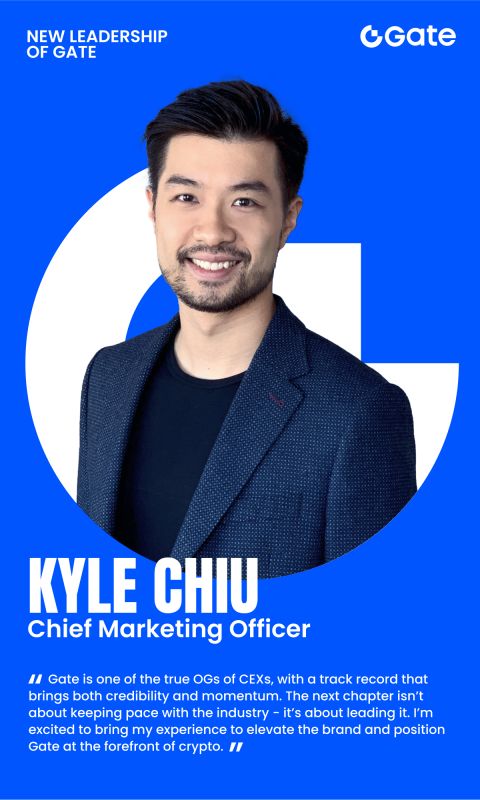
“Our vision for the European market began taking shape nearly a decade ago when we first planned our MiCA licensing strategy,” said a Kyle Chiu, Chief Marketing Officer at Gate. “Inter Milan was the natural fit, few clubs carry that level of influence and cultural weight across the continent. When you’re serious about Europe, Inter is the partner that makes sense.”
The reference to MiCA, the European Union’s landmark Markets in Crypto-Assets regulation, is important. It signals how mature crypto firms are increasingly approaching Europe not as a marketing exercise, but as a long-term regulatory and institutional market. And in that context, football becomes less about advertising and more about cultural entry points.
Inter’s value to Gate lies not only in audience size, but in emotional infrastructure.
Football clubs occupy a rare position in modern society. Their communities are inherited across generations, built on identity, ritual, loyalty, and belonging. That emotional architecture mirrors something crypto companies have spent years attempting to cultivate digitally through token communities, online ecosystems, and user networks.

“Both worlds run on culture, performance, and community,” Kyle explained. “A crypto holder who believes in a project or exchange and an Inter fan who bleeds black and blue are expressing the same human instinct, belonging to something bigger than themselves.”
That comparison may sound philosophical, but it reveals something deeper about the next phase of crypto branding. The industry is no longer trying to appear disruptive from the outside. It is trying to embed itself into mainstream culture from within.
And authenticity matters.
Football supporters are among the most commercially skeptical audiences in the world. They can immediately sense when a partnership exists purely for logo placement or financial extraction. That reality has forced brands entering the sport to rethink how they behave inside club ecosystems.
“Football fans have finely tuned instincts for what’s real and what’s just commercial noise,” he said. “Our approach has always been integration over interruption, we want to show up in ways with true fan engagement that genuinely add value to the Inter experience, not just occupy space on a shirt.”
That distinction reflects a broader trend across global sports partnerships. Sponsorships are increasingly expected to function as cultural collaborations rather than advertising inventory. The most effective partnerships today are not necessarily the loudest; they are the ones that feel native to the audience experiencing them.
For crypto firms especially, football also provides something digital advertising increasingly struggles to achieve: physical credibility.
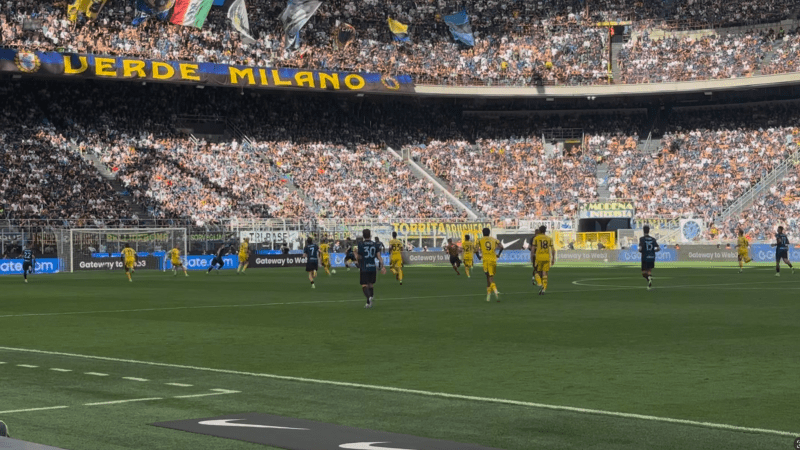
Inside an era dominated by algorithms, targeted ads, and infinite online impressions, stadiums remain one of the few places where attention is fully emotional, collective, and real-time. Few venues embody that better than San Siro — one of football’s most iconic cathedrals.
“San Siro doesn’t need an algorithm,” Kyle said. “When 75,000 people are inside that stadium chanting and celebrating together, the emotional intensity of that moment is something no digital campaign can replicate.”
That statement perhaps captures the real reason football continues attracting major technology and crypto brands despite the rise of digital marketing sophistication: because human emotion still scales better in person than online.
And Inter’s international footprint only amplifies that effect.
For Gate, whose growth strategy spans Europe, the Middle East, Asia, and Latin America, the club’s global reach aligns naturally with the company’s expansion priorities. Unlike traditional sponsorships that force brands into unfamiliar territories, this partnership operates through existing cultural pathways already built by football itself.
“Inter’s footprint across Europe, the Middle East, Asia, and Latin America maps almost perfectly onto our growth markets,” Gate noted. “We’re not forcing our brand into new territories, Inter is already there, and we’re proud to walk in alongside them.”
In many ways, the partnership reflects how crypto’s largest players are repositioning themselves for the next decade. The speculative phase of the industry created visibility. But visibility alone does not create permanence. Trust does.
And perhaps that is why football, with all its history, emotion, loyalty, and inherited identity, has become such an important arena for the sector’s most ambitious companies.
“The real value is credibility,” Kyle said. “For Gate, being alongside Inter signals that we are here for the long term, not the next cycle.”
For years, crypto companies chased visibility the same way startups chase clicks – loud branding, stadium LED boards, celebrity ambassadors, short-term hype. But inside the executive suites of the industry’s largest exchanges, the strategy has quietly evolved. The conversation is no longer about attention. It is about legitimacy.
That shift is precisely what sits behind Gate’s partnership with Inter Milan, a collaboration that says less about football sponsorships and more about where the crypto industry believes its future now lies.
Because Inter is not simply another club.

Mina Vucic • Director of Production and Multimedia, BNC Publishing
Entrepreneur Staff
Mina Vucic is the Director of Production and Multimedia at BNC Publishing, the media house... Read more