Why Media Buying Needs New Foundations as Small and Medium-Sized Businesses Redefine Modern Marketing Growth

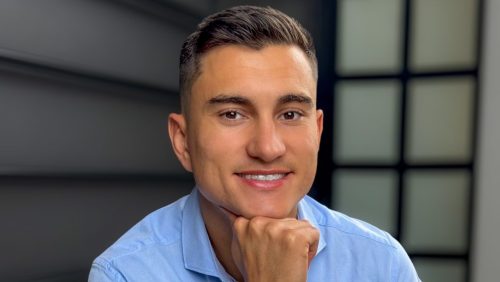
Eslam Essam, Founder of ParaGuru
You're reading Entrepreneur Middle East, an international franchise of Entrepreneur Media.
For decades, media buying has helped brands connect with audiences across television, radio, digital platforms, and, more recently, AI-powered advertising. As digital marketing has evolved, media buying has expanded beyond simply purchasing advertising space. According to a report, U.S. digital advertising reached $294.6 billion in revenue during 2025, reflecting 13.9% year-over-year growth and underscoring how central digital media has become to business growth.
Yet, according to Eslam Essam, founder of ParaGuru, media buying was originally shaped around the needs of large organizations running broad awareness campaigns. As the business landscape has evolved, he believes many growing businesses now require a different approach.
“The way media buying developed made complete sense for the businesses it was serving,” Essam says. “Large organizations often need campaigns with defined timelines and broad reach. The market has changed dramatically since then, and many growing businesses now need media buying to become part of a much longer business journey.”
Essam believes that the shift reflects how many smaller and medium-sized businesses now approach marketing. Rather than viewing campaigns as standalone efforts, he says many organizations want to understand how advertising supports customer growth, long-term planning, and measurable business objectives across an increasingly connected digital landscape.
According to Essam, those changing needs influenced ParaGuru’s direction. Originally established as a full-service marketing agency, the company narrowed its focus in 2021 to media buying and performance strategy after recognizing growing demand for longer-term support. Today, ParaGuru provides media planning, performance analysis, and data-driven optimization to help businesses make informed advertising decisions across multiple platforms.
Rather than viewing media buying as a sequence of disconnected campaigns, Essam frames it as an ongoing process that begins long before advertisements are launched and continues well after they conclude.
“Running the campaign is only one stage,” he says. “The real value comes from understanding the business objectives first, building measurable KPIs around those objectives, and then using every campaign to generate better decisions for the next one. That continuous learning process is where long-term value is created.”
According to Essam, that philosophy requires agencies to invest significant time building measurement systems capable of demonstrating progress over multiple years. He acknowledges that such an approach demands greater operational commitment, but he believes it creates stronger partnerships because both agency and client remain aligned around shared business objectives rather than isolated campaign metrics.
Essam believes the distinction becomes especially important for organizations that are still establishing their position in the market. While established brands often seek broad visibility, growing companies frequently need marketing investments that contribute directly to measurable business objectives over time. From his perspective, every stage of media buying should provide information that strengthens future decision-making, allowing campaigns to evolve as customer behavior, competitive conditions, and business priorities change.
ParaGuru (Source: ParaGuru)
That long-term perspective also reflects how media buying continues to evolve. Advertising now spans connected TV, streaming, mobile apps, retail media, social platforms, and AI-powered environments. A report shows that consumers spend an average of 6 hours per day engaging with media and entertainment across a growing mix of digital platforms, making coordinated cross-platform planning increasingly important for advertisers.
Essam explains that effective media buying increasingly begins with strategic planning rather than channel selection alone. According to him, the process begins by understanding a client’s business objectives, target audience, and performance goals before developing a media strategy. He says ongoing optimization and performance analysis then help shape future campaigns, creating a cycle of continuous improvement.
“Every business has different goals, different customers, and different timelines,” Essam says. “Media buying should reflect those differences. The objective is to build a framework that helps businesses understand what is working today while creating better decisions for tomorrow.”
That philosophy has also shaped ParaGuru’s position within the market. Rather than attempting to serve every aspect of marketing, the company chose to specialize in media buying after recognizing that many organizations needed deeper expertise in planning, execution, measurement, and long-term optimization. According to Essam, specialization allows the business to dedicate greater attention to developing systems that help clients understand how advertising contributes to sustainable growth while adapting strategies as markets evolve.
Looking ahead, Essam expects media buying to become even more integrated with artificial intelligence, automation, predictive analytics, and privacy-conscious measurement technologies. Even as those capabilities continue advancing, he believes the underlying principle will remain consistent. He notes that businesses will continue seeking marketing investments that generate meaningful commercial outcomes over time, supported by data that informs future decisions rather than concluding when a campaign ends.
“Media buying has always been about connecting businesses with people,” Essam says. “Today, it also has the opportunity to become a long-term business discipline that helps organizations learn, improve, and grow with every campaign they run.”
For decades, media buying has helped brands connect with audiences across television, radio, digital platforms, and, more recently, AI-powered advertising. As digital marketing has evolved, media buying has expanded beyond simply purchasing advertising space. According to a report, U.S. digital advertising reached $294.6 billion in revenue during 2025, reflecting 13.9% year-over-year growth and underscoring how central digital media has become to business growth.
Yet, according to Eslam Essam, founder of ParaGuru, media buying was originally shaped around the needs of large organizations running broad awareness campaigns. As the business landscape has evolved, he believes many growing businesses now require a different approach.
“The way media buying developed made complete sense for the businesses it was serving,” Essam says. “Large organizations often need campaigns with defined timelines and broad reach. The market has changed dramatically since then, and many growing businesses now need media buying to become part of a much longer business journey.”
Essam believes that the shift reflects how many smaller and medium-sized businesses now approach marketing. Rather than viewing campaigns as standalone efforts, he says many organizations want to understand how advertising supports customer growth, long-term planning, and measurable business objectives across an increasingly connected digital landscape.

Entrepreneur Middle East Staff
Entrepreneur Staff