Karma Al-Taher on Why Great Branding Starts With a Great Business
Karma Al-Taher on why the strongest brands are built from the inside out, why Saudi Arabia demands more than localization, and why the rise of AI may ultimately make human connection more valuable than ever.
You're reading Entrepreneur Middle East, an international franchise of Entrepreneur Media.
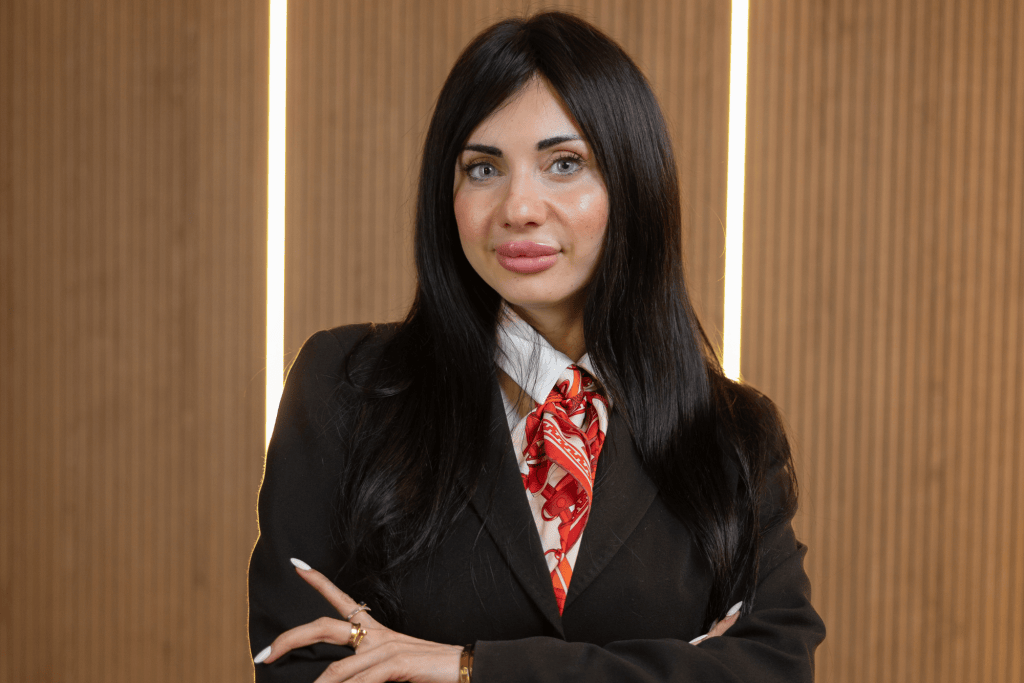
For Karma Al-Taher, branding has never really been about branding.
Not in the traditional sense, anyway.
Logos, campaigns, advertising, social media and carefully constructed messaging may be the most visible expressions of a brand, but Al-Taher believes they are merely the surface. Beneath them sits something far more consequential: the business itself.
“You cannot build a strong brand around a weak business proposition,” she says.
It is a deceptively simple observation, but one that underpins much of Al-Taher’s philosophy on marketing, leadership and business growth.
“Branding is not a logo, a campaign or a communications exercise,” she explains. “It is the experience a business creates at every touchpoint—its product, people, culture, leadership, customer experience and, ultimately, its reputation.”
And that distinction matters.
Marketing can generate attention. It can introduce a company to millions of people, accelerate awareness and create excitement around a product. What it cannot do indefinitely, Al-Taher argues, is conceal a disconnect between what a business promises and what it actually delivers.
“The strongest CMOs think beyond marketing,” she says. “They understand the business model, commercial objectives and customer, and then use the brand to connect all three.”
For entrepreneurs, that philosophy has particular significance.
In an era when launching a business can almost immediately be followed by launching an Instagram page, producing content, hiring a PR agency and running digital advertising, Al-Taher believes many founders are communicating before they have properly established what they are communicating about.
It is, she says, one of the most common mistakes she sees.
“Many entrepreneurs understandably want visibility immediately,” Al-Taher says. “They start thinking about social media, campaigns, PR and advertising before answering some very fundamental questions: Why should this company exist? What problem are we solving? Why should somebody choose us? And what do we want people to remember about us?”
Her warning is succinct: “Visibility without clarity can actually accelerate confusion.”
For a founder eager to grow, slowing down long enough to answer those questions can feel counterintuitive. But Al-Taher argues that establishing purpose, positioning, audience and value proposition first makes every marketing decision that follows more effective.
It also becomes increasingly important as a company grows.
Growing Without Losing Yourself
There is a familiar evolution that takes place inside many successful businesses.
The entrepreneurial company becomes the growth company. The growth company becomes an organization. Teams expand, processes are introduced, departments appear, approval structures become necessary and communication becomes increasingly managed.
Then, somewhere along the way, some companies lose the personality that made customers care about them in the first place.
Al-Taher believes scale inevitably requires structure—but structure should not erase character.
“The danger is that the brand starts speaking like an institution rather than a human being,” she says.
The solution, she believes, is to identify the parts of a brand that should never be negotiated away: its personality, values, tone and customer promise.
Those elements need to survive growth.
“Scaling does not have to mean losing personality,” she says. “Some of the strongest brands in the world have achieved enormous scale while remaining unmistakably themselves.”
It is partly why Al-Taher has, at times, referred to herself as a “brand policeman.”
But the policing she describes is less about enforcing a logo guideline or correcting a shade of color than protecting organizational consistency.
“A brand is built through thousands of small decisions, and every department has the ability to strengthen or weaken it,” she says.
“If marketing communicates one promise, sales communicates another, leadership behaves differently and the customer experiences something else entirely, eventually the brand loses credibility.”
And credibility is difficult to regain once lost.
“Consistency builds recognition, but more importantly, it builds trust,” she says. “And trust is one of the most valuable assets any business can own.”
That inevitably brings the conversation to authenticity—a word so frequently used in modern marketing that it risks becoming another corporate cliché.
Al-Taher draws a firm distinction between constructing an image and building an authentic brand.
“You can manufacture an image,” she says. “You cannot manufacture authenticity for very long.”
Consumers, she argues, have become extraordinarily adept at detecting the distance between what companies say and what they actually do.
A beautifully written purpose statement carries little weight when leadership decisions routinely contradict it.
The founder does not necessarily need to become the brand, particularly as a company grows beyond its entrepreneurial origins. But leadership, she says, must embody the principles the organization claims to represent.
“Authenticity is ultimately alignment—between what you say, what you do and what people experience.”
The Psychology Behind the Purchase
Al-Taher’s view of marketing extends beyond communication into human behavior.
Asked how much of modern marketing is psychology disguised as strategy, her answer is immediate.
“A significant part of it.”
Marketing has always attempted to understand what people desire, fear, value and remember—and, ultimately, what causes them to act.
Data has transformed how precisely businesses can observe those behaviors, but Al-Taher believes numbers alone cannot explain them.
“Data tells us what people are doing,” she says. “Psychology often helps us understand why.”
That difference is particularly important in a business environment increasingly dominated by dashboards, analytics, attribution models and performance metrics.
The numbers matter. But behind every number is still a person.
“The best marketers combine both,” Al-Taher says. “They understand the numbers, but they also understand the human being behind those numbers. Because ultimately, people don’t experience brands through dashboards. They experience them emotionally.”
There is, however, an ethical boundary.
The same knowledge that enables marketers to understand consumers more effectively can also be used to exploit them.
For Al-Taher, the difference lies in intention.
Understanding psychology should enable brands to communicate value clearly, remove friction and design experiences that genuinely resonate with what consumers need.
“Manipulation begins when those insights are deliberately used to exploit vulnerability, create unnecessary fear or push people toward decisions that may not serve them,” she says.
Such tactics might produce a transaction. But they can simultaneously destroy something much harder to rebuild: trust.
“Sustainable brands are built on real connection.”
Saudi Arabia: Localization Is Not Translation
Few markets currently demonstrate the importance of cultural understanding.
As the Kingdom undergoes rapid economic, social and commercial transformation, global companies are competing for the attention of an increasingly sophisticated consumer base.
Al-Taher believes one of the most persistent mistakes international companies make is assuming that a global strategy can simply be translated into Arabic and deployed locally.
“Saudi consumers are sophisticated, digitally connected, ambitious and increasingly discerning,” she says.
They are also exposed to the world’s leading brands, which means their expectations around products, service and customer experience are increasingly benchmarked globally.
Yet global standards do not eliminate the need for local understanding.
“Localization is not translation,” Al-Taher says. “Brands need to understand the nuances of the market, its values, aspirations and rapidly evolving consumer expectations.”
For brands hoping to succeed in Saudi Arabia, the proposition is therefore more complex than simply choosing between local and global.
They need both.
“The companies that succeed will be those that respect local identity while delivering at a genuinely global standard.”
But perhaps the more interesting transformation is taking place in the opposite direction.
For decades, discussions about branding in the Middle East often centered on how international companies could enter and capture regional markets.
Increasingly, however, businesses born in Saudi Arabia, the UAE and elsewhere in the region are considering how they can travel outward.
Al-Taher sees this as one of the most exciting shifts currently taking place.
“The opportunity now is to build brands that are proudly rooted in this region without limiting themselves to it,” she says.
And she rejects the idea that becoming international requires stripping a company of its origins.
“You do not need to erase your cultural identity to become global,” she says. “In many cases, that distinctiveness can become your competitive advantage.”
RELATED: Alexandra Carvalho on 10 Years of Building a Self-Funded Business in the UAE
The AI Paradox
If one force is currently reshaping marketing faster than almost any other, it is artificial intelligence.
Copy that once took hours can be generated in seconds. Campaign concepts can be produced almost instantaneously. Images, analysis, personalization and even elements of strategy can increasingly be automated.
For marketers, the implications are enormous.
But when asked what AI still cannot replicate, Al-Taher does not hesitate.
“The human experience.”
AI can process extraordinary volumes of information and dramatically increase the speed at which marketing teams operate.
What it cannot do, she argues, is replicate a lived experience, genuine empathy, human instinct or the cultural sensitivity required to walk into a room and understand what people are feeling without them having to articulate it.
And paradoxically, she believes those qualities may become more valuable precisely because AI is becoming more powerful.
“The more artificial our world becomes, the more people will yearn for what feels genuinely human—the real conversations, the real experiences, real stories and meaningful connections.”
For brands, this creates an intriguing tension.
Technology can make them faster, smarter and more personalized than ever before.
But efficiency alone does not create emotional relevance.
“I don’t believe the future is AI versus humans,” Al-Taher says. “The strongest companies will combine the best of both worlds: the intelligence, scale and speed of AI with the empathy, creativity, judgment and emotional connection that only human beings can bring.”
There is another danger, too.
As generative AI tools become universally accessible, the same technology that democratizes creativity could simultaneously homogenize it.
“Potentially both,” Al-Taher says when asked whether AI will make branding more creative or make every brand look and sound increasingly similar.
“If everyone uses the same tools, similar prompts and the same datasets without adding original thinking, sameness becomes inevitable.”
And herein may lie the next competitive advantage.
Access to AI will cease to differentiate businesses because practically everyone will have it.
Originality will.
“The advantage will be having a distinctive point of view and knowing how to use technology without allowing technology to define your identity.”
Leadership Is Ultimately About People
Al-Taher’s own career has taken her through a diverse range of environments—from Big Four firms and multinational corporations to family businesses, government entities and global advertising agencies, across markets including the US, UK, China, UAE, Saudi Arabia, Egypt and Oman.
Rather than identifying one particular employer or experience as defining her approach to leadership, she credits the diversity of that journey.
“Different cultures value different things,” she says. “Different businesses demand different leadership styles. And different people respond to very different forms of motivation.”
What remained consistent among the strongest leaders she encountered was purpose.
They understood why they were leading, what they stood for and what kind of impact they hoped to leave behind.
But if managing brands is complicated, Al-Taher says managing the human beings behind them is considerably harder.
Asked which of the two presents the greater challenge, she laughs at the premise only figuratively: there is little hesitation.
“Definitely the personalities.”
After all, brands are ultimately created by people—founders, executives, employees, partners and customers—each bringing their own ambitions, perspectives and priorities.
A CMO therefore needs more than creative ability.
“You can have the strongest strategy in the room, but if you cannot create trust, communicate clearly, manage different personalities and bring people with you, execution becomes extremely difficult.”
It is a realization that became increasingly apparent to Al-Taher as she progressed into more senior positions.
“The more senior I became, the more I realized that emotional intelligence is not a ‘soft skill.’ It is a leadership skill.”
Senior leadership also required her to unlearn something many ambitious executives spend the early parts of their careers attempting to prove: that they need to have the answer.
“Leadership requires moving from execution to empowerment,” she says.
“The higher you rise, the more you realize that leadership is not about having all the answers. It is about bringing together the right minds to find the best one.”
That shift also changes how leaders measure their own contribution.
Instead of focusing solely on individual output, Al-Taher believes senior leaders should increasingly measure their value through what other people are capable of achieving around them.
“The goal is to build a room full of smart people and give them the confidence to challenge you.”
The First Dirham
Perhaps Al-Taher’s philosophy is best captured by one hypothetical question.
Suppose a founder gave her AED1 million and one instruction: make people care about my company.
Where would she spend the first dirham?
“I wouldn’t spend the first dirham on advertising,” she says.
Instead, she would use it to understand why anyone should care in the first place.
Before media buying, campaigns or amplification, she would examine the customer, the proposition, the competitive landscape and the story.
She would look for both the emotional and commercial reason the company deserves attention.
“Once that is clear,” she says, “then we can decide where the remaining AED999,999 should go.”
Her conclusion could almost serve as a warning to an entire generation of companies racing to produce more content, capture more impressions and acquire more attention:
“Amplification without relevance is simply expensive noise.”
Perhaps that principle applies just as readily to leadership.
When asked what she hopes people will associate with the name Karma Al-Taher a decade from now, she does not mention a campaign, a company or a title.
She chooses one word.
“Impact.”
“Of course, I want to be associated with building powerful brands, meaningful ideas and successful businesses,” she says. “But ultimately, I would like my legacy to go beyond campaigns, titles or achievements.”
She wants to have helped businesses find their voice and leaders tell their stories. She wants to have built brands that meant something. And, most importantly, she wants the people around her to have grown because she was there.
“When everything else fades,” Al-Taher says, “impact is what remains.”
For Karma Al-Taher, branding has never really been about branding.
Not in the traditional sense, anyway.
Logos, campaigns, advertising, social media and carefully constructed messaging may be the most visible expressions of a brand, but Al-Taher believes they are merely the surface. Beneath them sits something far more consequential: the business itself.

Entrepreneur Middle East Staff
Entrepreneur Staff