Microsoft to Invest More Than US$10 Billion in UAE, Saudi Arabia, Qatar and Kuwait by 2030
Microsoft said the framework will focus on technology infrastructure, digital resilience and workforce development.
You're reading Entrepreneur Middle East, an international franchise of Entrepreneur Media.
Microsoft plans to invest more than US$10 billion in capital and operating expenses across the Middle East by 2030, expanding its cloud and AI infrastructure across the UAE, Saudi Arabia, Qatar and Kuwait.
The technology company also plans to invest more than US$400 million in subsea and terrestrial connectivity across the region by 2030. This will build on existing infrastructure investments, including the SeaMeWe-6 subsea cable system, which has landing points in the UAE, Saudi Arabia and Qatar.
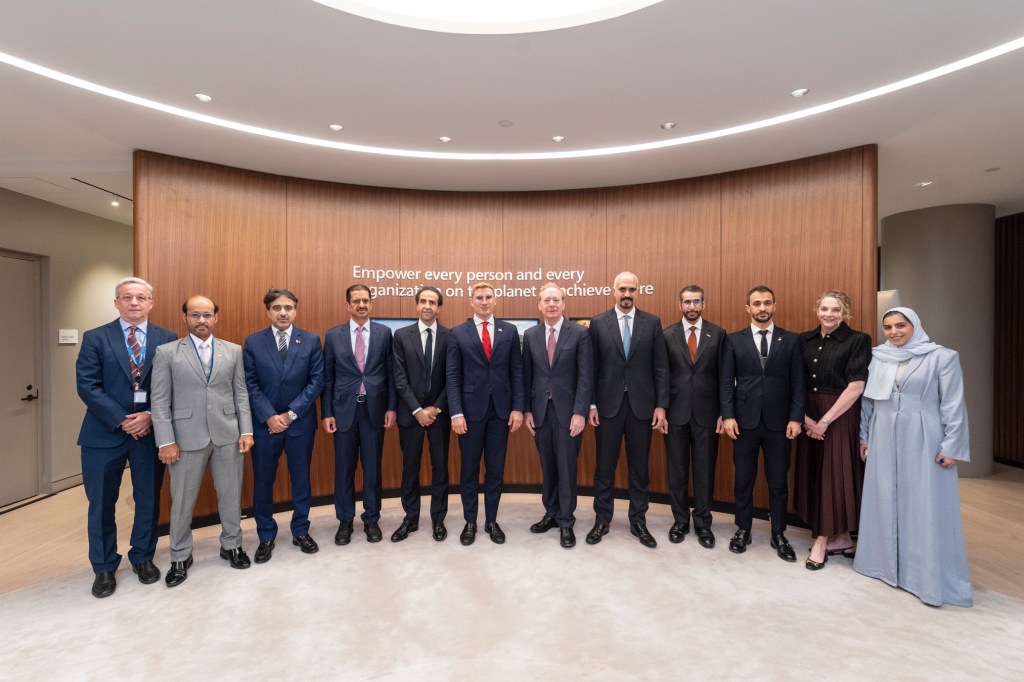
The plans form part of a new Middle East framework announced by Microsoft Vice Chair and President Brad Smith and Microsoft Middle East and Africa President Naim Yazbeck during a roundtable on the sidelines of the United Nations General Assembly in New York. The meeting was attended by government representatives from the UAE, Saudi Arabia, Qatar and Kuwait.
Microsoft said the framework will focus on technology infrastructure, digital resilience and workforce development.
The company will expand partnerships with governments and national AI organizations, including UAE-based G42, Saudi Arabia’s HUMAIN, QAI and the Government of Kuwait. Its existing regional initiatives also include TAMM in the UAE, SDAIA’s ALLaM in Saudi Arabia, TASMU in Qatar and Microsoft 365 Copilot adoption across the Government of Kuwait.
Microsoft also announced plans for a Middle East Digital Resilience initiative focused on business continuity and recovery. The company said it will expand data protection, sovereignty and business continuity services for eligible governments and customers through Microsoft Sovereign Public Cloud, Sovereign Private Cloud and Project Digital Shield.
Cybersecurity cooperation with national authorities in the UAE, Saudi Arabia, Qatar and Kuwait will also be expanded, with dedicated Microsoft cybersecurity specialists in each market.
On responsible AI, Microsoft plans to expand its work with the Responsible AI Future Foundation, which it co-founded with G42 and Abu Dhabi’s Mohamed bin Zayed University of Artificial Intelligence (MBZUAI).
The new commitments build on Microsoft’s existing target to help train more than 4.2 million people across the UAE, Saudi Arabia, Qatar and Kuwait by 2030. Programs include Saudi Arabia’s AI Global Leadership Program, AI Skills 4 Women initiatives in Saudi Arabia and Qatar, and the Women’s Datacenter Academy in Saudi Arabia.
“Countries across the region aren’t waiting for the future of AI to be written elsewhere – they’re helping shape it themselves, and our role is to be a long-term partner in that journey,” Yazbeck said.
Microsoft said it will also work with governments, educational institutions and employers across the Middle East on AI literacy, workforce readiness and the responsible use of AI in education.
RELATED: Middle East Still Exports More Capital Than It Attracts, But the Gap Is Narrowing, BlackRock Finds
Microsoft plans to invest more than US$10 billion in capital and operating expenses across the Middle East by 2030, expanding its cloud and AI infrastructure across the UAE, Saudi Arabia, Qatar and Kuwait.
The technology company also plans to invest more than US$400 million in subsea and terrestrial connectivity across the region by 2030. This will build on existing infrastructure investments, including the SeaMeWe-6 subsea cable system, which has landing points in the UAE, Saudi Arabia and Qatar.
The plans form part of a new Middle East framework announced by Microsoft Vice Chair and President Brad Smith and Microsoft Middle East and Africa President Naim Yazbeck during a roundtable on the sidelines of the United Nations General Assembly in New York. The meeting was attended by government representatives from the UAE, Saudi Arabia, Qatar and Kuwait.

Entrepreneur Middle East Staff
Entrepreneur Staff