Visibility Should Create Value, Not Attention, Says Sheldon du Toit
Visibility has become easier to achieve. Attention is everywhere. Creating something worth paying attention to is harder.
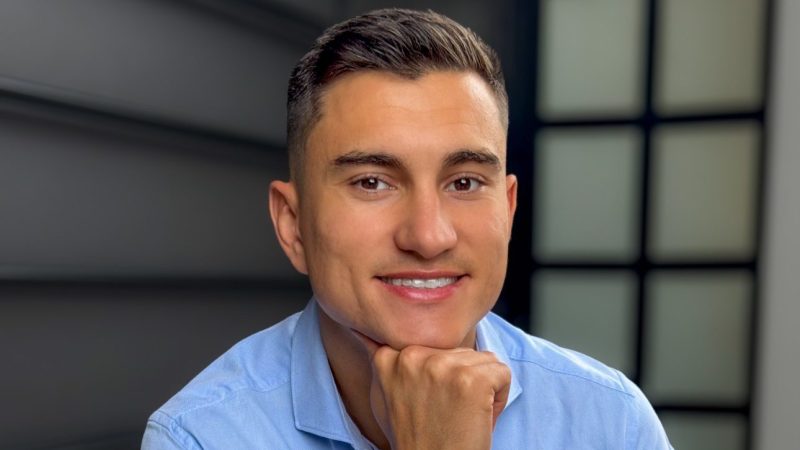
Sheldon du Toit
Screenshot
You're reading Entrepreneur Middle East, an international franchise of Entrepreneur Media.
For Sheldon du Toit, that distinction matters.
As founders and executives become more conscious of how they appear online, he believes the conversation around personal branding has become too focused on simply being seen.
“Visibility should have a purpose,” he says. “It should create value. If someone reads something you have shared, hears your story or learns from your experience, they should walk away with something they can use.”
It is a perspective shaped as much by his own life as by his work.
Years ago, Sheldon and his wife made the decision to leave the small South African town where he had grown up and start again somewhere new. It meant moving away from family, friends and familiarity without knowing exactly how the next chapter would unfold.
It was uncomfortable. That was partly the point.
“You reach moments where you know that staying where you are is comfortable, but you also know that growth probably requires you to move,” he says. “You are not always going to feel 100% ready. Sometimes you have to make the decision and then grow into it.”
He has carried that thinking into business.
Sheldon believes many founders reach a similar point with their public reputation. They may have spent 10, 20 or even 30 years building expertise, yet very little of that knowledge exists publicly. Their customers know them. Their teams know them. Their close network understands what they have built. The wider market often does not.
For years, that could be easier to ignore.
Sheldon believes it is becoming increasingly difficult to do so.
People still use traditional search, but the way they research companies and individuals is changing. Instead of opening multiple websites themselves, people are increasingly asking AI platforms to help them understand who someone is, what a business does and whether either appears credible.
That creates a different challenge for founders.
“AI can only work with what exists,” he says. “If you have decades of experience but there is almost nothing credible about you online, the internet cannot reflect the full picture of who you are.”
It is part of the work he now does as Chief Operating Officer of CredibilityX, a global branding, marketing and reputation company founded in 2015. The company works with founders, executives and businesses across international markets to strengthen how they are positioned across media, search, social platforms and emerging AI ecosystems. In 2026, CredibilityX was recognised in Dubai with two industry awards, including Best Real Estate Media Agency 2026
The company combines media positioning with digital visibility across traditional search and newer forms of AI discovery, including SEO, AEO and GEO.
The objective, Sheldon says, is not to turn executives into influencers.
It is to help the public information around a person or company catch up with the substance that already exists behind the scenes.
Many executives are simply too busy running companies to spend hours creating content every day. Sheldon sees editorial media as another way to communicate their thinking.
“A founder can be brilliant at what they do, but one meeting does not give someone the full story,” he says. “An article can communicate what they believe, what they have learned, where they are going and why they built what they built.”
For Sheldon du Toit, the value of that visibility becomes clearer over time. The goal is not to appear everywhere or constantly compete for attention. It is to build a body of credible information that gives people a better understanding of the experience, thinking and values behind a person or business.
Someone discovering a founder for the first time may initially know little more than their name and company. The information they encounter afterwards can shape whether they understand the person only by their title, or whether they begin to see the years of knowledge, decisions and experience behind it.
That is also why Sheldon believes visibility should ultimately be connected to contribution.
His long term ambition is less about being known for a particular title than for being useful.
“Five years from now, I would rather somebody tell me that something I said or something I did helped them move forward in their own career or life,” he says. “For me, that would mean more than simply being known.”
That perspective extends beyond reputation.
Sheldon du Toit believes goals matter. So does planning. Yet he has become increasingly aware that life rarely follows the exact direction imagined years earlier.
“Most people can look back five years and see that their life changed in ways they could not have predicted,” he says. “You might change careers, move somewhere new, enter a completely different industry or be given an opportunity you never expected.”
Rather than seeing that uncertainty as a reason to avoid planning, he sees it as a reminder to work toward the future without forgetting to live in the present.
For Sheldon, that is also where faith enters the picture.
He believes strongly in setting goals, working hard and taking responsibility for the direction of his life, while accepting that not every outcome is his to control.
“You can make plans for one year, three years or five years,” he says. “But you also have to be present and trust that God may have a different direction for your life than the one you originally imagined.”
Perhaps that is what growth ultimately demands.
Not constant reinvention for the sake of it.
Not attention for attention’s sake.
A willingness to keep developing as life, business and opportunity change around you.
Because the next level rarely requires you to become someone else entirely.
It requires you to become more capable of who you already have the potential to be.
For Sheldon du Toit, that distinction matters.
As founders and executives become more conscious of how they appear online, he believes the conversation around personal branding has become too focused on simply being seen.
“Visibility should have a purpose,” he says. “It should create value. If someone reads something you have shared, hears your story or learns from your experience, they should walk away with something they can use.”

Entrepreneur Middle East Staff
Entrepreneur Staff