How Emirati Entrepreneur Hamad Almheiri Turned Doomscrolling Into Bite-Sized Learning
Within just the first two months of its launch, BrainScroller recorded around 1,500 installs across 40+ countries, alongside strong retention, frequent daily usage, and largely five-star user reviews indicating high early engagement.
You're reading Entrepreneur Middle East, an international franchise of Entrepreneur Media.

In September 2023, when Merriam-Webster dictionary officially recognized the word ‘doomscrolling’, there was something significant in the entry: it included not just a definition of the act but also the emotions it evoked. “To spend excessive time scrolling through online content (especially news) that makes one feel sad, anxious, angry, etc.,” is how the dictionary defines a behavior that has quietly become a default habit for millions today. Plenty of studies back up this notion. An April 2023 Applied Research in Quality of Life review of ~1,200 adults linked doomscrolling to poorer mental well-being and life satisfaction, while a Health Communication study of 1,000+ participants found nearly 17% with severely problematic news consumption reported higher stress and poorer physical health.
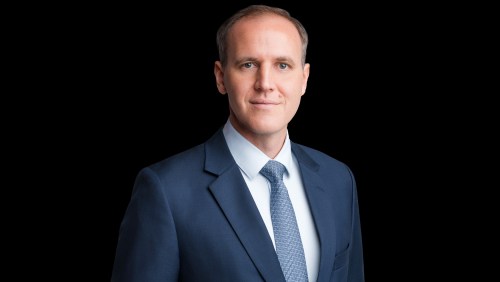
And while there are plenty of suggested ways to counter this new social behavior, 22-year-old Emirati entrepreneur Hamad Almheiri has a different approach. “Scrolling is already a habit for billions of people. Rather than trying to stop that behavior, my app, BrainScroller, simply gives people a better alternative for some of the time they spend online. It is less about replacing social media and more about offering a different option,” he says.
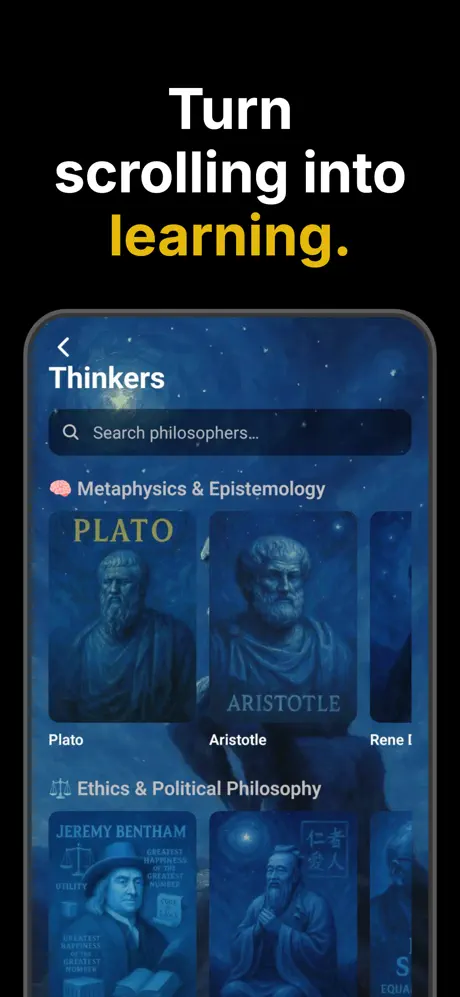
Indeed, Almheiri built BrainScroller as an app that turns social media habits into quick, bite-sized learning by delivering short insights from philosophy, psychology, and science. “The app works through a simple scrolling feed,” he explains. “Each post introduces a concept, idea, or insight in a short format that can be read in under a minute. Users can scroll through topics like philosophy, psychology, neuroscience, paradoxes, and history. If something interests them, they can save it or explore related content. The design decisions were intentional. The interface is simple, with minimal distractions, because the goal is to keep the focus on the ideas themselves. Instead of complicated menus or long articles, everything is structured so that learning feels quick and effortless. In many ways, the experience mirrors how people already use social media, just with different content.”
AlMheiri, part of a generation that continues to navigate the repercussions of doomscrolling, says the inspiration to create the app was simple: to add a sense of purpose to time spent online. “There are incredible ideas in philosophy, psychology, neuroscience, and science that most people never come across because they are buried in long books or academic material,” he says. “BrainScroller tries to bridge that gap between this knowledge and the huge amount of time people spend scrolling on their phones. The vision is to make discovering ideas as easy and natural as scrolling through social media. Instead of fighting the habit of scrolling, the app redirects it toward learning something interesting in just a few seconds. Over time, the goal is to build a platform where opening your phone can lead to discovering ideas that actually make you think.”
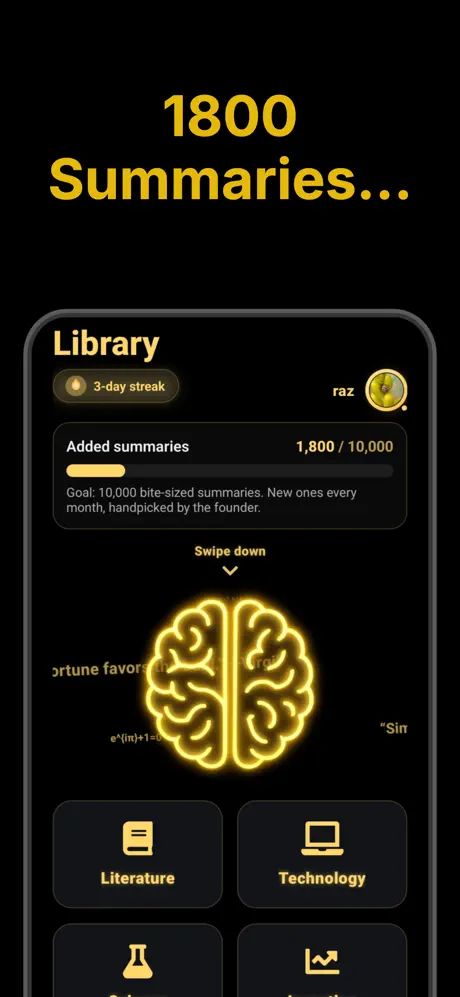
Within just the first two months of its launch, BrainScroller recorded around 1,500 installs across 40+ countries, alongside strong retention, frequent daily usage, and largely five-star user reviews indicating high early engagement. “BrainScroller is currently fully bootstrapped,” AlMheiri reveals. “I spent about eight months building and coding the app myself, focusing on getting the product right and launching it before seeking outside funding. Now that the app is live and showing promising early traction, the long-term plan is to eventually pursue the venture capital route to scale the platform and grow the user base globally.”
While addressing the wider implications of doomscrolling, AlMheiri also hopes that Brainscroller can prove how adopting the attention-grabbing techniques of social media can be better applied to edtech spaces. As such, the founder notes that the real challenge lies in how attention works in today’s fast-paced digital environment. “Social media platforms have become very effective at presenting content in short, engaging formats that people can absorb quickly, while educational platforms often still rely on long lectures, articles, or courses that require a large time commitment,” he explains.
“BrainScroller tries to bridge that gap by presenting ideas in a format that fits how people already consume information,” AlMheiri adds. “Each post introduces a concept in a short, clear way that can be understood in under a minute. If the idea interests the user, they can explore it further. So rather than fighting shorter attention spans, the platform adapts to them while still introducing meaningful ideas. The goal is to make learning something that can happen in small moments throughout the day.”

Beyond the product itself, Almheiri believes BrainScroller points to a broader potential within the UAE’s digital ecosystem. “The UAE has made a strong push toward building a knowledge-based and digital economy, and I think there is a real opportunity for founders here to build products that reach a global audience,” he says. “With BrainScroller, my hope is to contribute to that by creating a platform that encourages curiosity and learning, while also showing that globally used tech products can be built from the UAE. If more young founders in the region feel encouraged to build ambitious technology products, that would be a positive outcome not just for startups, but for the broader digital ecosystem in the country.”
In September 2023, when Merriam-Webster dictionary officially recognized the word ‘doomscrolling’, there was something significant in the entry: it included not just a definition of the act but also the emotions it evoked. “To spend excessive time scrolling through online content (especially news) that makes one feel sad, anxious, angry, etc.,” is how the dictionary defines a behavior that has quietly become a default habit for millions today. Plenty of studies back up this notion. An April 2023 Applied Research in Quality of Life review of ~1,200 adults linked doomscrolling to poorer mental well-being and life satisfaction, while a Health Communication study of 1,000+ participants found nearly 17% with severely problematic news consumption reported higher stress and poorer physical health.
And while there are plenty of suggested ways to counter this new social behavior, 22-year-old Emirati entrepreneur Hamad Almheiri has a different approach. “Scrolling is already a habit for billions of people. Rather than trying to stop that behavior, my app, BrainScroller, simply gives people a better alternative for some of the time they spend online. It is less about replacing social media and more about offering a different option,” he says.
Indeed, Almheiri built BrainScroller as an app that turns social media habits into quick, bite-sized learning by delivering short insights from philosophy, psychology, and science. “The app works through a simple scrolling feed,” he explains. “Each post introduces a concept, idea, or insight in a short format that can be read in under a minute. Users can scroll through topics like philosophy, psychology, neuroscience, paradoxes, and history. If something interests them, they can save it or explore related content. The design decisions were intentional. The interface is simple, with minimal distractions, because the goal is to keep the focus on the ideas themselves. Instead of complicated menus or long articles, everything is structured so that learning feels quick and effortless. In many ways, the experience mirrors how people already use social media, just with different content.”

Aalia Mehreen Ahmed • Senior Features Editor, Entrepreneur Middle East
Entrepreneur Staff
Aalia Mehreen Ahmed is the Senior Features Editor at Entrepreneur Middle East. She is an... Read more