Brace For Impact: How Augmented Reality Is Going To Change The Automotive Industry
It’s no surprise that the automotive industry’s enthusiastic adoption of augmented reality (AR) technology in the development of new cars today is a reflection of its continual quest for innovations.
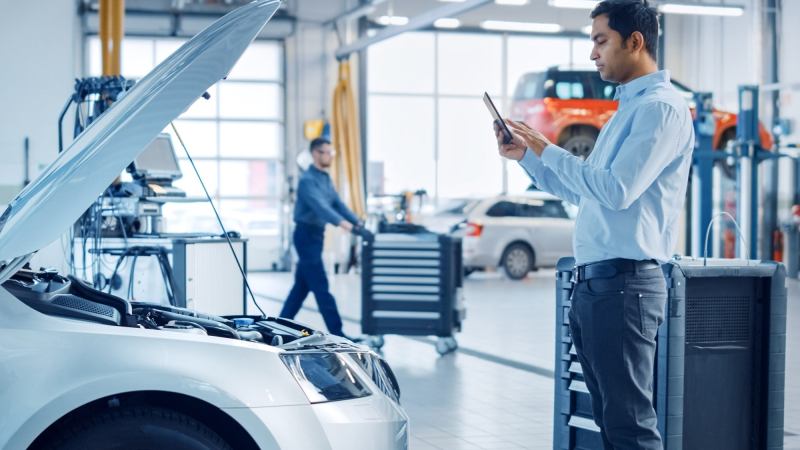
Shutterstock
Opinions expressed by Entrepreneur contributors are their own.
You're reading Entrepreneur Middle East, an international franchise of Entrepreneur Media.
Over the last few decades, we have seen the automotive industry play a significant role in the growth of an economy and society at large. Thanks to intense rivalry and competition among the manufacturers, as well as the wealth of new security and innovative features offered with the latest car models, this industry keeps offering something new every year.
As such, it’s no surprise that the industry’s enthusiastic adoption of augmented reality (AR) technology in the development of new cars today is a reflection of its continual quest for innovations. While AR is now expected to become a mainstay across all industries, I am particularly looking forward to this direction of growth in the automotive industry as and when the manufacturers will launch the new car models for consumers.
This is not about the distant future though- in fact, 86% of automotive company representatives think AR strategies will be enhanced and implemented as soon as within a year, while the market for virtual reality (VR) and AR is expected to reach US$209.2 billion by the end of 2022. These are indeed exciting times.
Now, back to an industry very close to my heart, we are seeing that car companies are rapidly embracing AR technologies in their search for a new strategic edge over their competitors. I am certainly looking forward to the most inventive uses of AR in the automotive sector. Here are a few of them:
– Using AR systems, the driver can receive visual information about the environment, traffic conditions, and navigation through the windscreen, all without impairing their ability to drive. These alerts can prevent accidents and make the journey smoother. Safe driving is by far the biggest benefit for one and all.
– Long and complex manuals are replaced by AR tutorials and guidance. The physical instruction manuals that usually come with your new car are cumbersome and often difficult to find the information you need quickly. And let’s face it, unless you’re in the business, you’ve probably never opened the manual. With AR, we will be able to identify problems, and be directed on how to solve them, without ever having to flip through an old book.
Related: Stronger Together: Oweis Zahran, Founder And Chairman, OWS Auto
– For individuals who build or service cars, learning is automated with AR headsets. When it comes to the manufacturing or servicing of cars, AR is excellent for speeding up, automating, and improving training operations. Using an AR headset, trainees can quickly examine the inside of a piece of equipment or a vehicle. From a personal point of view, I see this as a major move for my company, OWS Auto, in raising efficiency and increasing productivity.
– Item picking aided by AR may help warehouse employees work more productively. Locating parts within a huge warehouse can be complicated when being done manually, AR can locate your item within seconds. This is another crucial element that will aid in time management and increase efficiencies.
– Since its inception, car sales process has essentially remained unchanged. With the AR technology both customers and manufacturers will be able to experience a more immersive way of buying a new or even used car. I foresee the launch of more digital showrooms that can be accessed in the comfort of your own home thus making the buying decision a lot easier and simpler.
As more major players in the industry turn to it in search of a new competitive edge, it is essential to understand the breadth and depth of possibilities of AR in automobile manufacturing to keep up with rivals. Not only car owners will benefit from this technology, but the entire automotive sector will see a major shift. From streamlining processes, to saving time, money, and human resources, the overall advantage of AR technology will be quite revolutionary for the future of the automotive industry, and it will reshape the way we live and commute.
We recognize that AR is rapidly gaining traction in the automotive sector, with producers like Chrysler, Hyundai, Porsche, BMW, Mercedes, and other businesses already experimenting and launching innovations, technologies, and software in this realm. Personally, I cannot wait to see what they come out with, as it will have a massive impact on our lives for decades to come.
Related: How Women Can Help Drive The Future Of The Automotive Industry
Over the last few decades, we have seen the automotive industry play a significant role in the growth of an economy and society at large. Thanks to intense rivalry and competition among the manufacturers, as well as the wealth of new security and innovative features offered with the latest car models, this industry keeps offering something new every year.
As such, it’s no surprise that the industry’s enthusiastic adoption of augmented reality (AR) technology in the development of new cars today is a reflection of its continual quest for innovations. While AR is now expected to become a mainstay across all industries, I am particularly looking forward to this direction of growth in the automotive industry as and when the manufacturers will launch the new car models for consumers.
This is not about the distant future though- in fact, 86% of automotive company representatives think AR strategies will be enhanced and implemented as soon as within a year, while the market for virtual reality (VR) and AR is expected to reach US$209.2 billion by the end of 2022. These are indeed exciting times.

Oweis Zahran • CEO, OWS Auto
As a dynamic entrepreneur in both the automotive industry and in the VC space, Oweis... Read more