How Kuwait-Based Logistics Giant Agility Is Embracing Digital Disruption
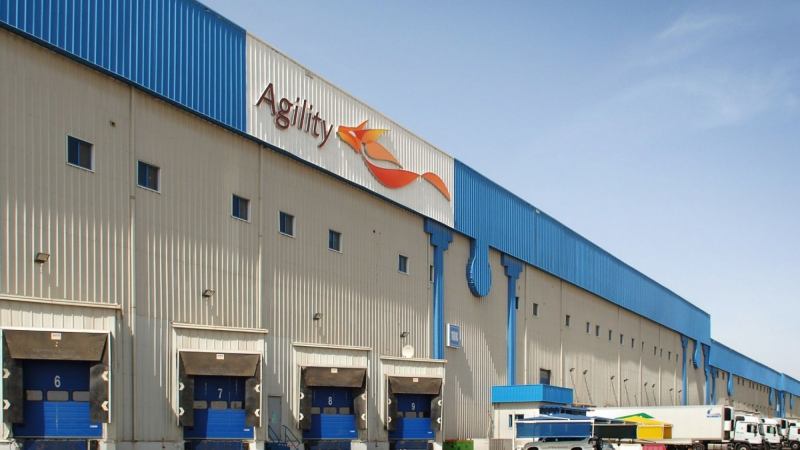
Agility
Opinions expressed by Entrepreneur contributors are their own.
You're reading Entrepreneur Middle East, an international franchise of Entrepreneur Media.
Digital disruption in the logistics industry is happening in ways big and small. For a mature company in a mature industry like ours, this can be either terrifying or exhilarating. Personally, I am excited about the potential to close known gaps with our customers, drive efficiencies, deepen access to services, and open entirely new markets with new ways of doing business. Our approach at Agility is two-fold. First, disrupt ourselves from within, and simultaneously, invest in the disrupters.
The certainty of disruption
Change in our industry is inevitable. Here’s a quick example. Even if you only spend US$10 on an e-commerce platform like Amazon, you get a digital experience that works simply, easily, and well. You can buy your product, track its progress en-route, and manage returns or concerns, all on a single platform. However, when it comes to freight forwarding, shippers can spend anywhere from hundreds of thousands to millions of dollars on freight and still have to write emails, make calls, fill out paperwork, and very often, still not know with precision where their goods are at any point in time.
It doesn’t add up. It’s neither coincidental nor surprising that venture capitalists have quadrupled investments in freight forwarding startups in the last couple of years, according to The Wall Street Journal. Venture capital funding for freight forwarding companies exceeded $1 billion in 2015, more than double the amount invested in the five prior years. Put simply: the industry is ripe for change.
Partnering with the disrupters
Digital disruption is not just about improving the business we have today. It’s also about anticipating new ways of doing business. On this front, Agility has created a new technology venture to invest in disruptive technology related to logistics. The idea is to look outside our company at new business models that we feel that we can either adopt internally or promote through our business. For example, we have invested in Cargo X, a platform that is looking to revolutionize how road freight is booked in complex markets like Brazil. Our goal is not just to see it succeed in Brazil, but to help bring the model to other emerging markets where we have strong local relationships with regulators, shippers, and transport suppliers. Using similar reasoning, we are partnering with Colle Capital, an early-stage venture capitalist.
One of Colle Capital’s portfolio companies, called Hyliion, has developed a hybrid technology for the trucking industry that reduces fuel consumption and corresponding emissions by a staggering 30%. These savings are achieved by recycling otherwise wasted kinetic energy and through a simple 30-minute trailer retrofit. Hyliion has the potential to disrupt multiple industries, from supply to oil-and-gas and beyond. Imagine for a moment the impact of a near-term 30% reduction in diesel consumption for trucks.
While we believe that this technology will succeed in its own right, we also believe that we can accelerate value creation by using the technology in our own fleets and promoting the technology with customers around the world. This philosophy of finding multiple points of leverage is at the heart of our tech strategy.
Disruption without distraction
The challenge of being a big company is not distracting the core business, even as we invest in the technologies that may change it forever. There are many cautionary tales of logistics titans in our industry that spent hundreds of millions of dollars on transforming their technology platforms and ultimately failed. Internally, our approach has been measured change: engage widely, pilot at every step, and roll out in phases, fixing problems early and continuously.
From our technology venture perspective, we ring-fence our investments from the business until it makes sense timing-wise, geography wise or service-wise to link them together. In this way, we hope to reap the benefits of revolution with the relative ease of evolution.
Related: IBM’s Juan Jose De La Torre On The Need For MENA Businesses To Embrace Digital Transformation
Digital disruption in the logistics industry is happening in ways big and small. For a mature company in a mature industry like ours, this can be either terrifying or exhilarating. Personally, I am excited about the potential to close known gaps with our customers, drive efficiencies, deepen access to services, and open entirely new markets with new ways of doing business. Our approach at Agility is two-fold. First, disrupt ourselves from within, and simultaneously, invest in the disrupters.
The certainty of disruption
Change in our industry is inevitable. Here’s a quick example. Even if you only spend US$10 on an e-commerce platform like Amazon, you get a digital experience that works simply, easily, and well. You can buy your product, track its progress en-route, and manage returns or concerns, all on a single platform. However, when it comes to freight forwarding, shippers can spend anywhere from hundreds of thousands to millions of dollars on freight and still have to write emails, make calls, fill out paperwork, and very often, still not know with precision where their goods are at any point in time.
It doesn’t add up. It’s neither coincidental nor surprising that venture capitalists have quadrupled investments in freight forwarding startups in the last couple of years, according to The Wall Street Journal. Venture capital funding for freight forwarding companies exceeded $1 billion in 2015, more than double the amount invested in the five prior years. Put simply: the industry is ripe for change.

Tarek Sultan • CEO and Vice Chairman, Agility
Tarek Sultan is the Chief Executive Officer and Vice Chairman of Agility, one of the... Read more